


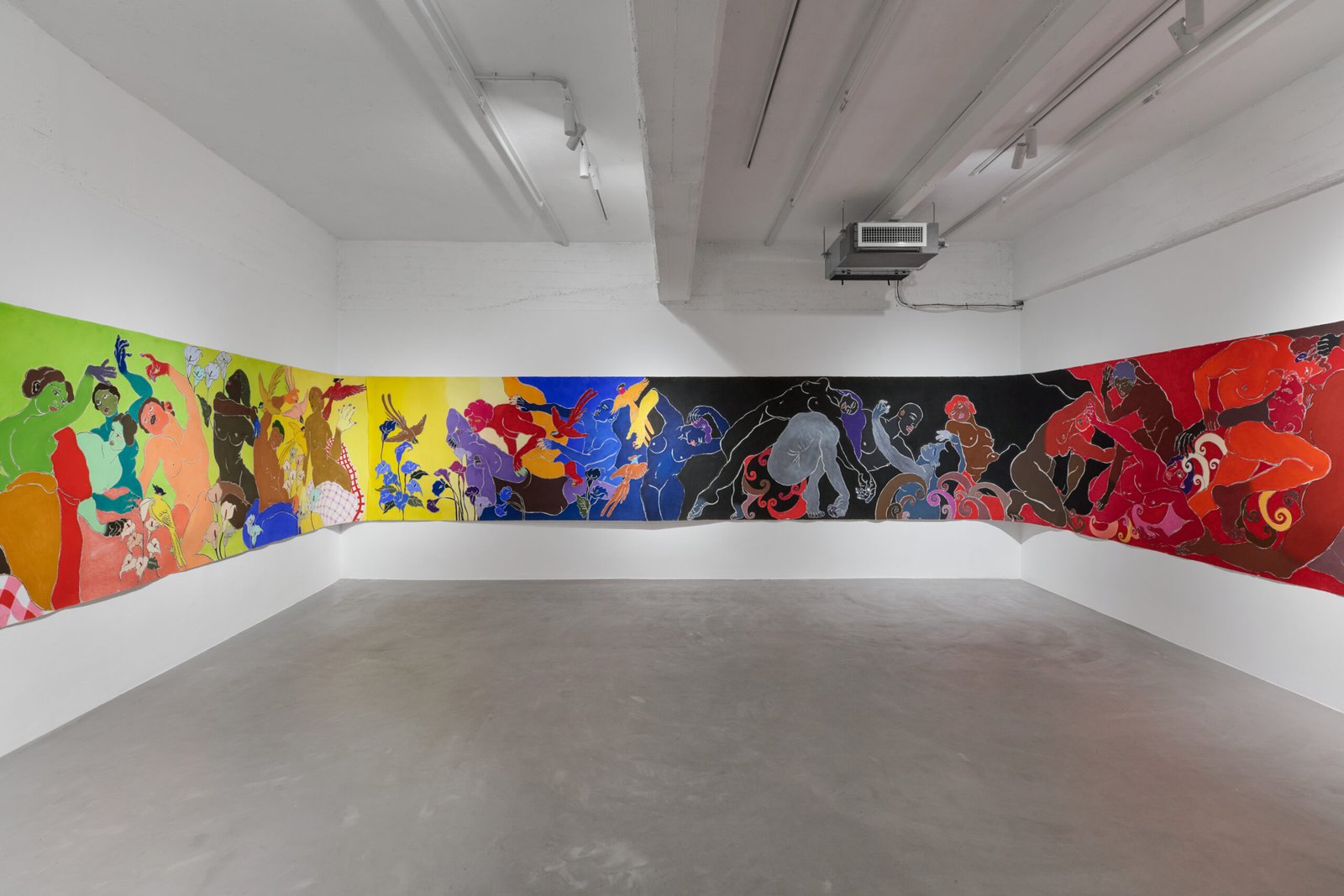
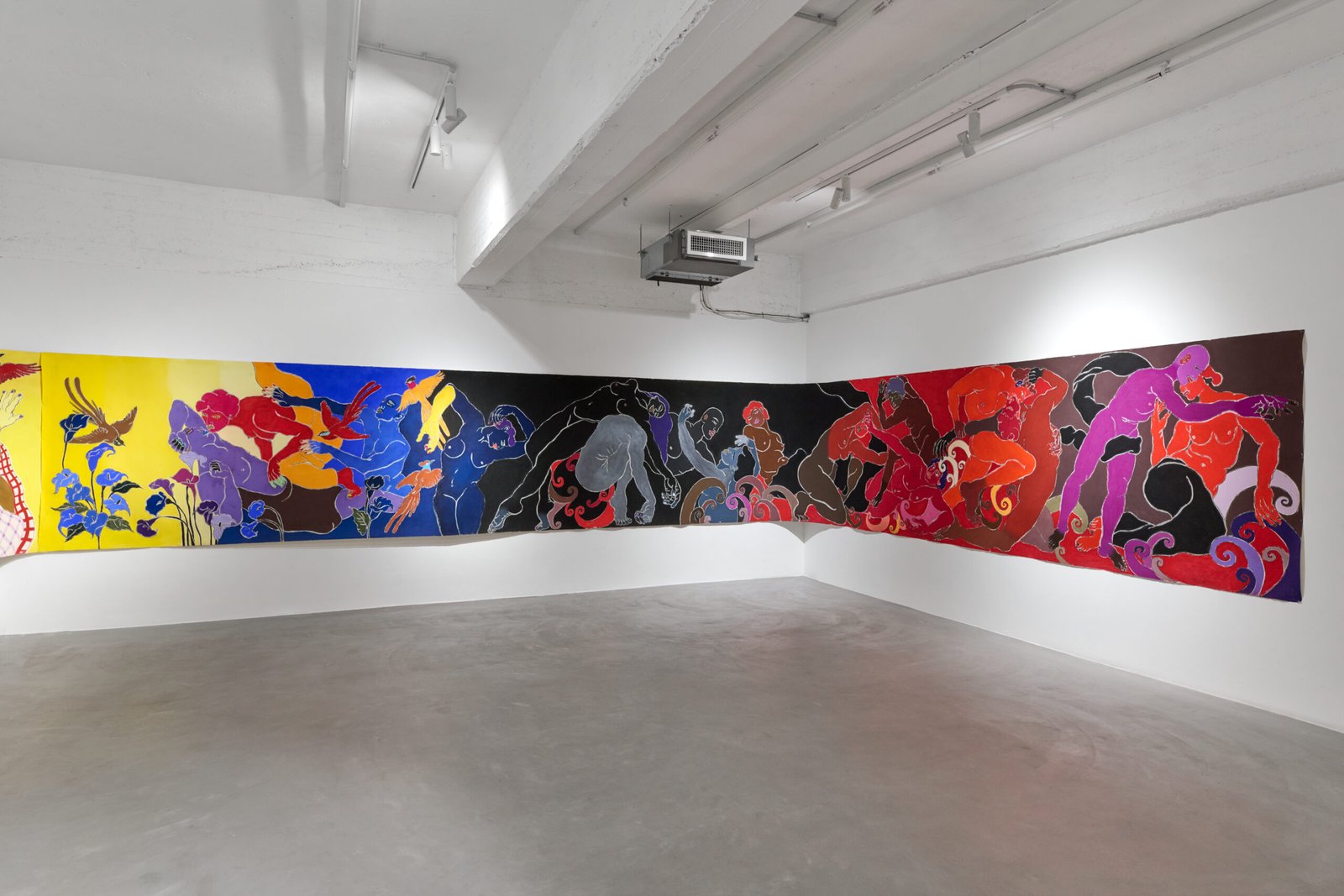
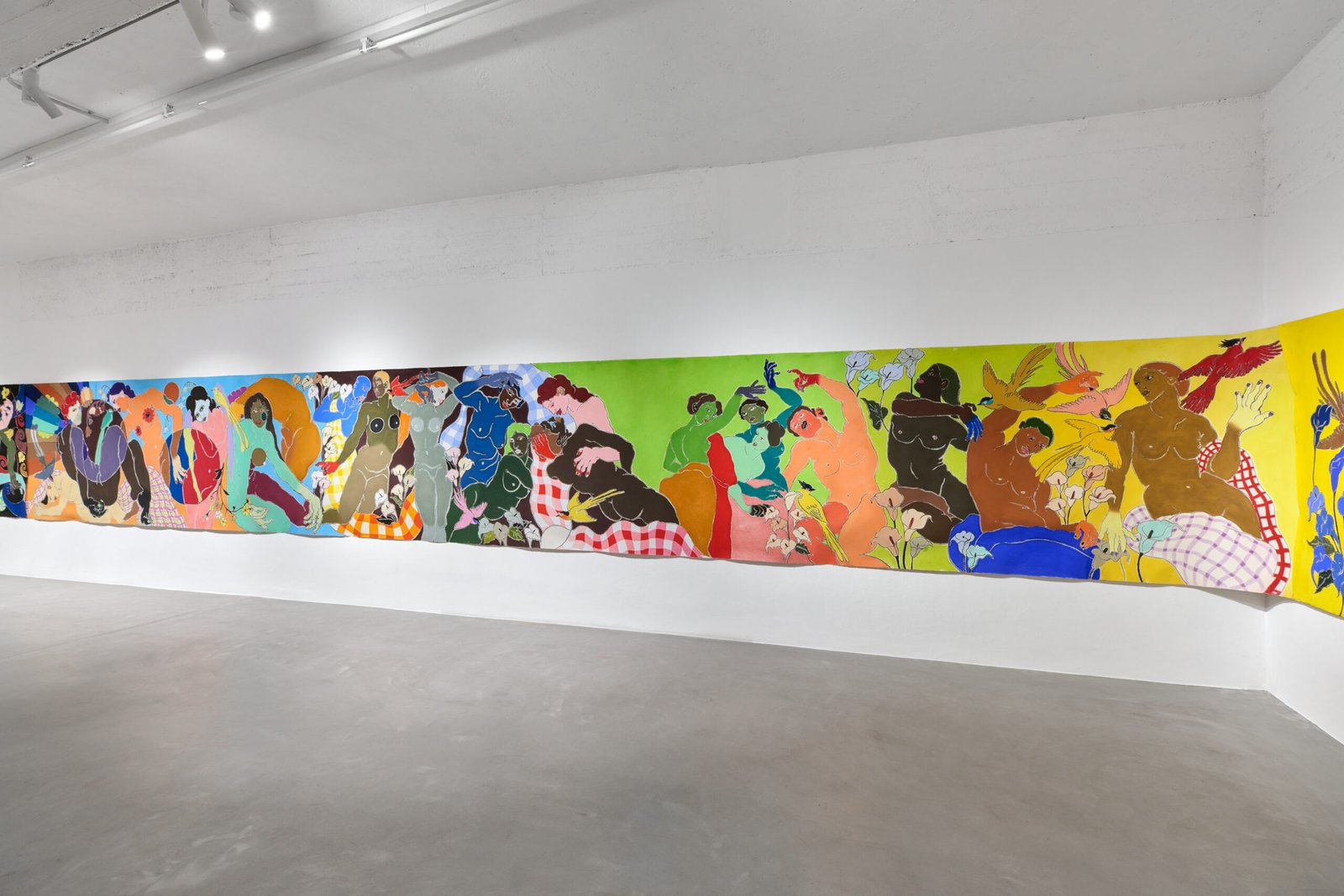
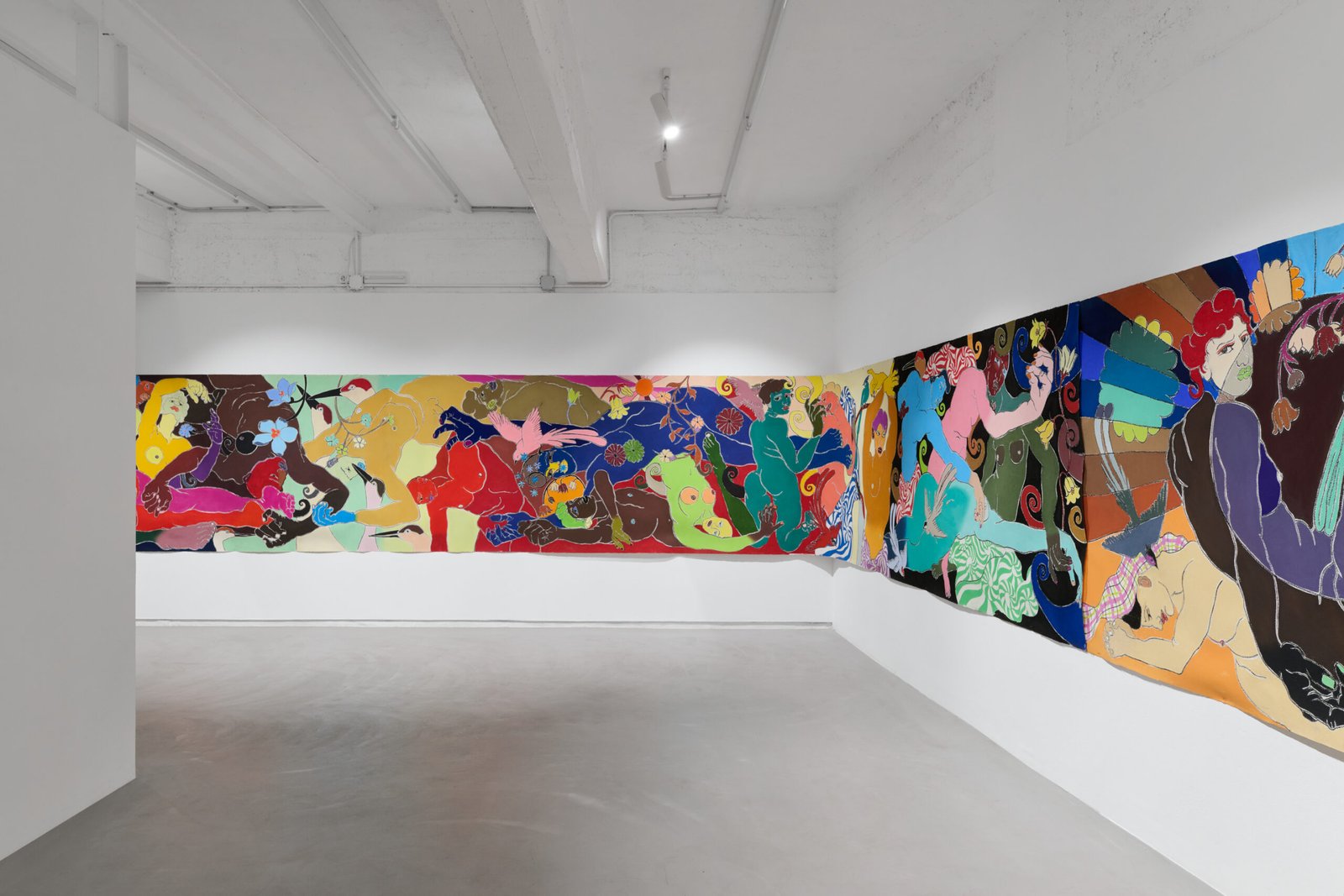
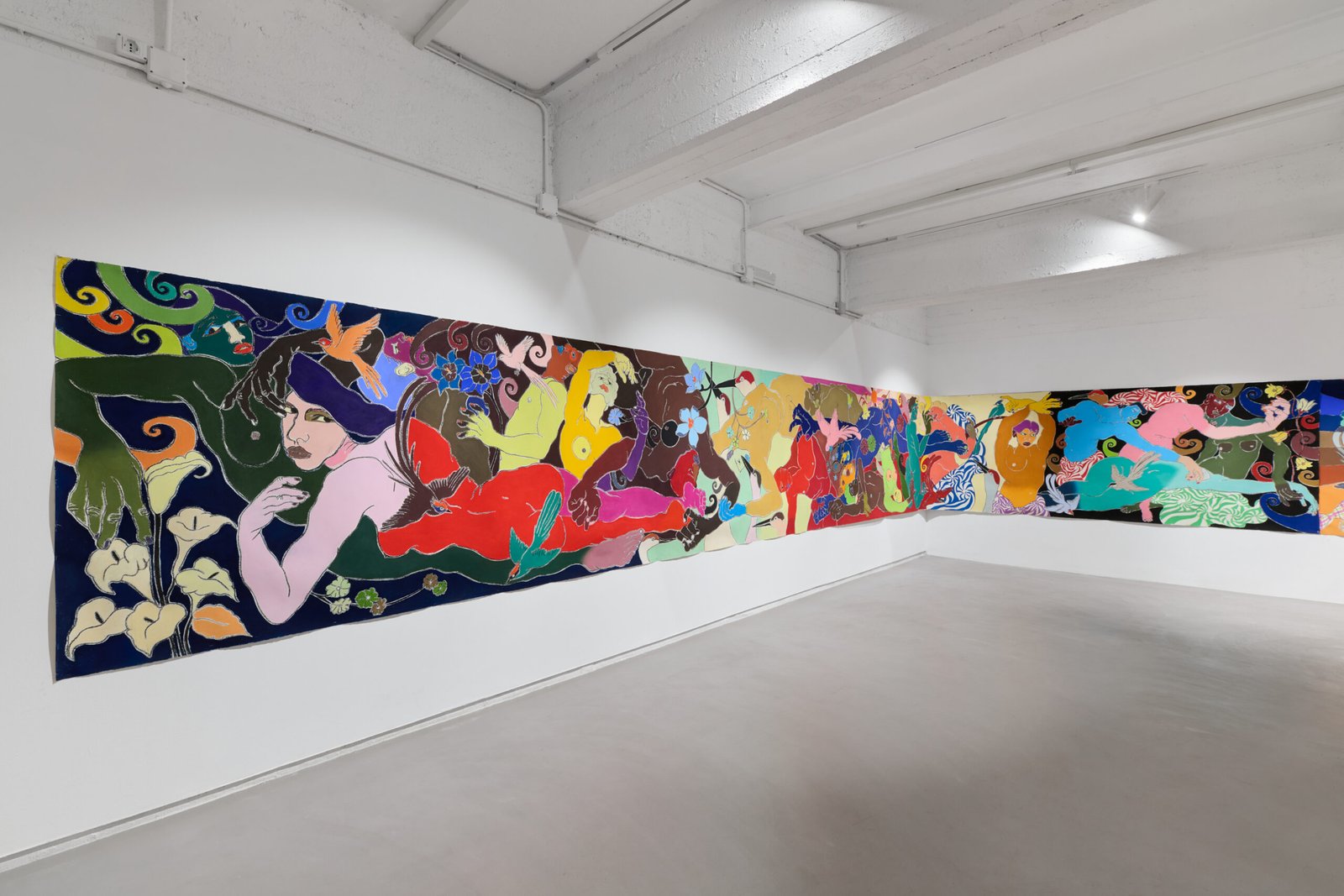
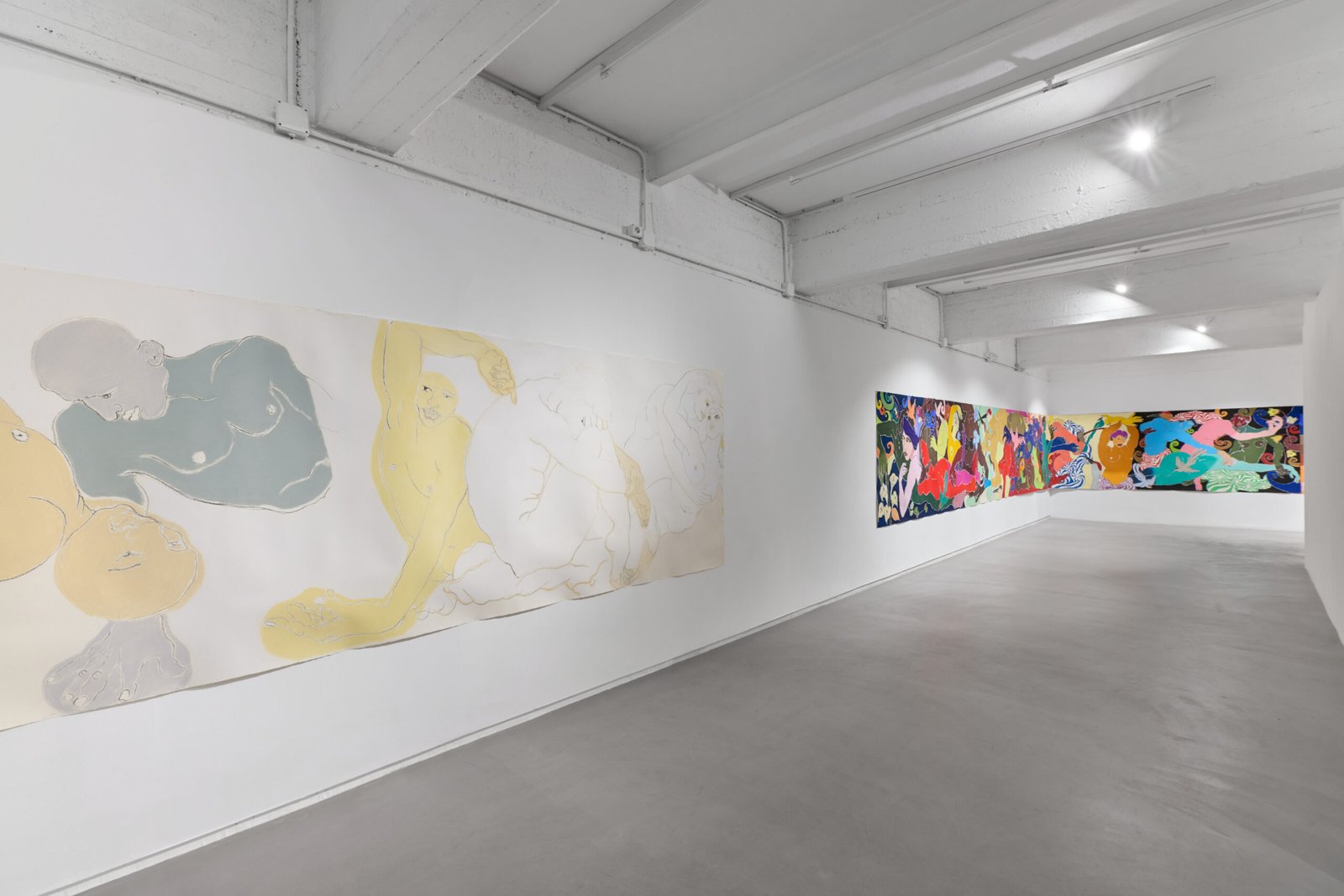
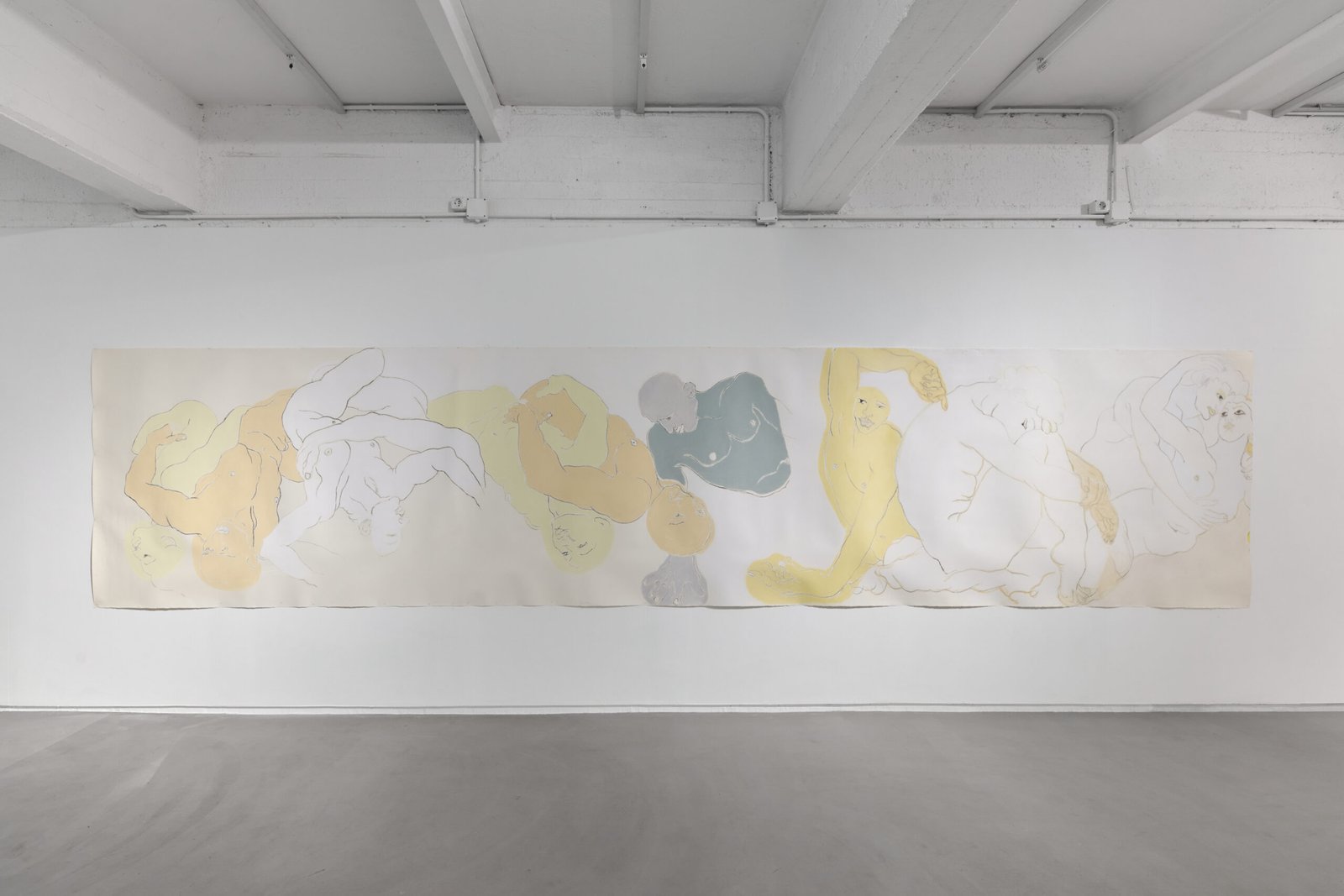
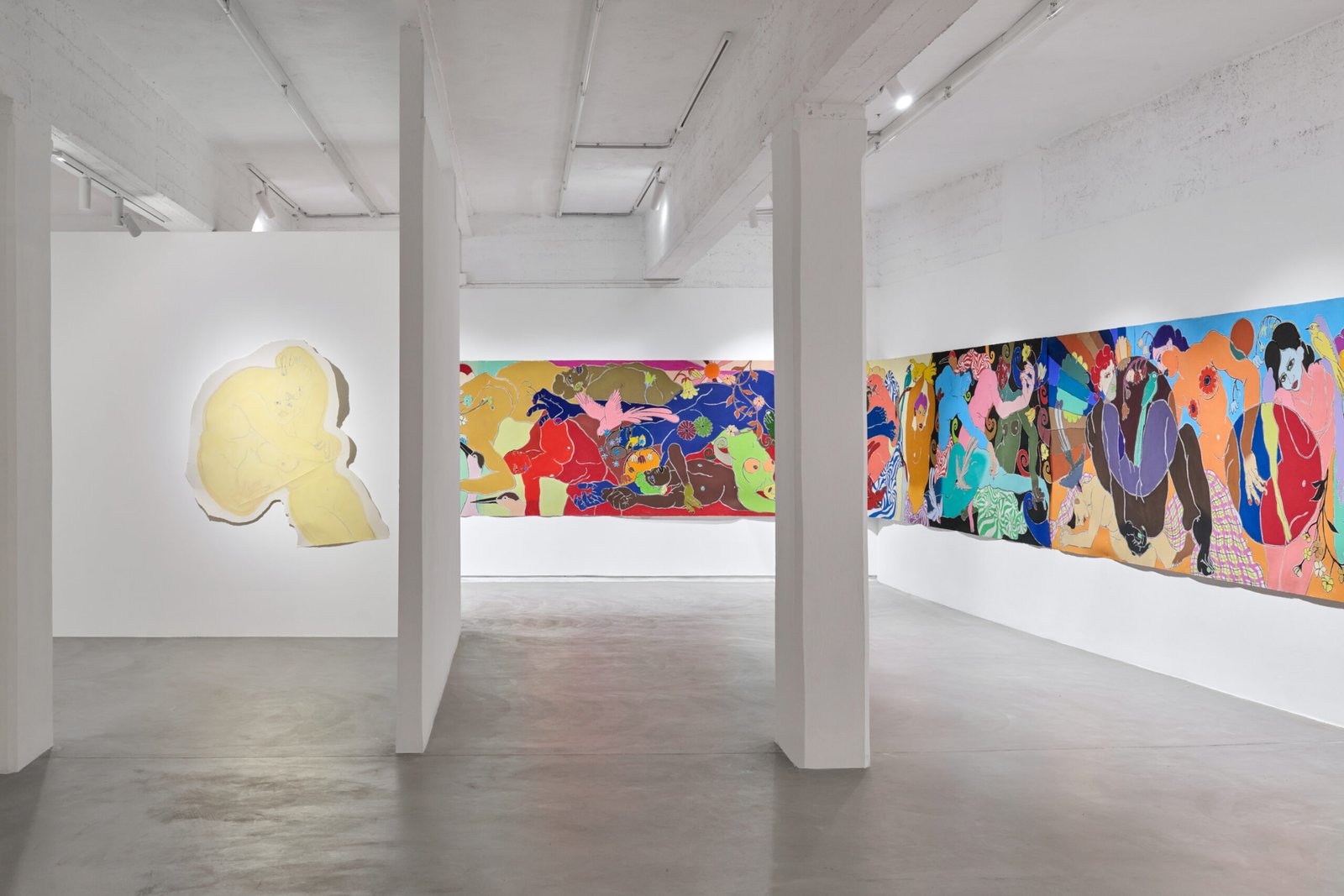
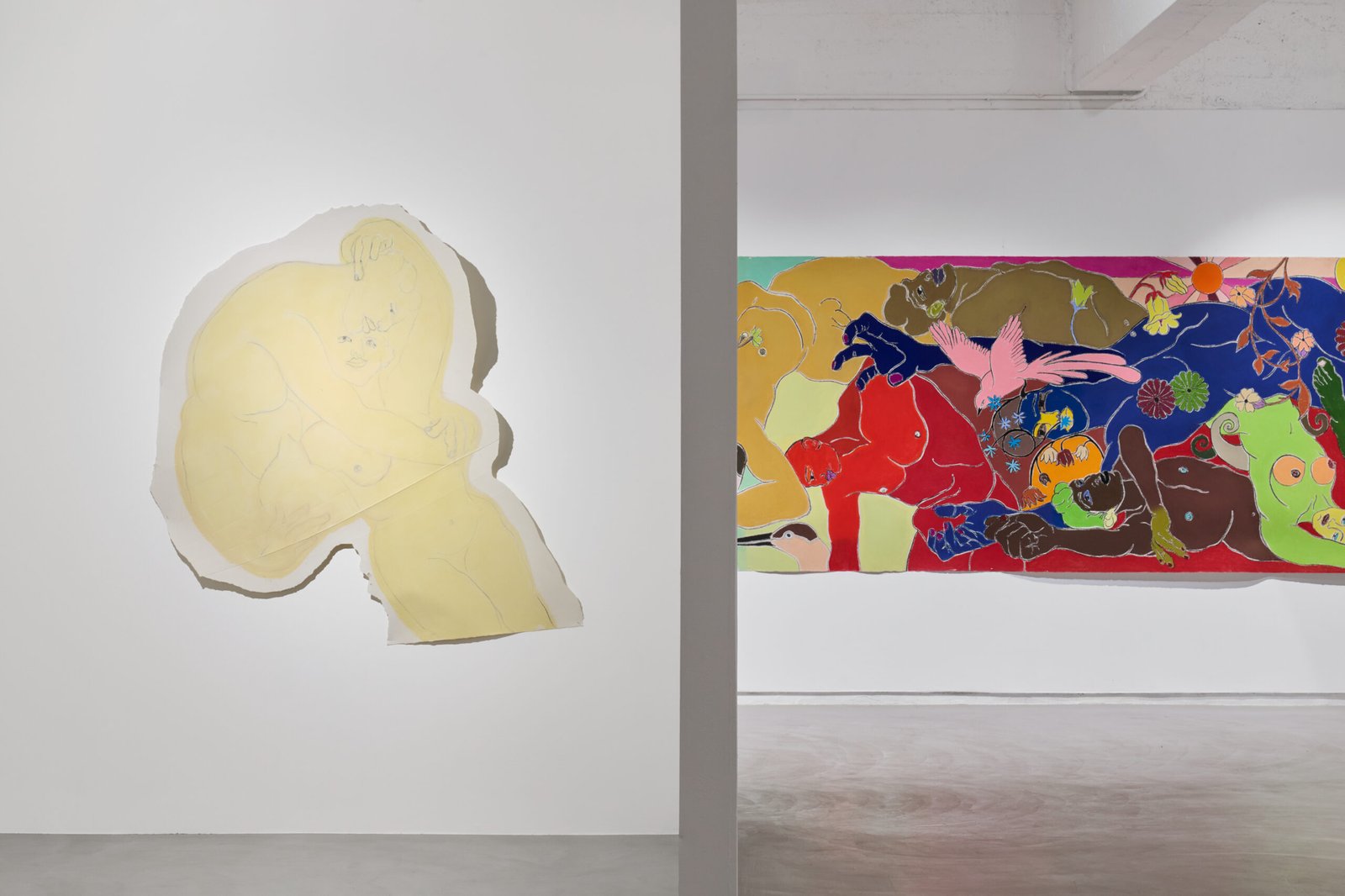
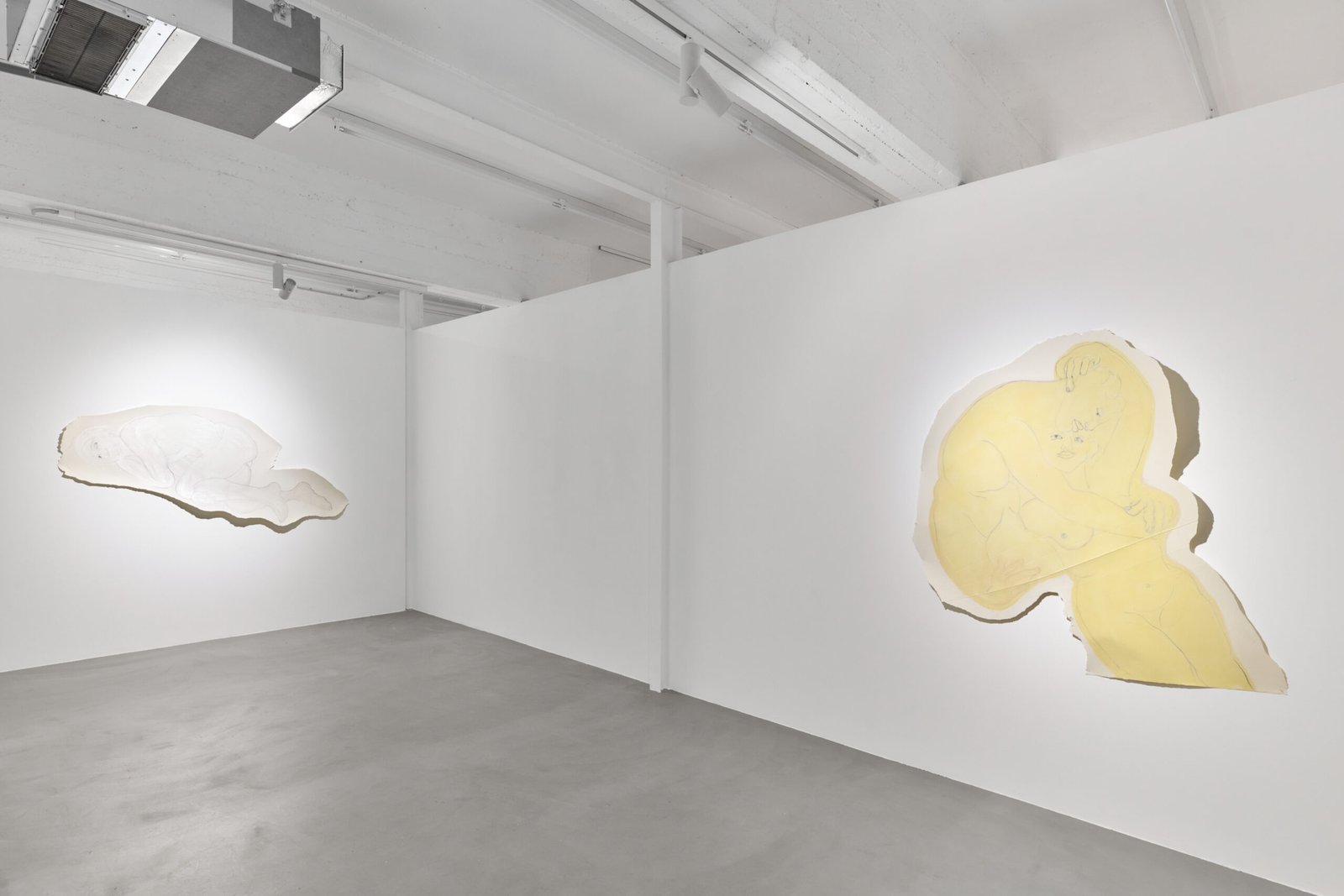
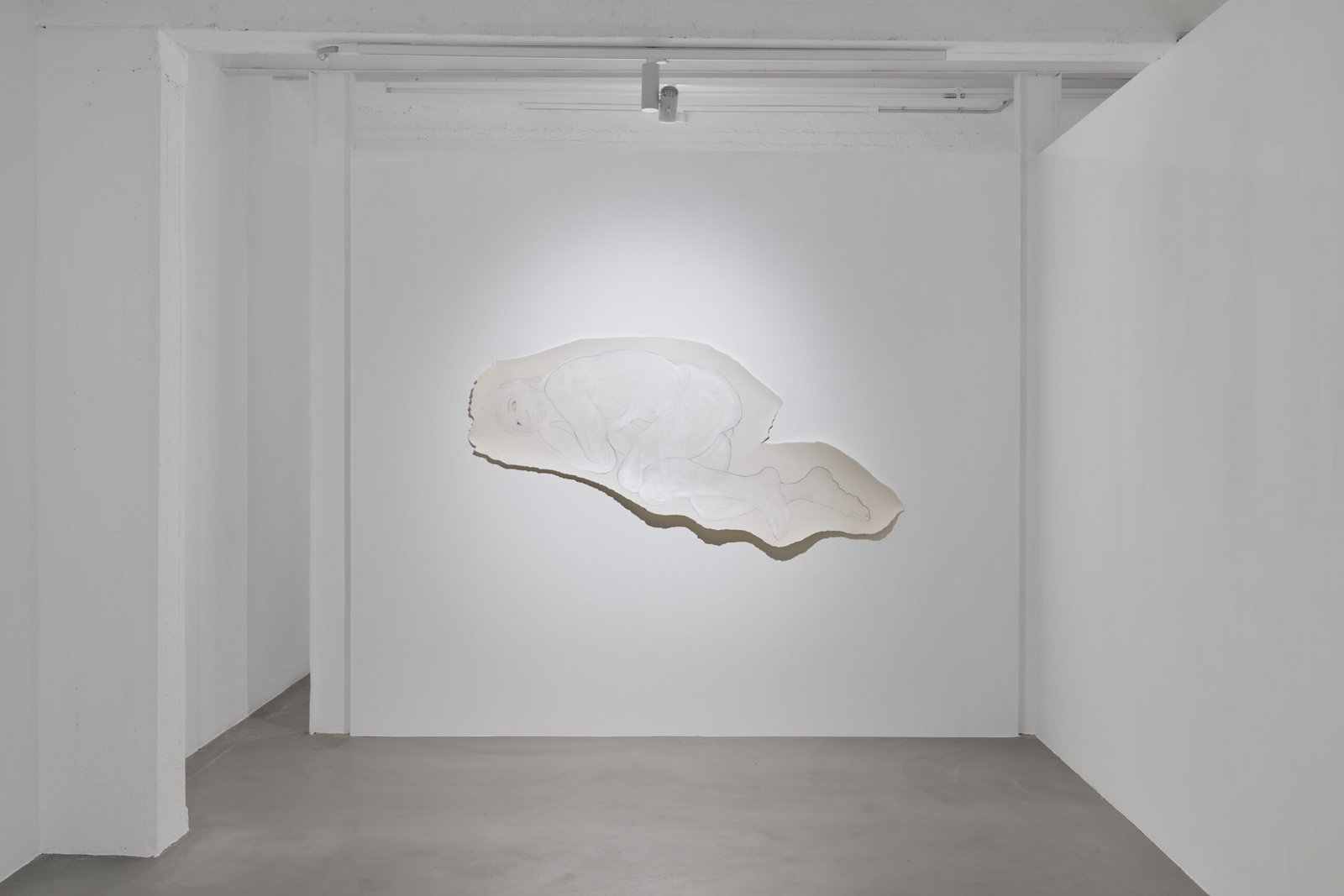
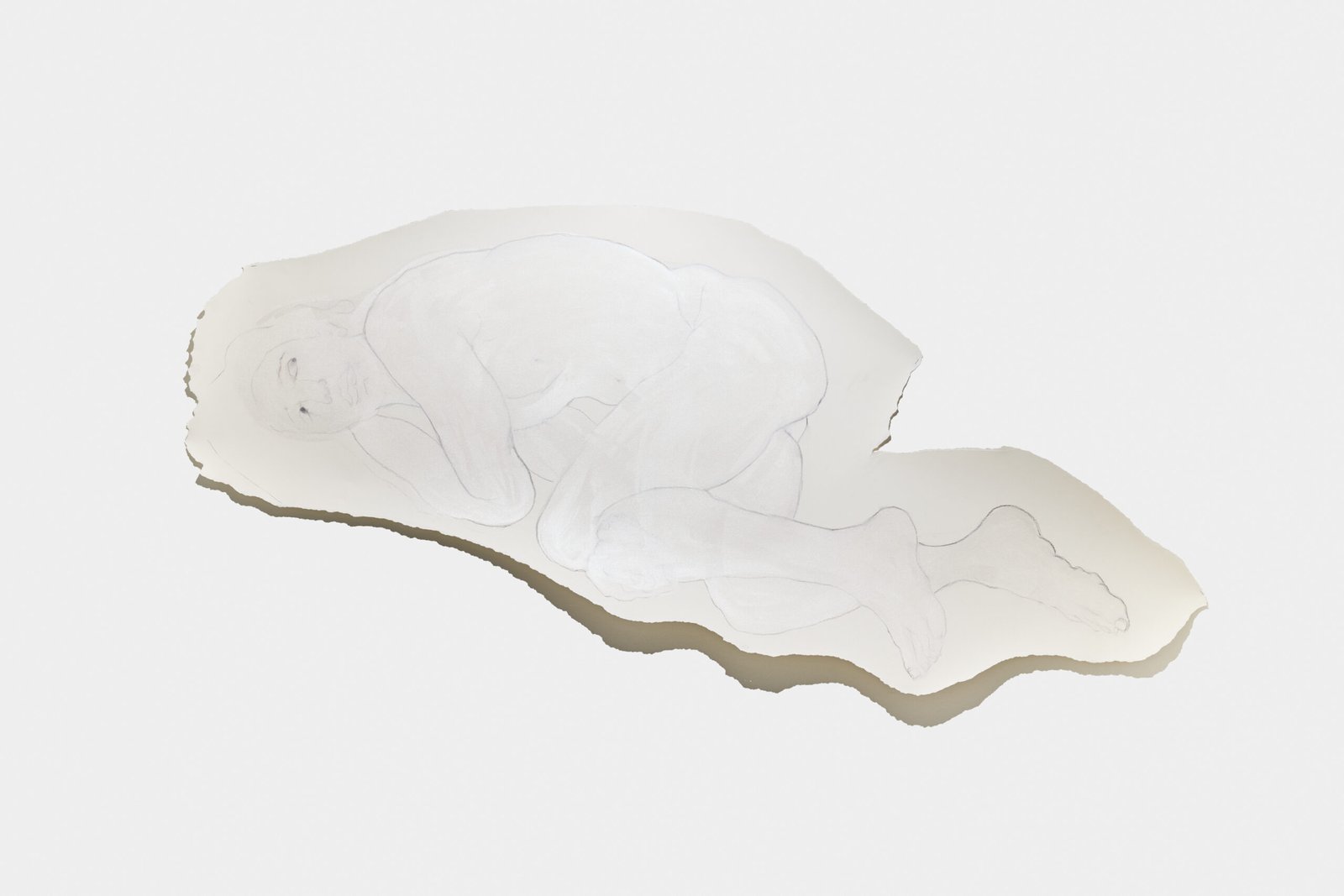
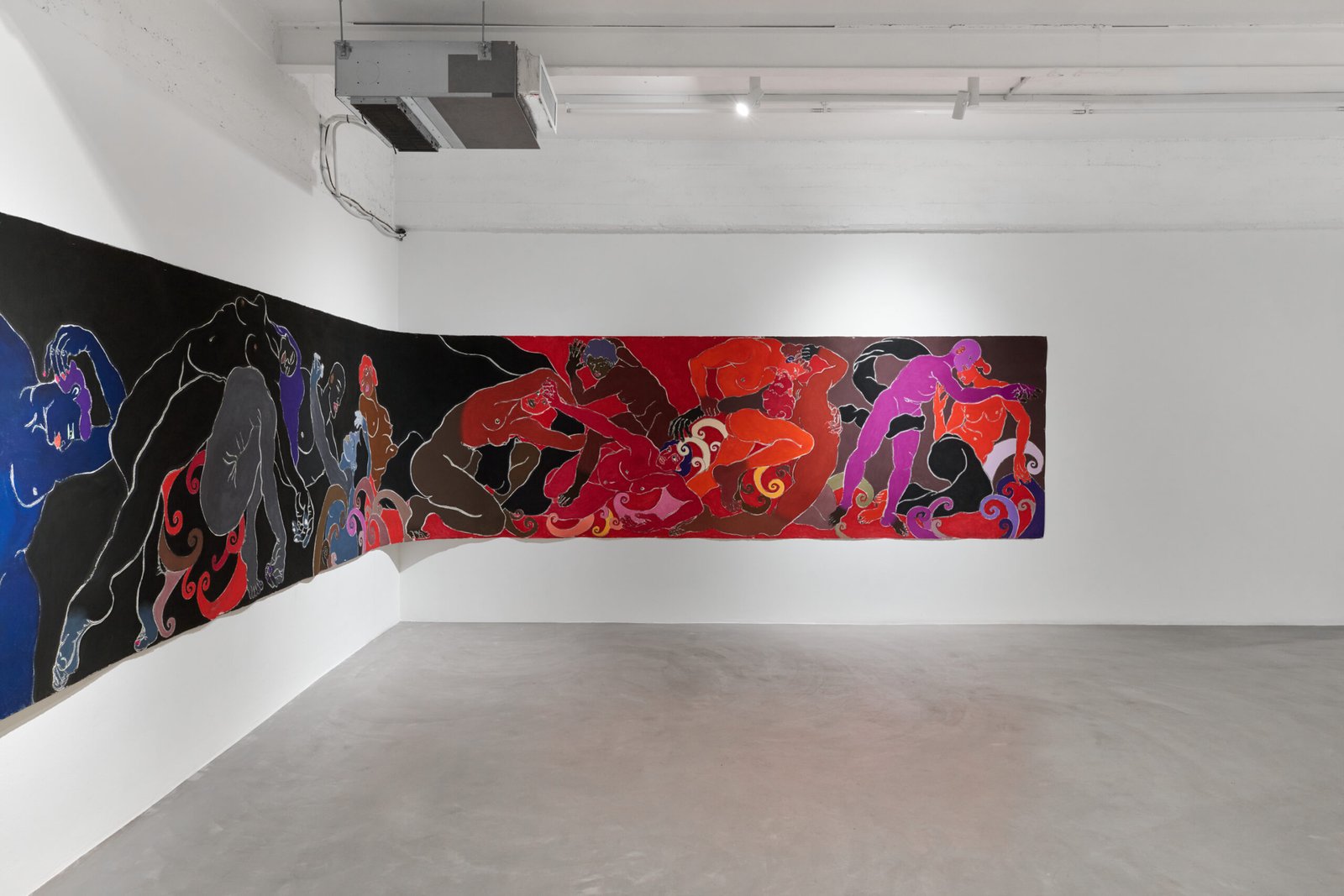
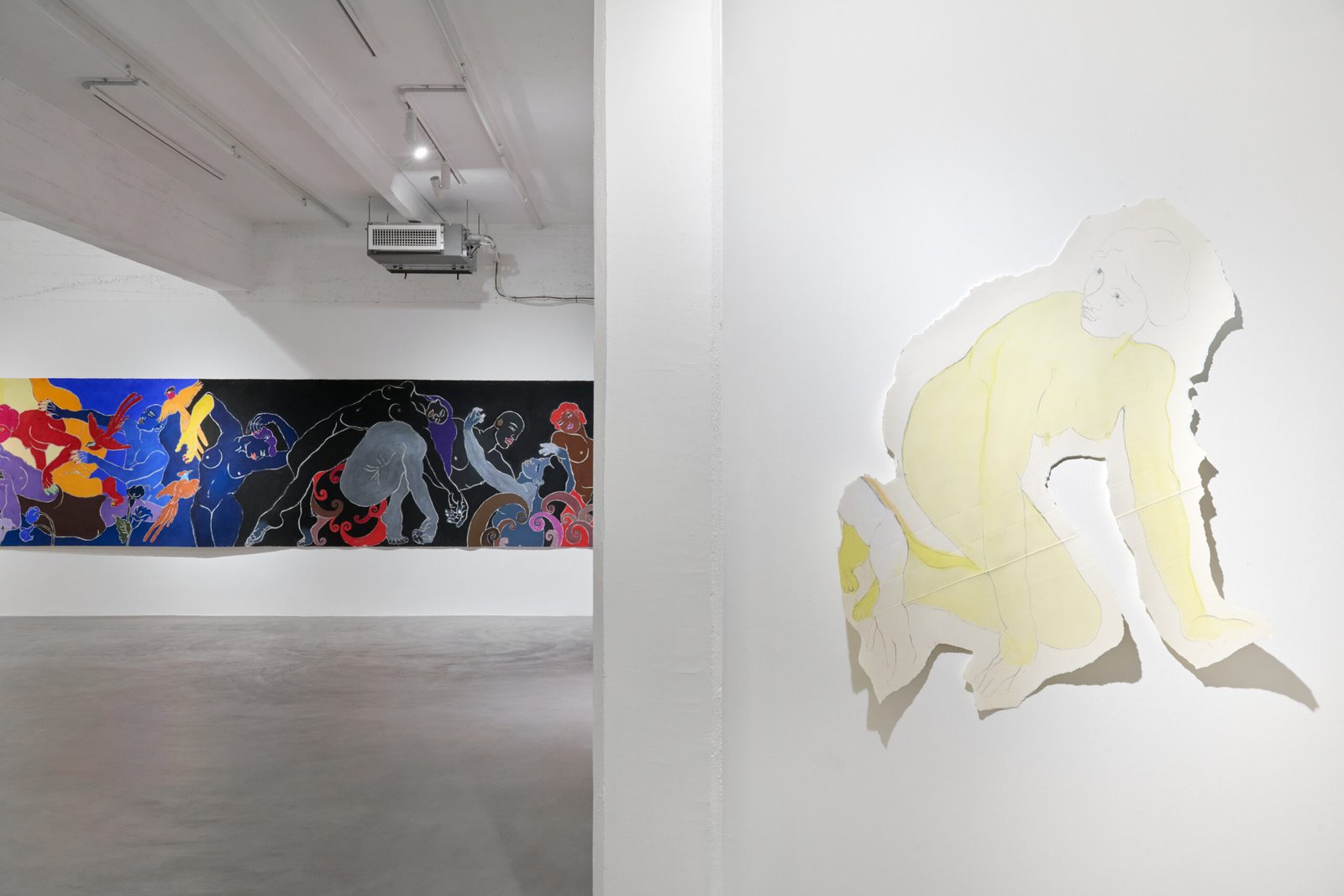
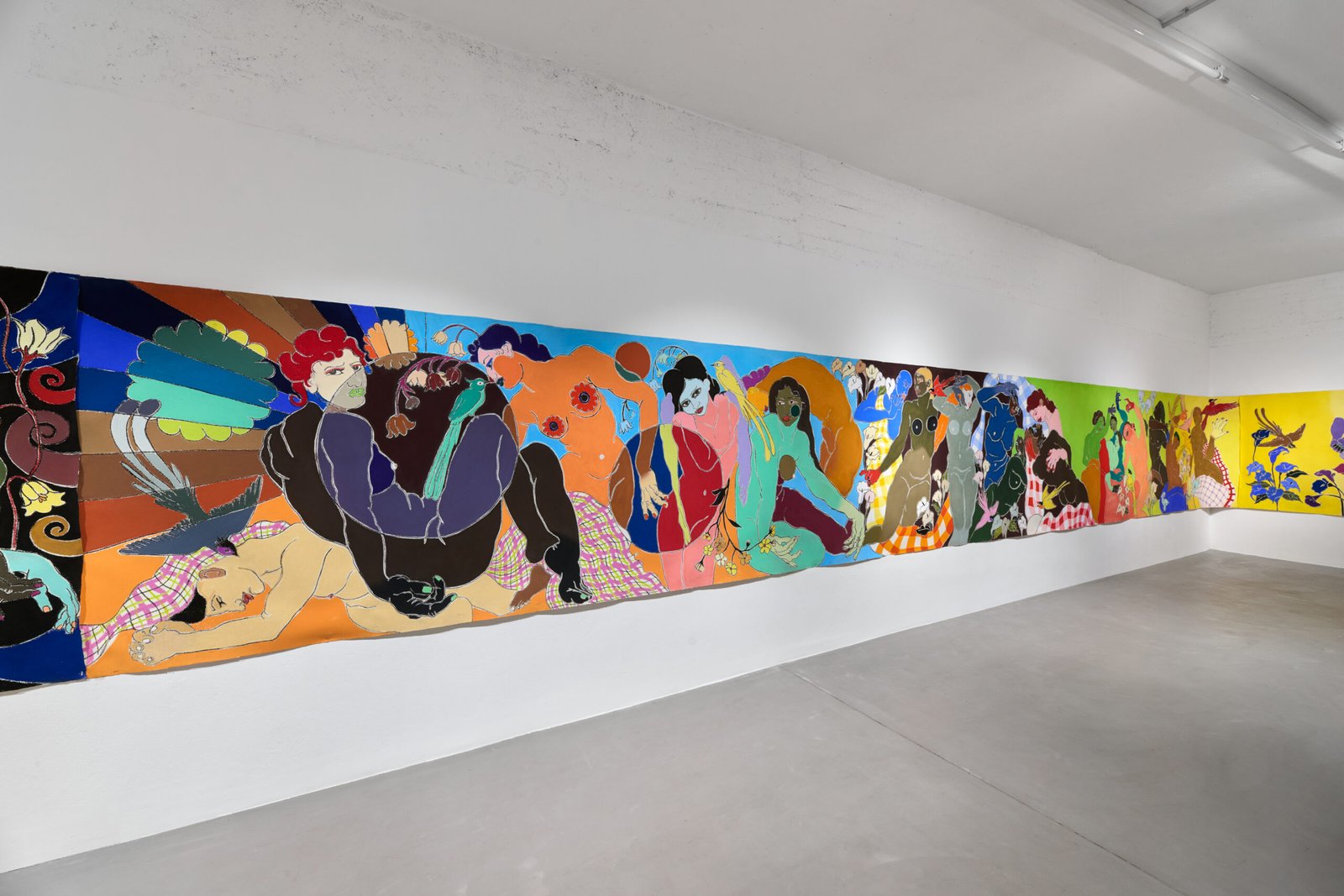
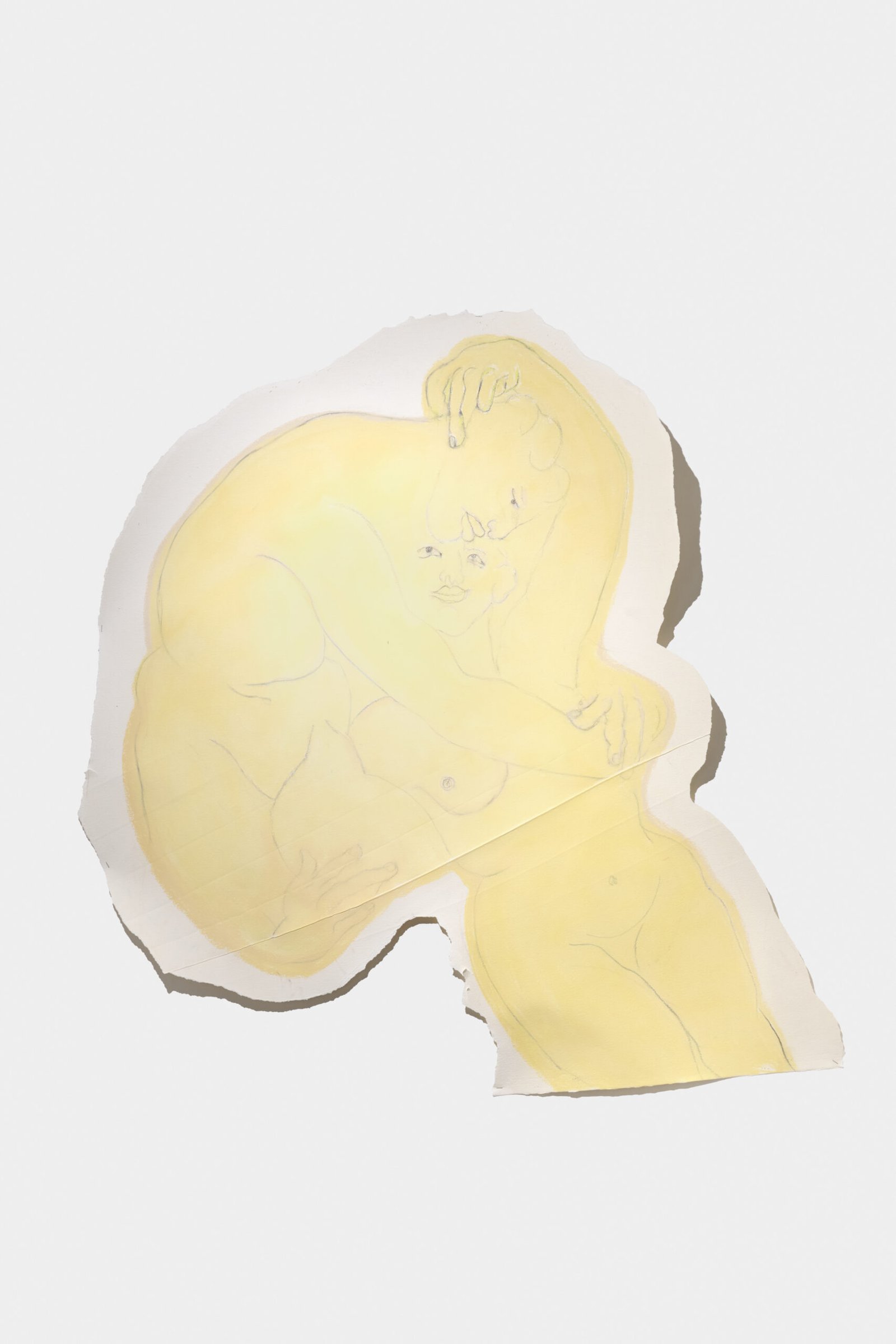
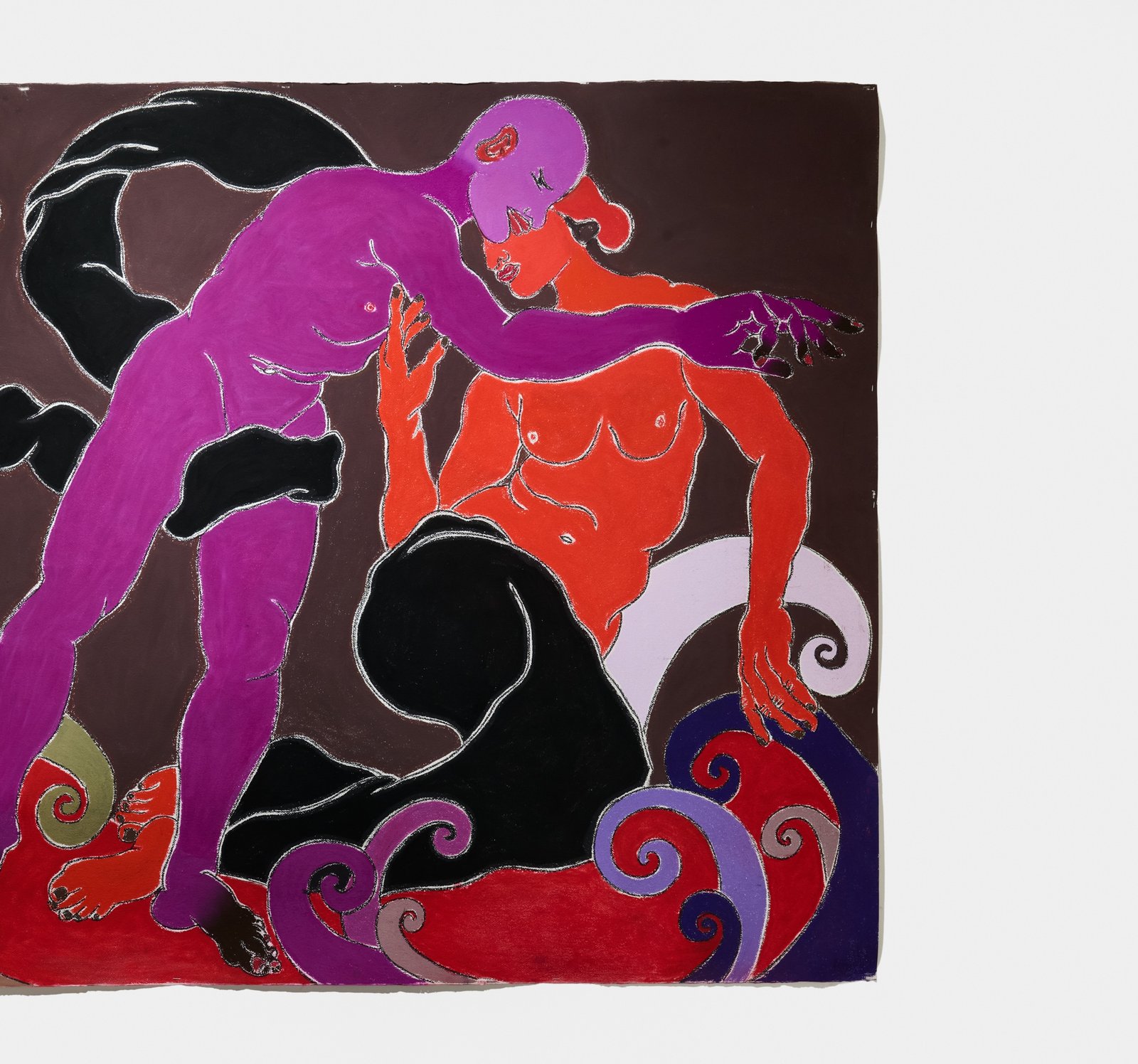
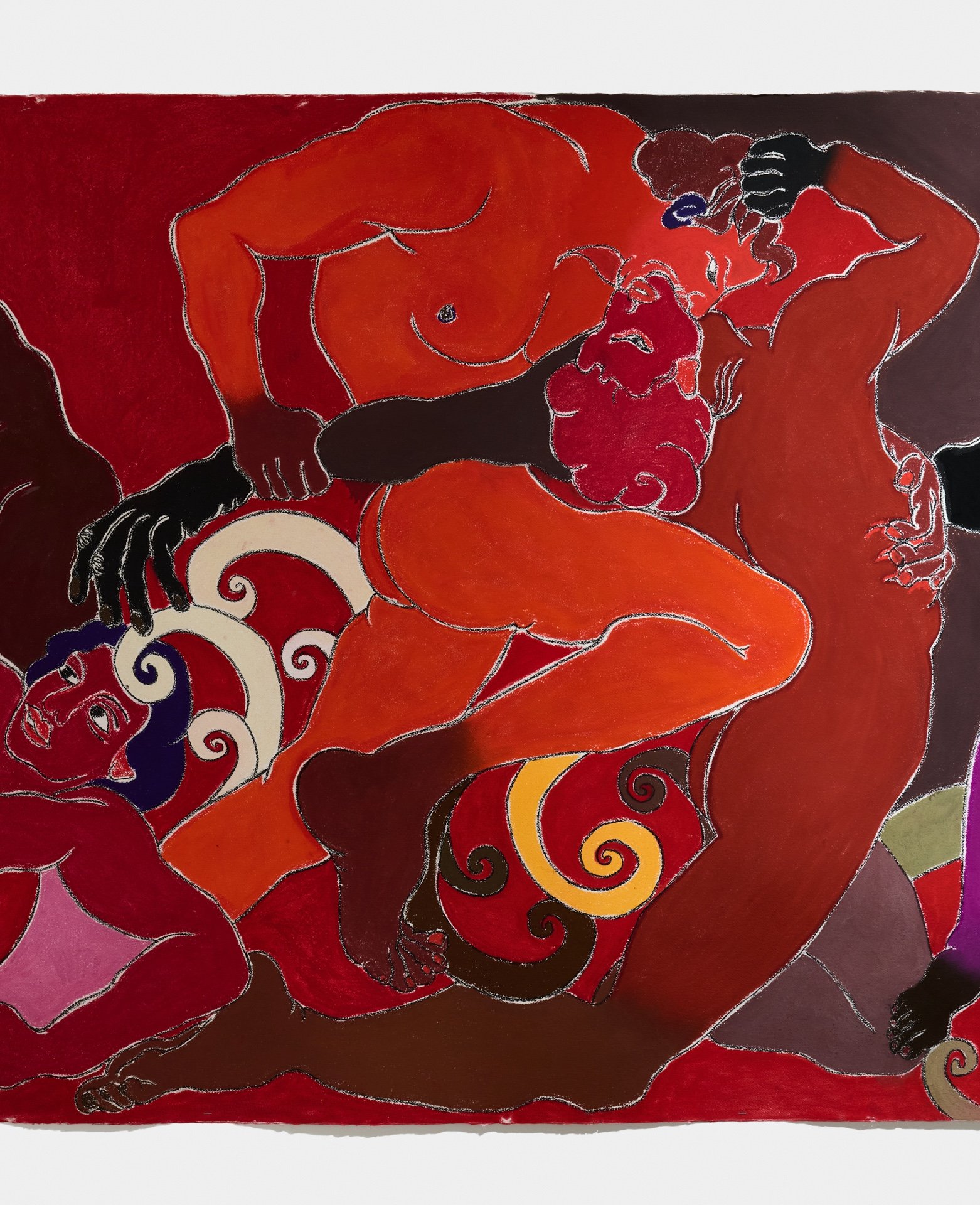
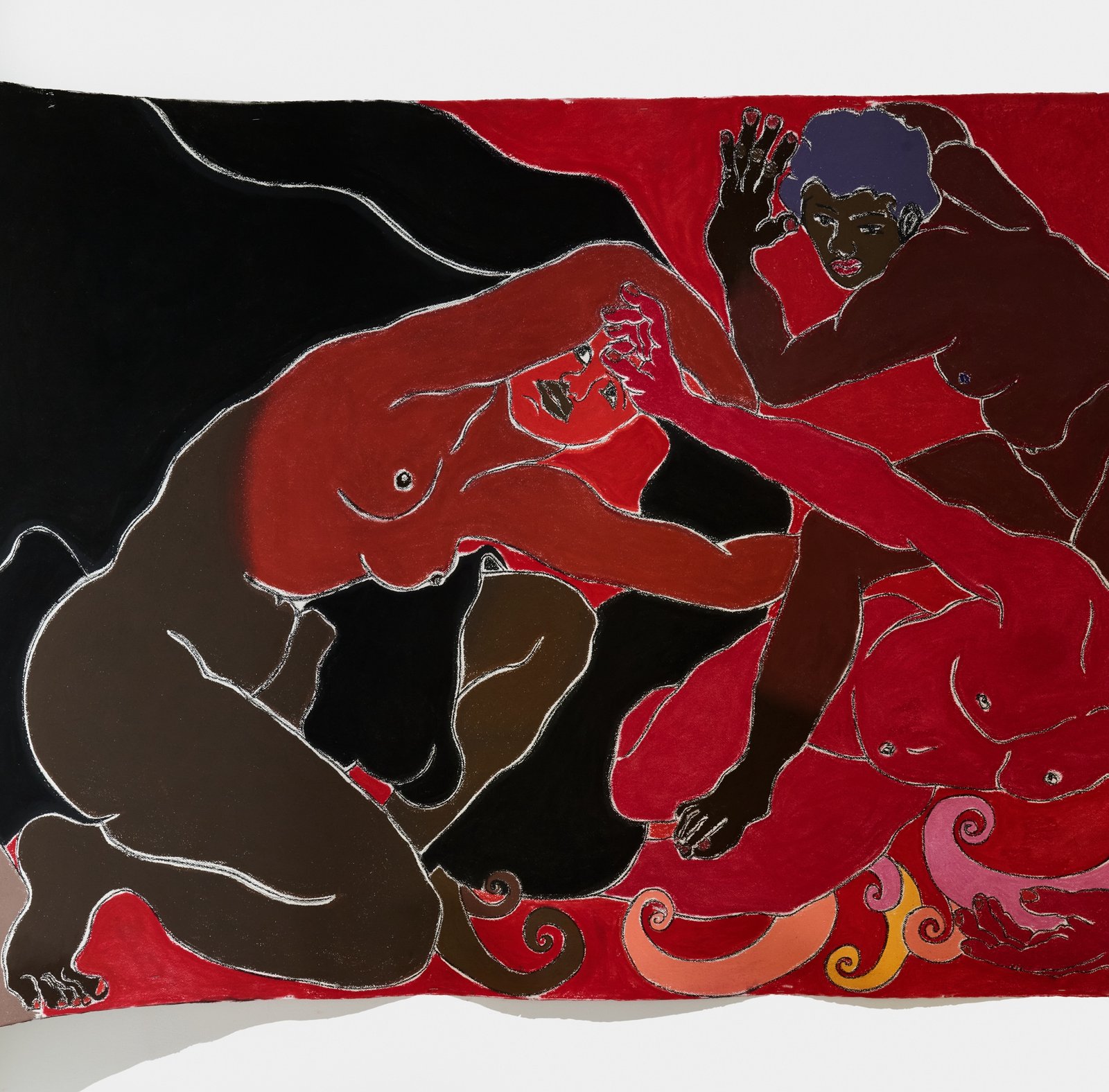
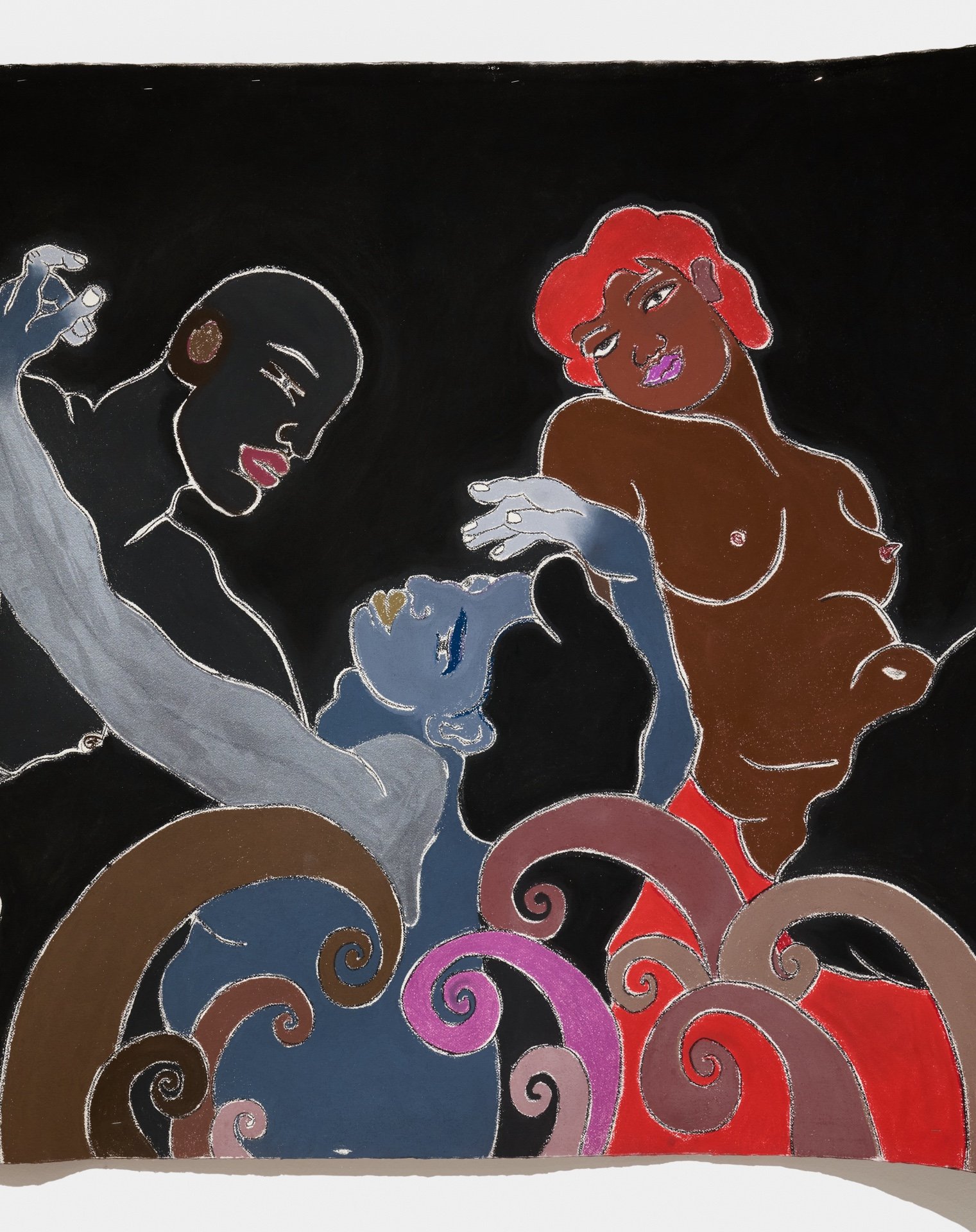
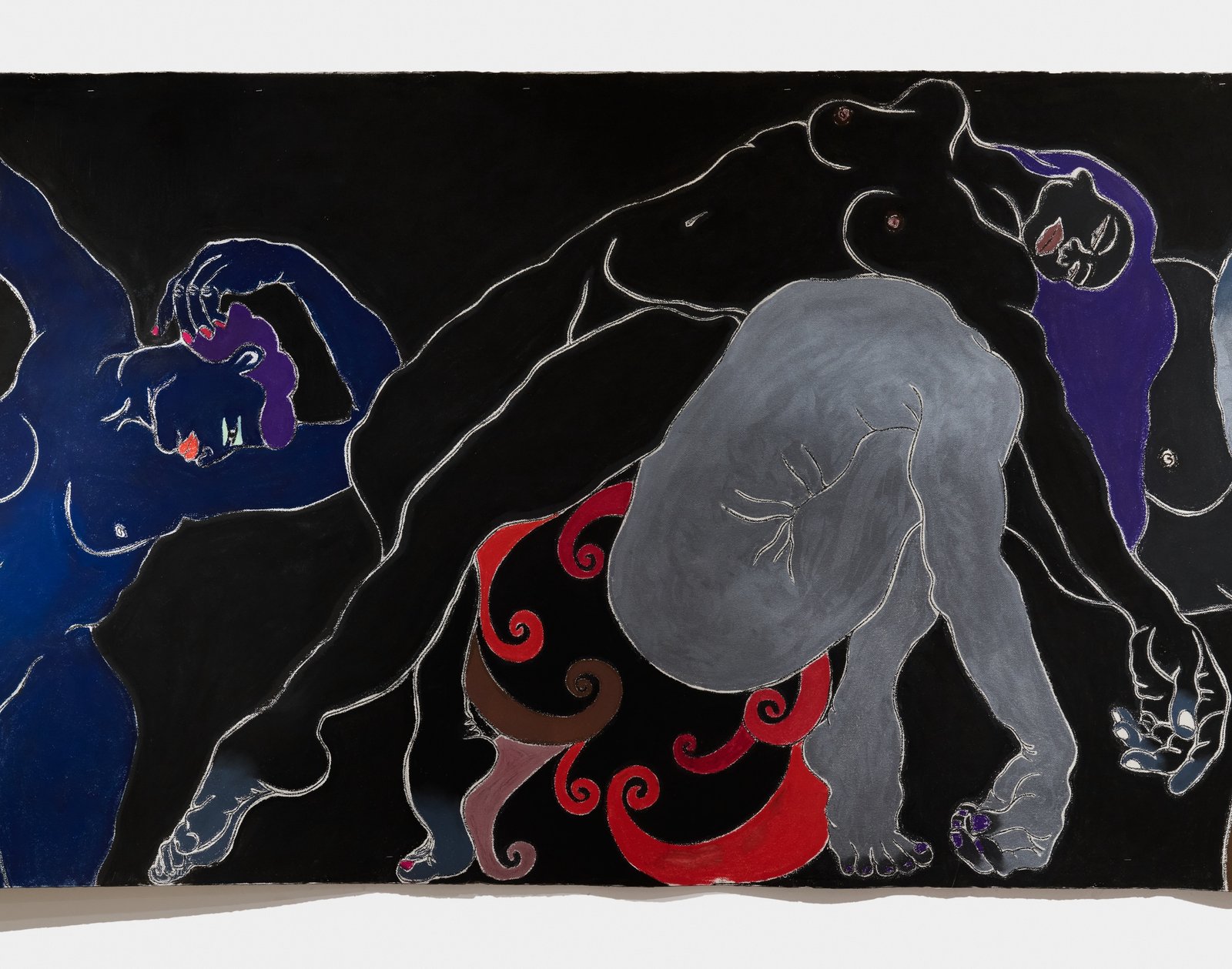
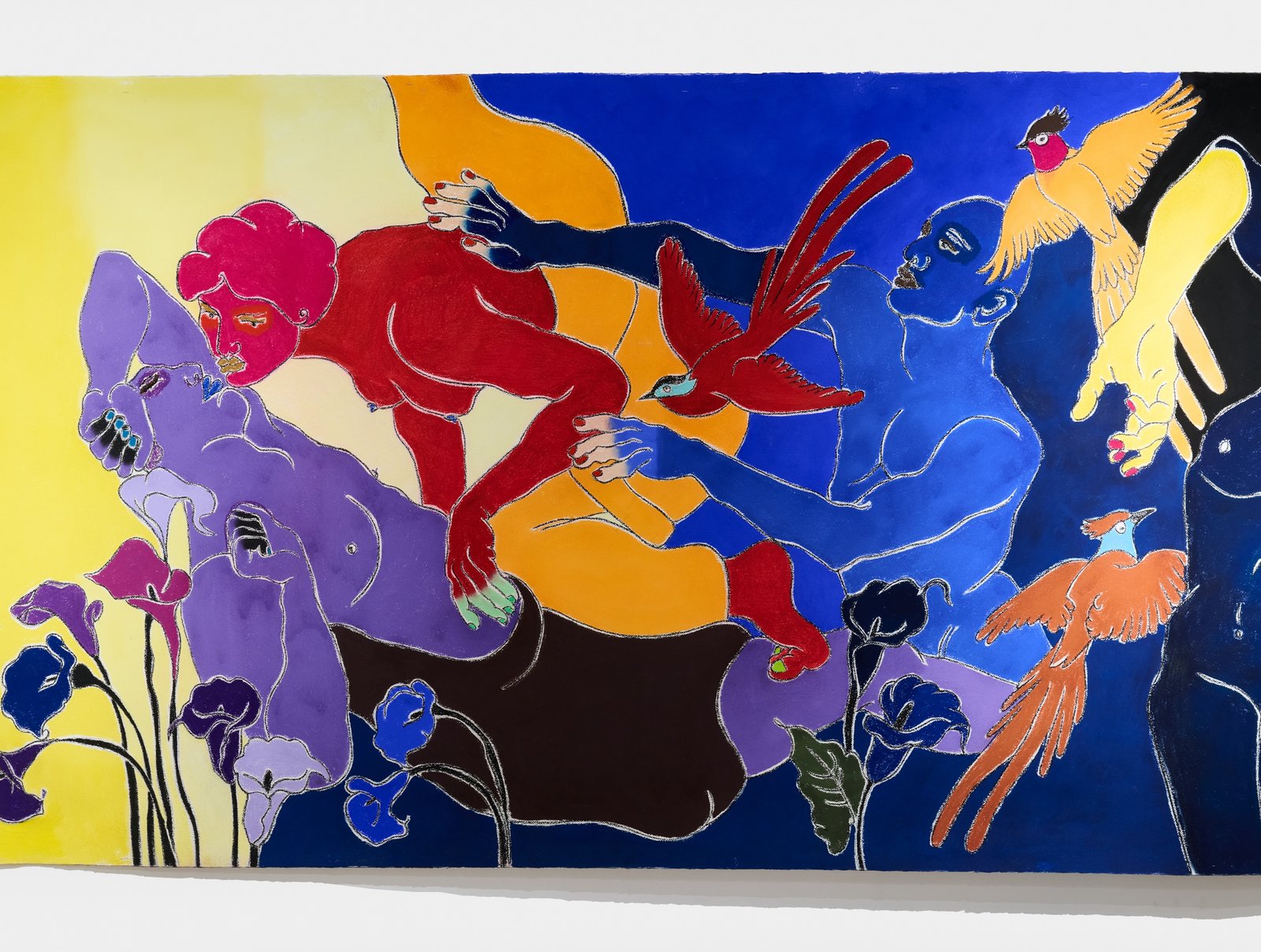
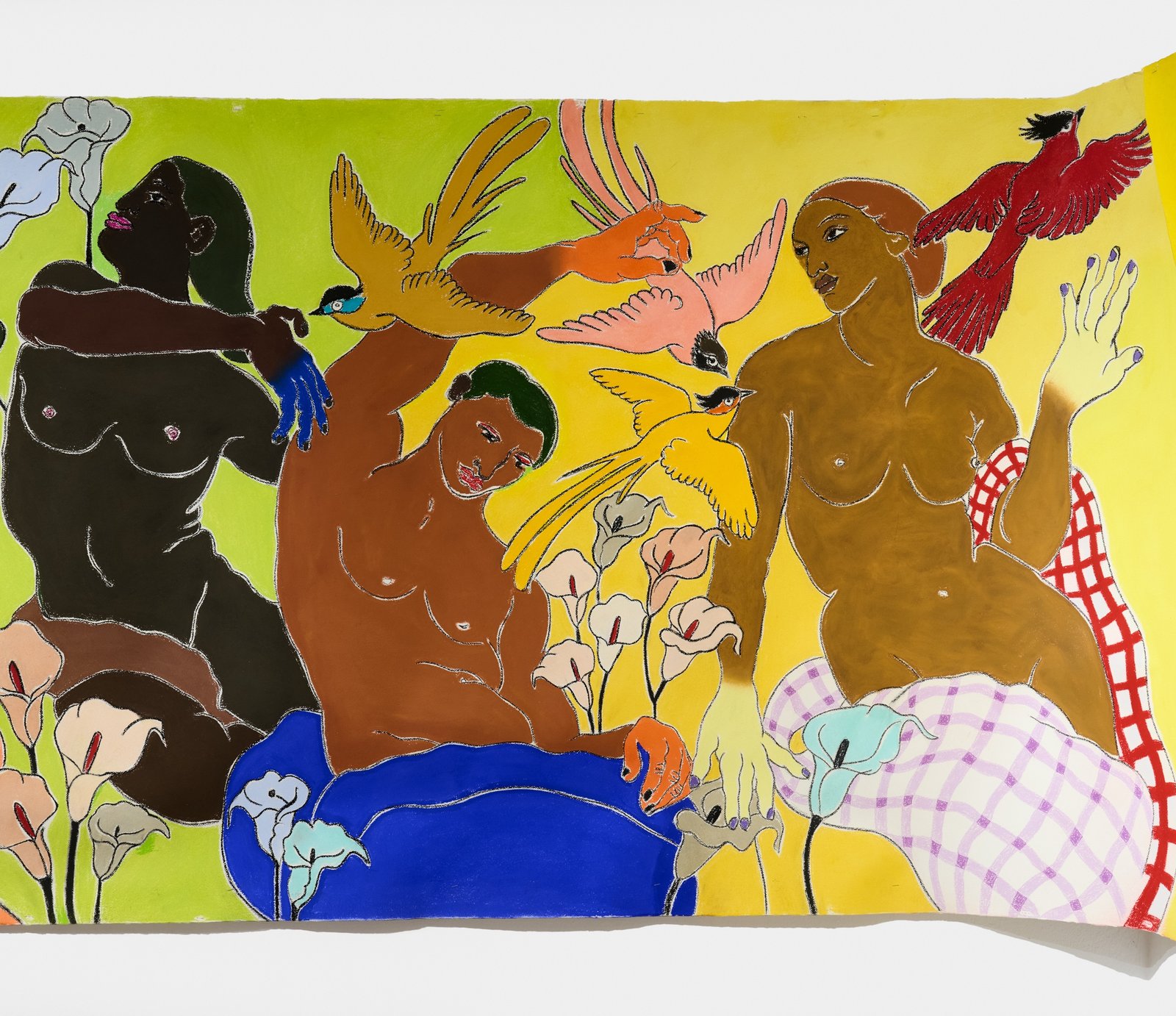
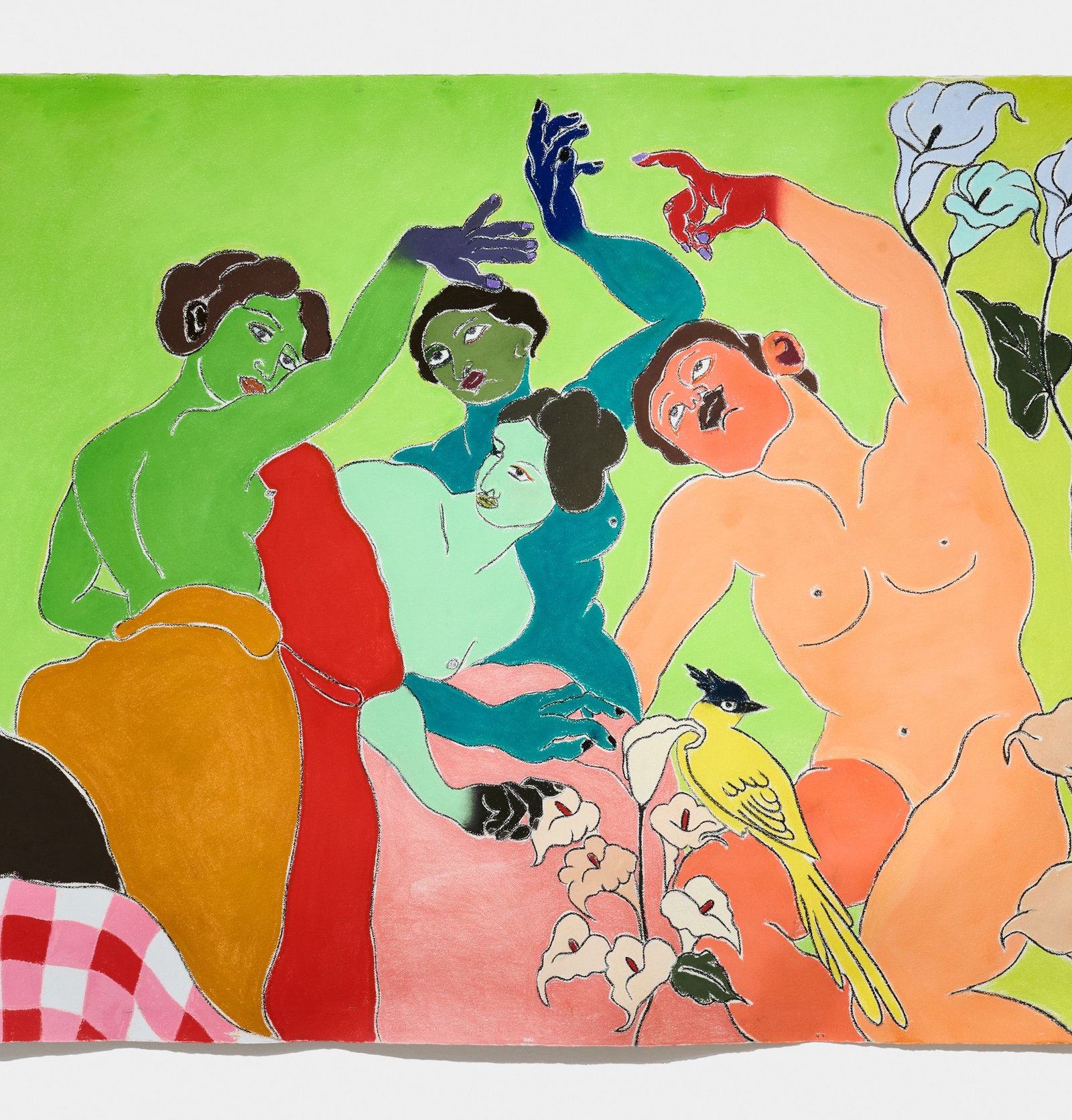
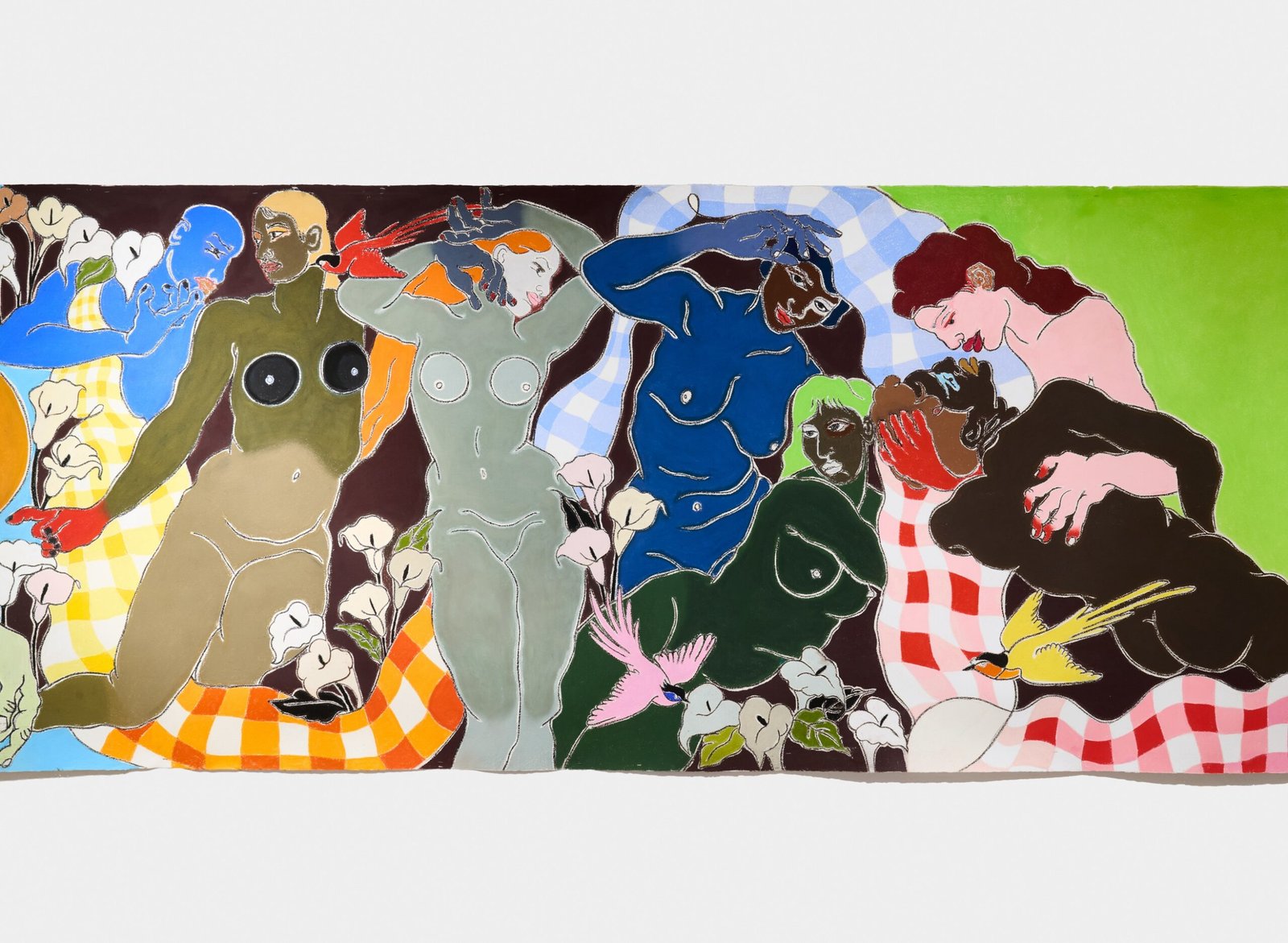
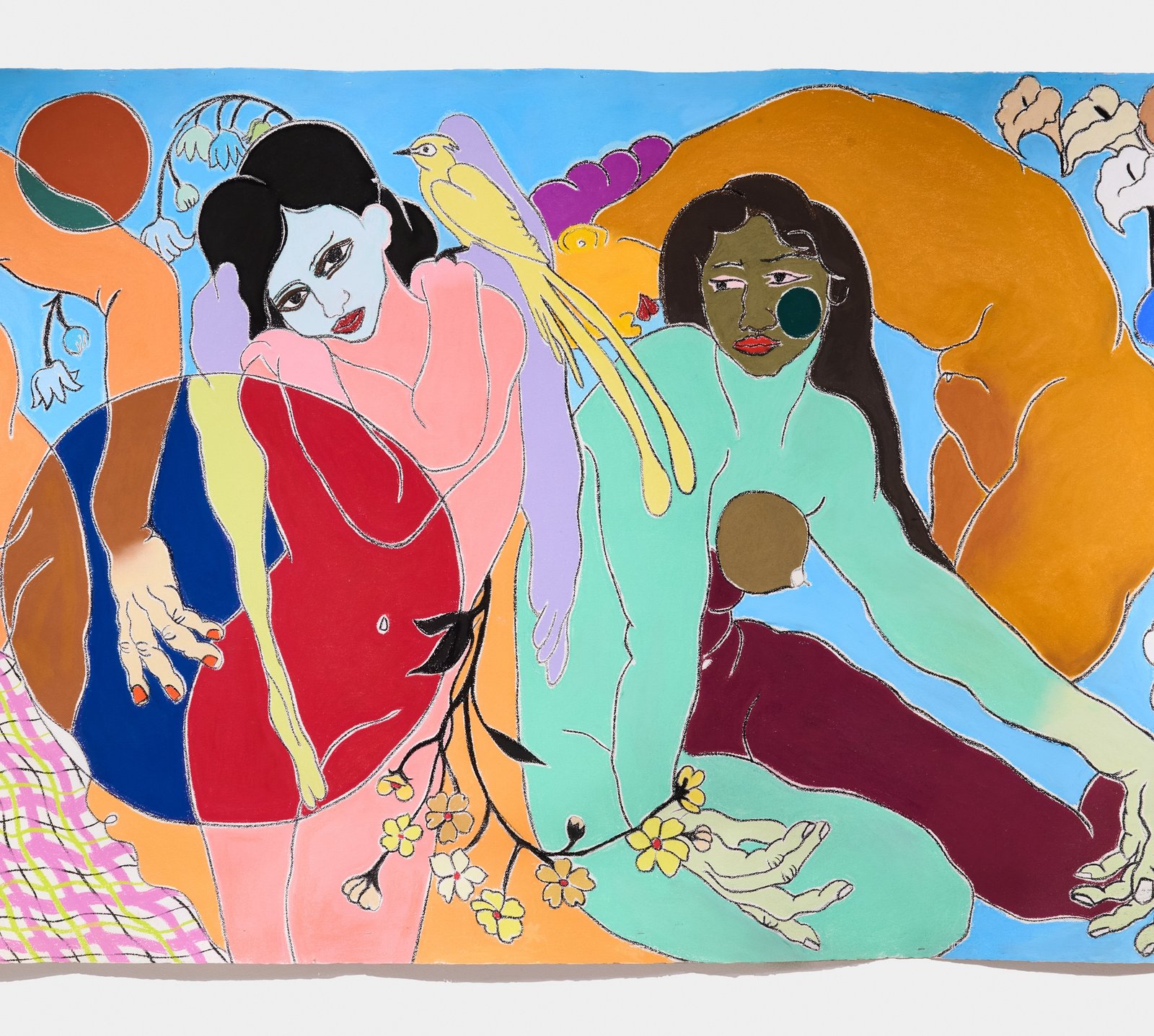
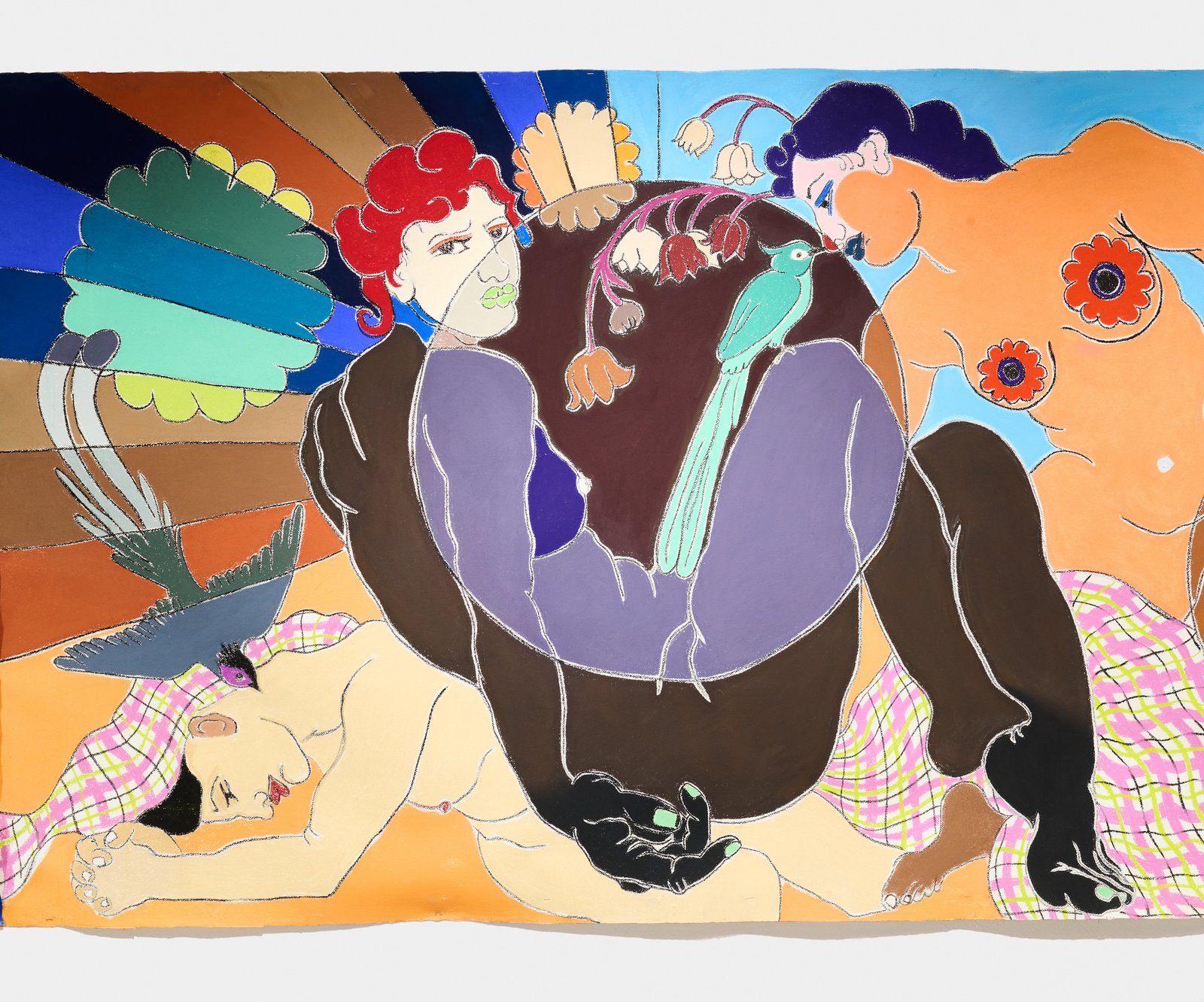
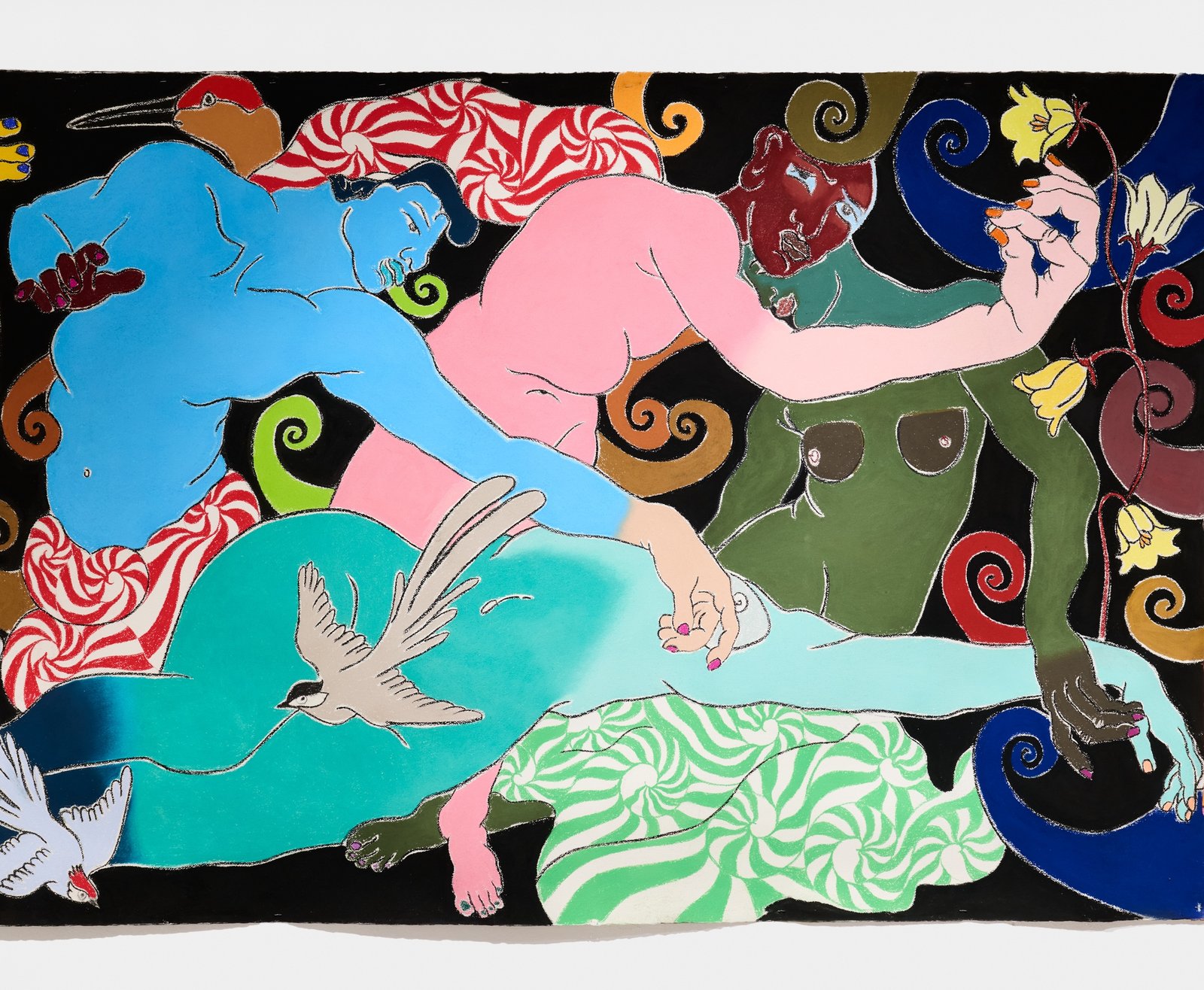
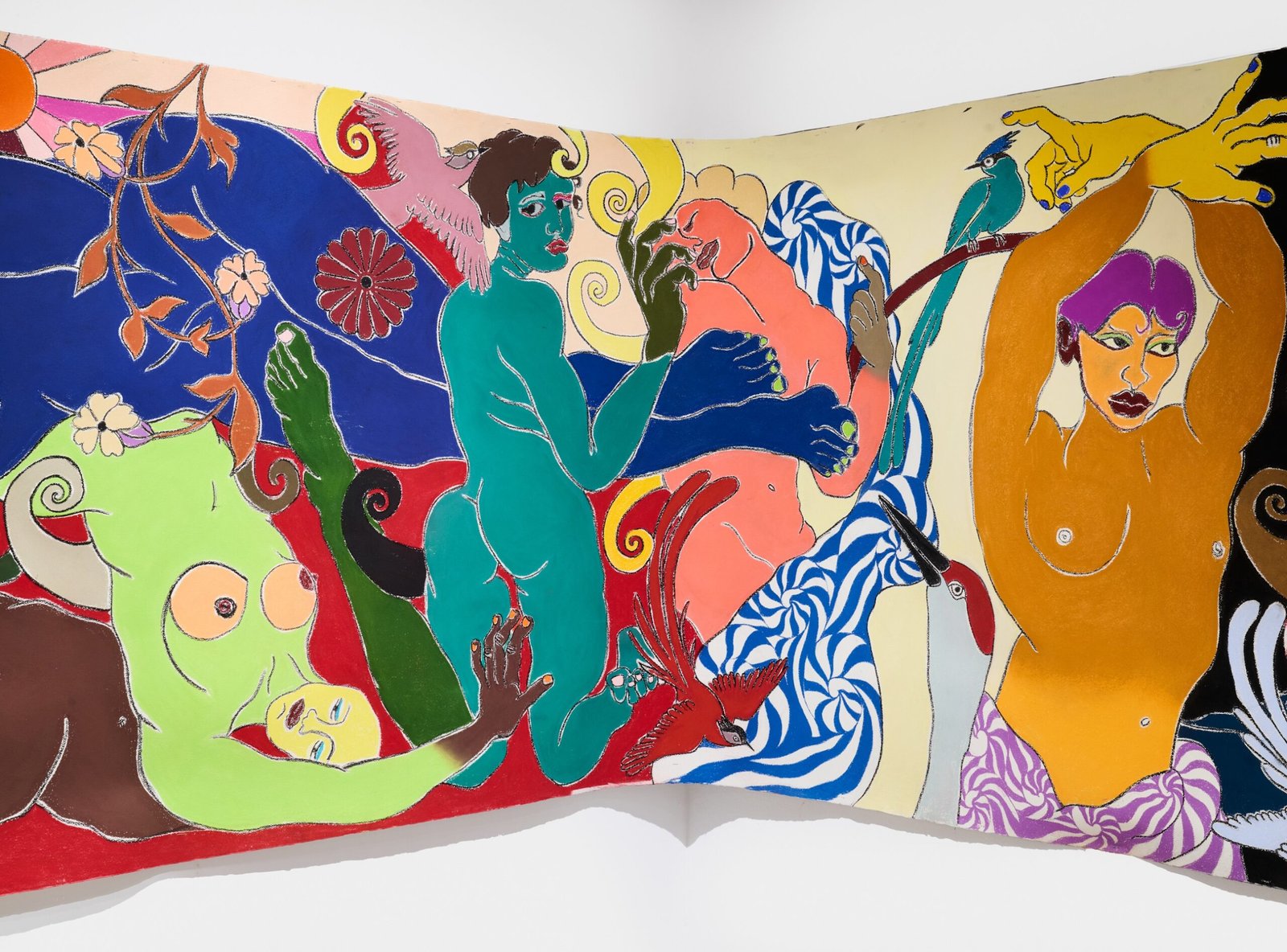
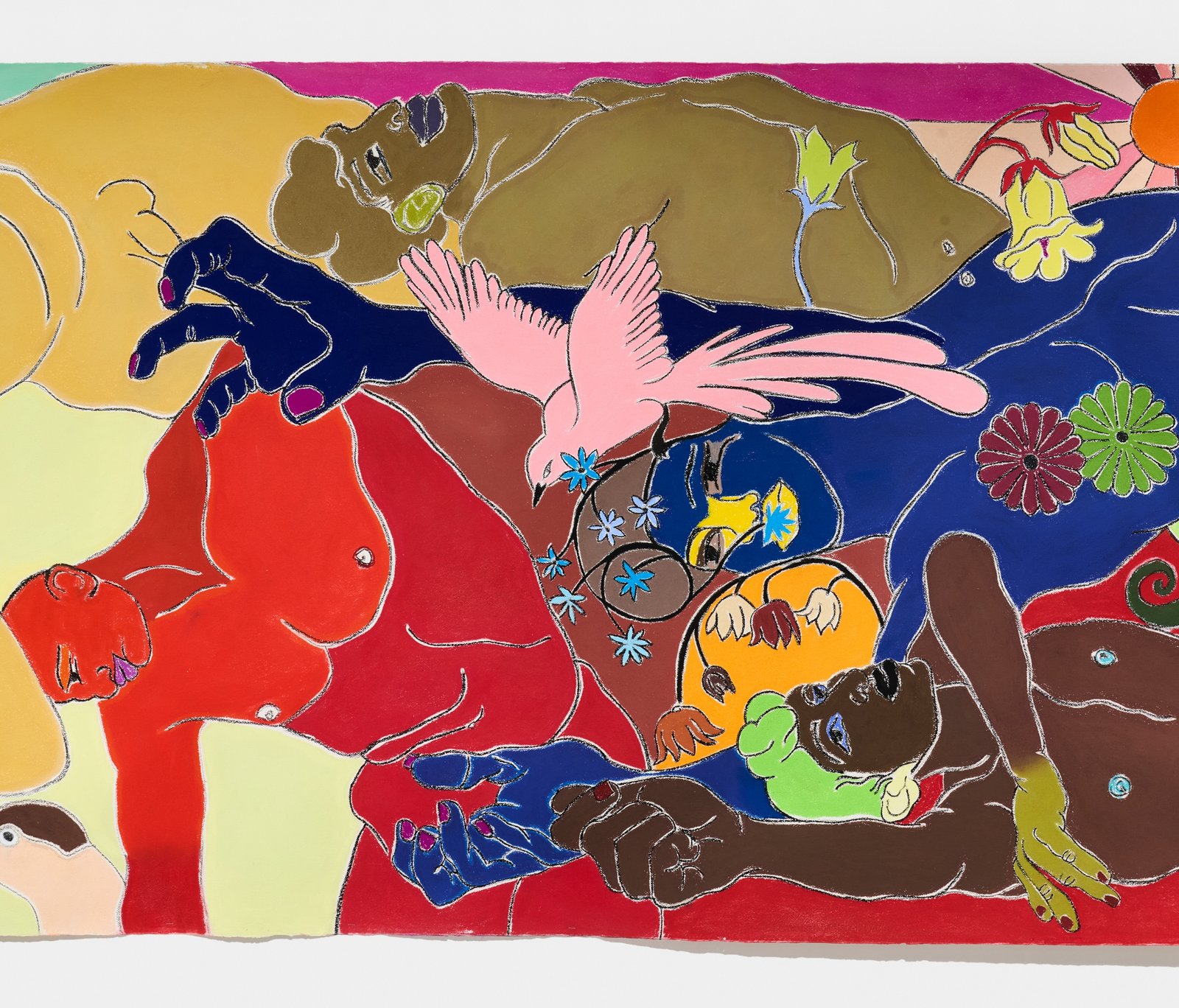
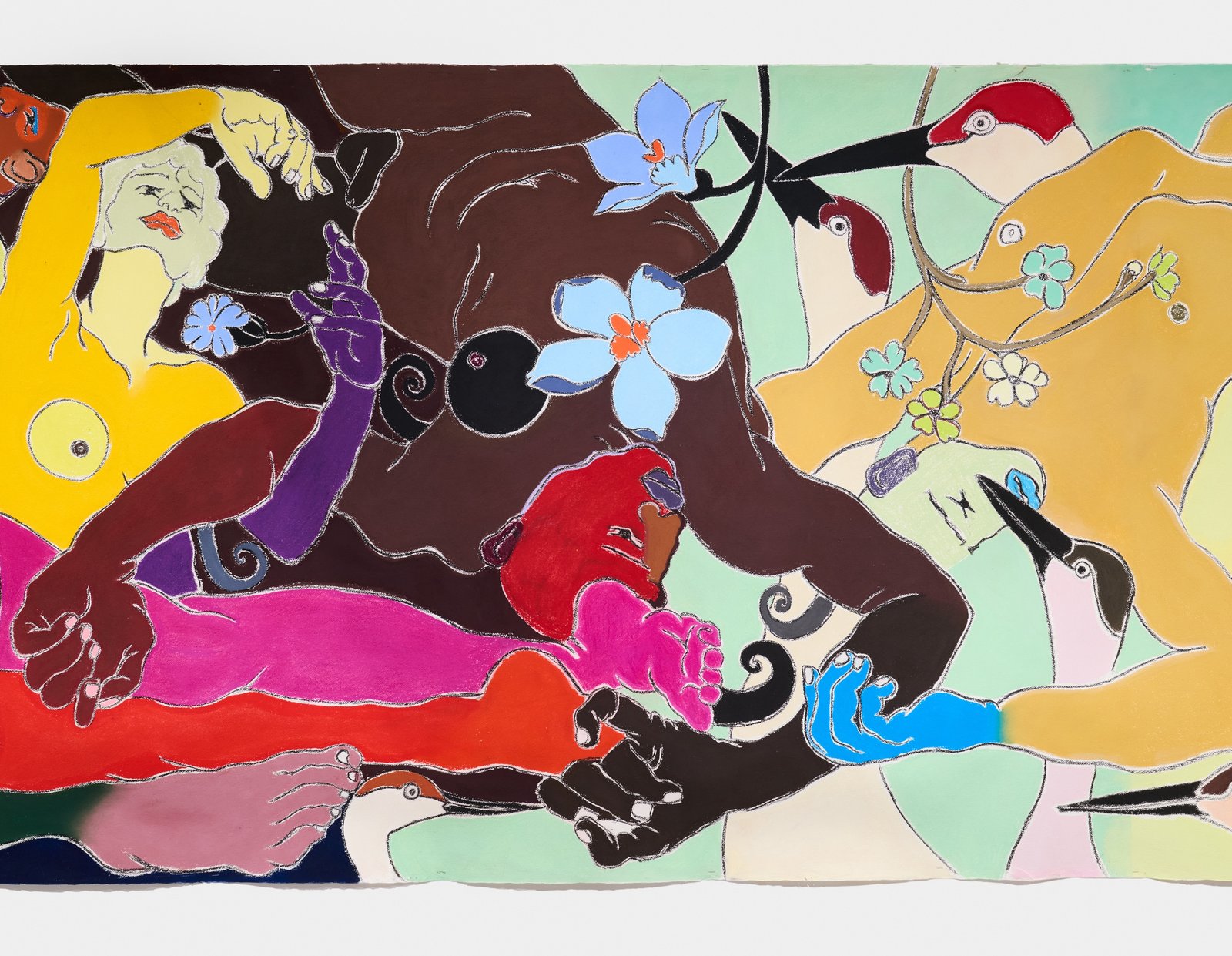
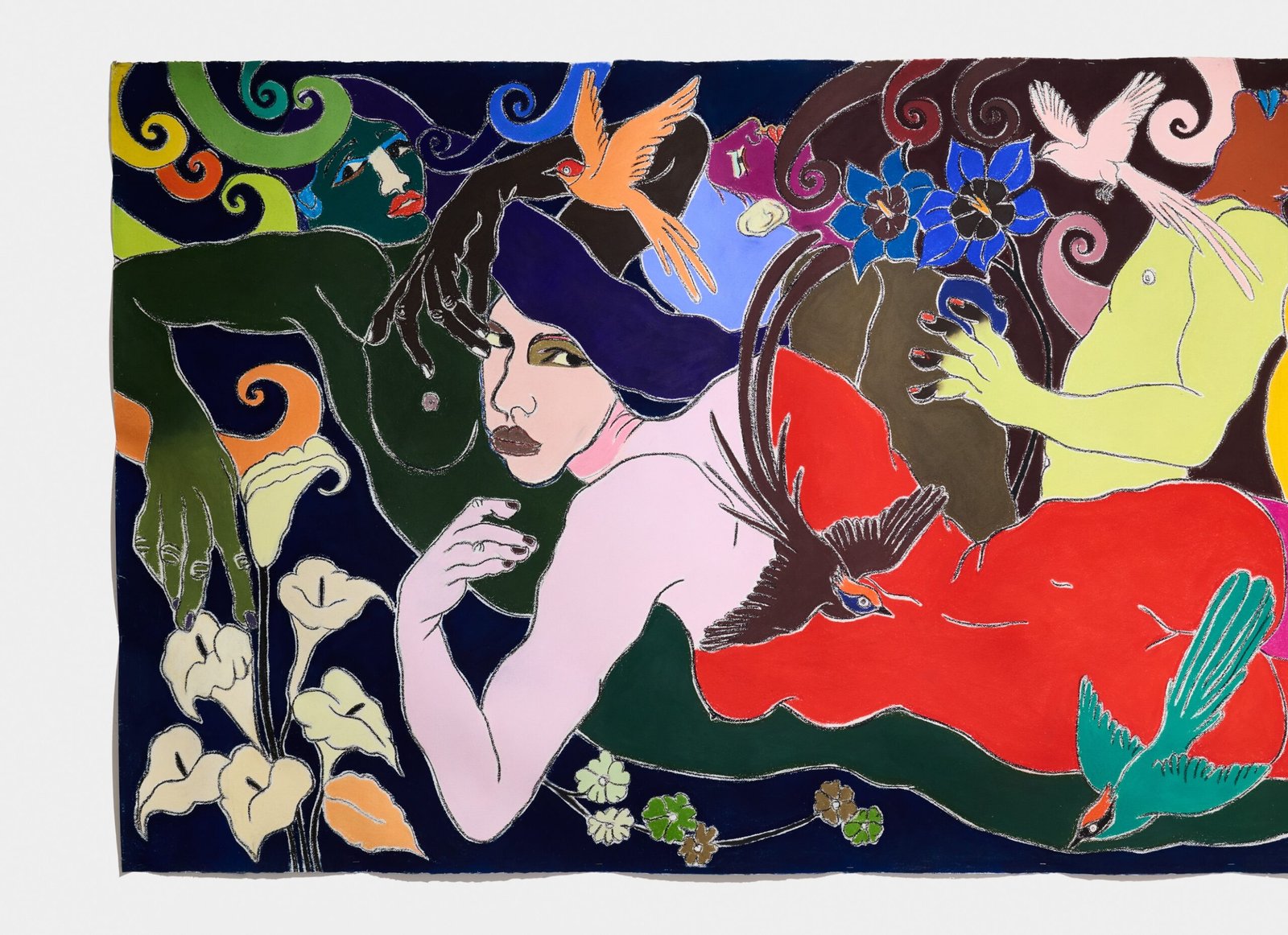
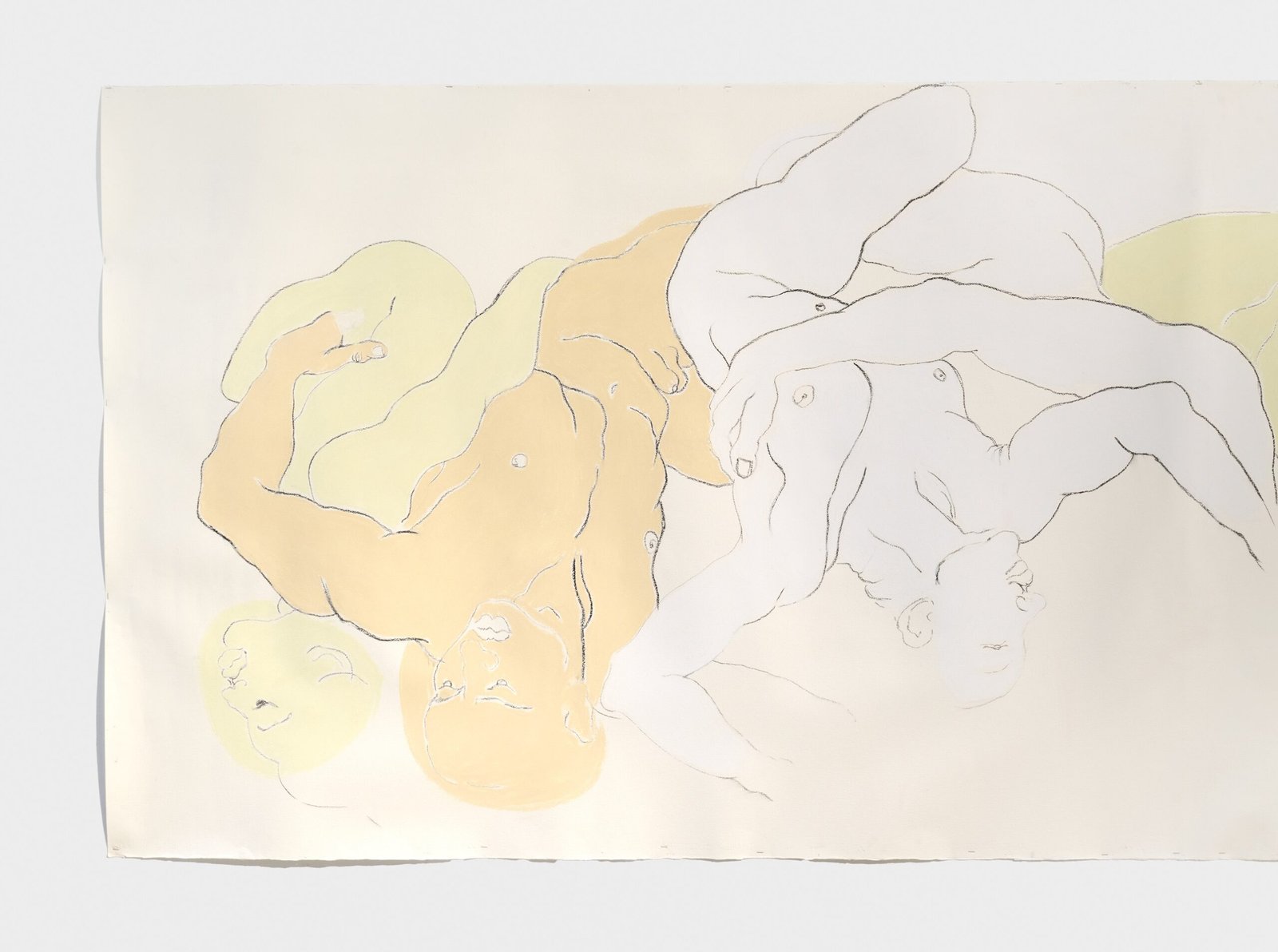
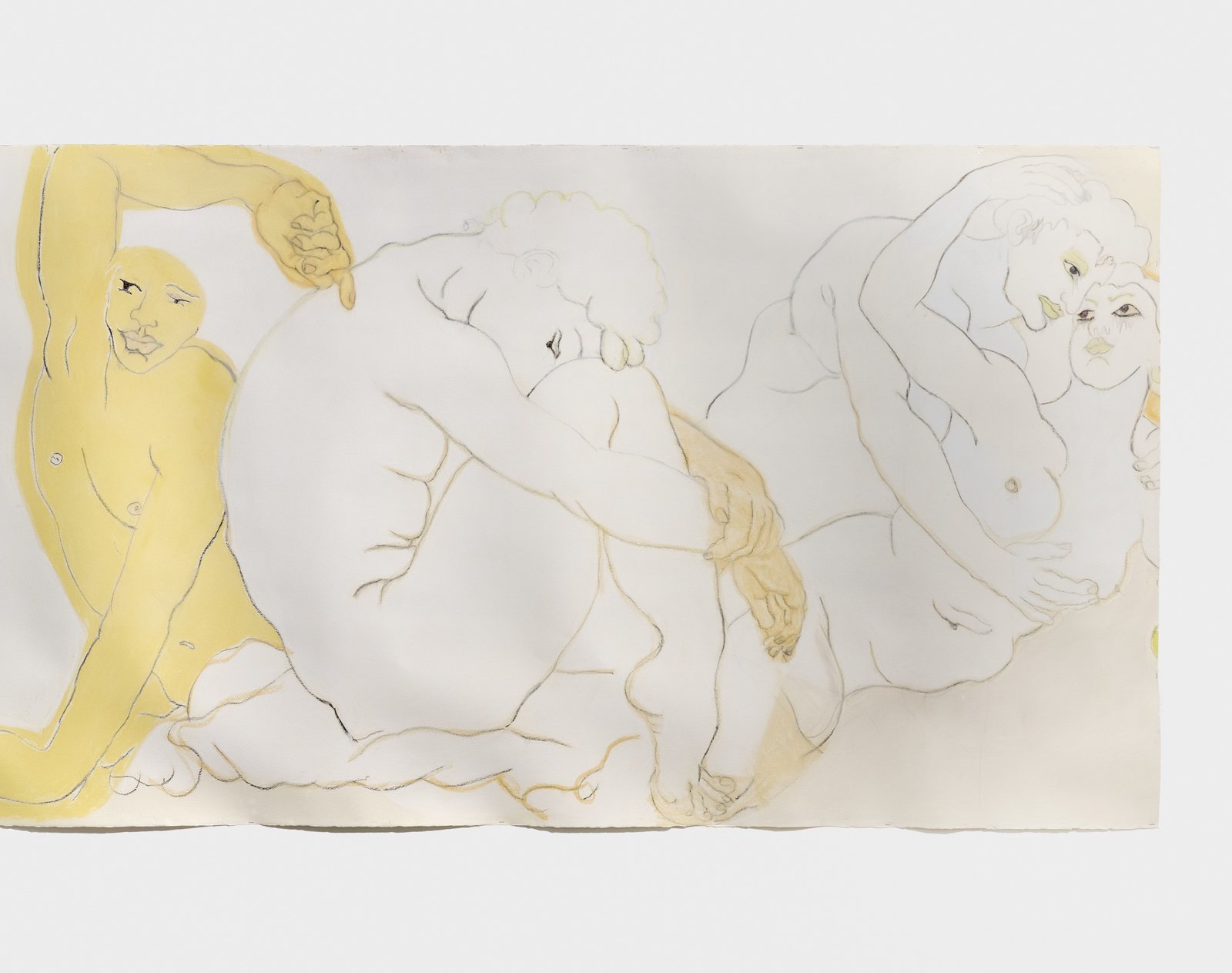
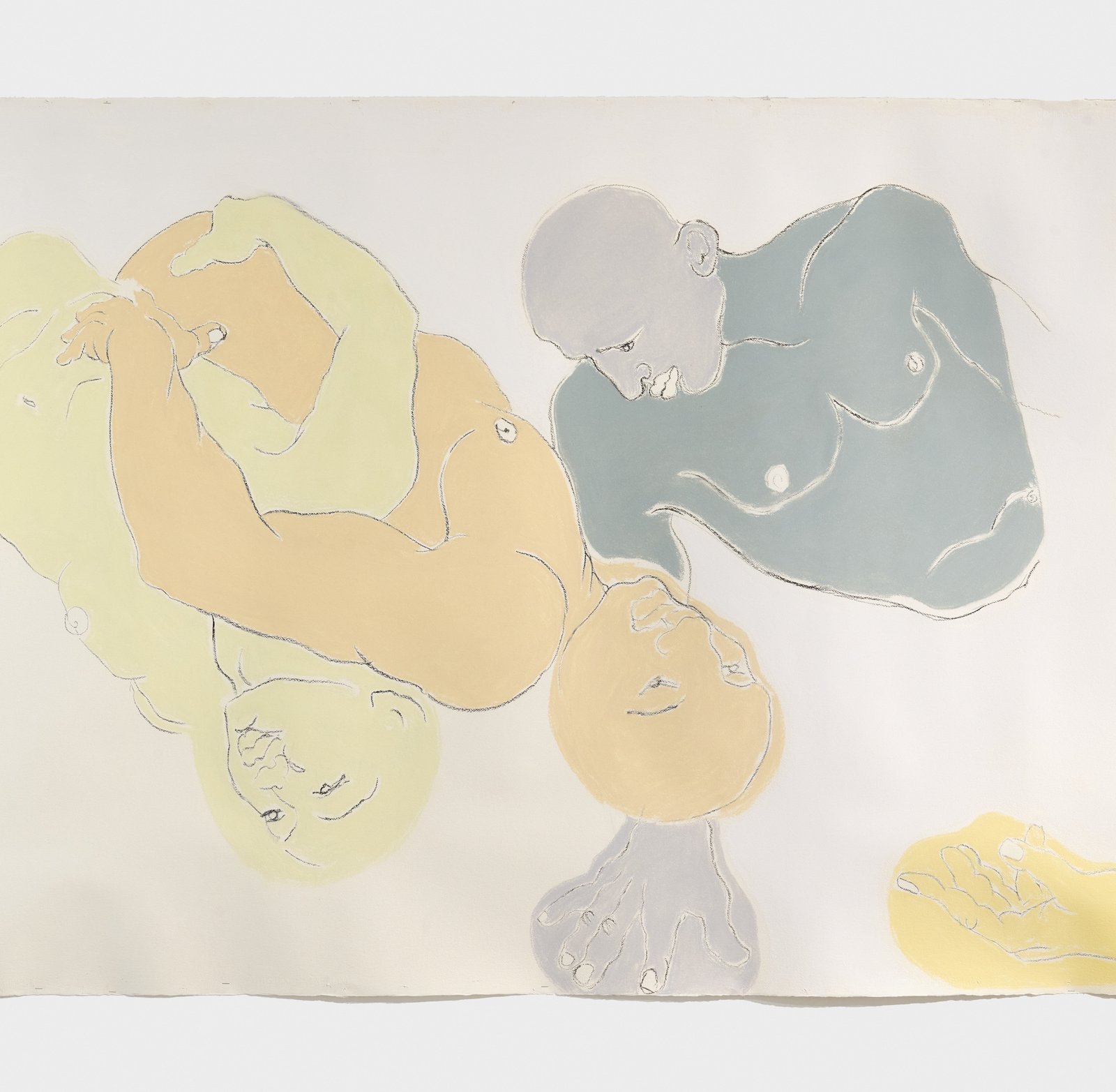
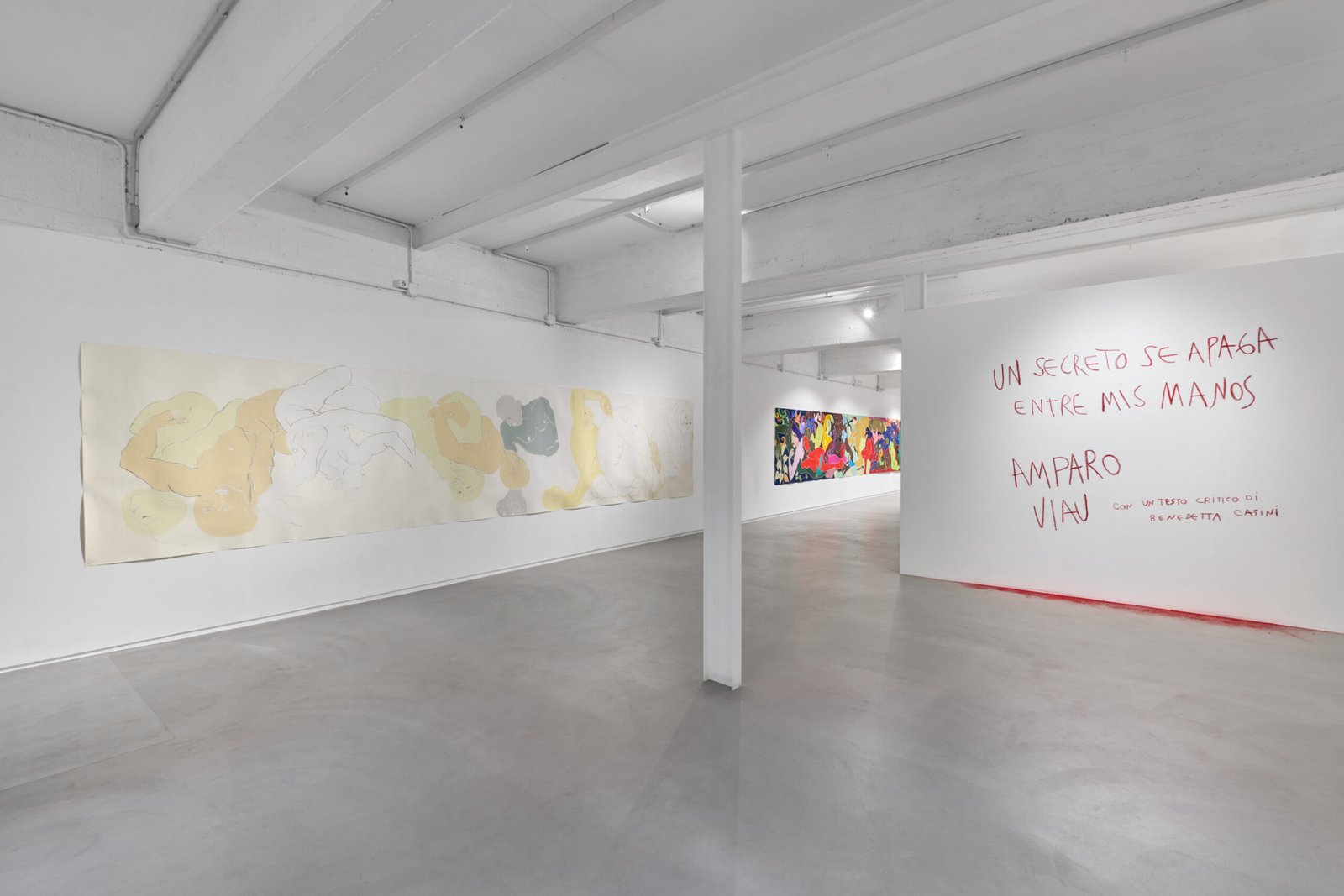
Intertwined in improbable poses, the bodies of Amparo Viau unwind through the exhibition space in a seamless, continuous path: brazen in returning the viewer’s gaze, they engage in the most unlikely contortions. Their feats are hosted on a single 40-meter-long sheet of paper that guides the visitor into a gradual immersion in the artist’s dreamlike imagination. The narrative progression recalls the chronological linearity of a film unspooling along the perimeter of the space: it is no surprise that, after an initial training in visual arts, Viau specialized in directing at the film school in Buenos Aires. Sequence after sequence, we delve into her inner world.
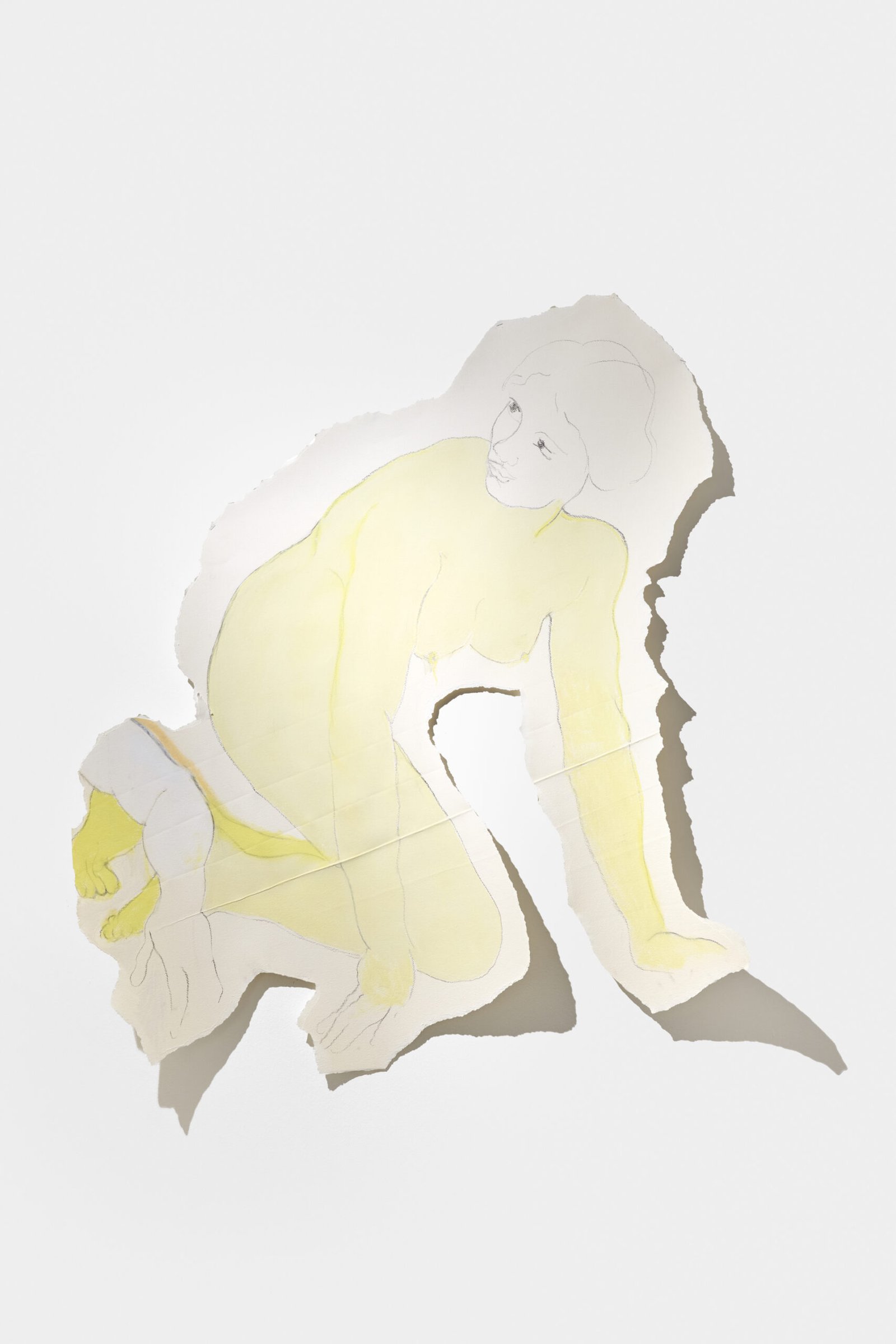
Throughout the entire path, drawing and color compete in virtuosic displays in a perfectly balanced duel: an incipit dominated by subtle variations of flesh tones is followed by a moment of expressive vitality, marked by violent chromatic contrasts, which ultimately opens into a zone of intense drama where different shades of red blaze. In the final room, some figures emancipate themselves from the swirling continuum in which they had been absorbed, acquiring a life of their own: the earthly dimension of these now individual bodies is emphasized by a delicate carnality that suggests an ideal reconnection with the intimate quiet of the beginning.
The insistence on nude bodies, reminiscent of sacred iconographies, reveals Viau’s interest in Renaissance painting, soon undermined by the obscenity of color. The chromatic exuberance of the surface, sensual in its soft tactility, competes with the virtuosity of the drawn line, which the artist cultivates by reviving traditional practices such as live models and the almost obsessive repetition of anatomical elements. The velvety roundness that results is the outcome of a rigorous and programmatic construction of the image, reconnecting the artist’s practice with the origins of painting technique. The days that structured the execution of fifteenth-century frescoes correspond here to the minutes Viau allows herself to work on different areas of the composition, in a deliberate pursuit of graphic immediacy. Her artistic process thus acquires an almost performative dimension, confined to the intimate space of her studio, yet evident in the dynamism of the resulting forms.
The outlines traced in this creative frenzy are later filled with layers of flat color that deny any possible illusion of reality. In the total absence of shadow and in the flatness of the bodies, one perceives a fascination with Fauvist chromatic saturation, itself rooted in the circulation of Japanese prints in Europe. The abandonment of any reference to real spatiality, the profusion of flowers, birds, and textiles winding around the human figures, draw on the Orientalist tradition, yet remain firmly grounded in contemporary concerns and a geographically situated discourse. Equally significant is the reference to the Argentine Nueva Figuración of the 1960s, particularly the expressive and gestural painting of Rómulo Macció, fragmented into a fantastic alternation of solid colors. Despite the apparent excess, Viau’s chromatic voluptuousness responds to a careful management of resources: along the perimeter of her studio in Buenos Aires, boxes of colored chalks—more or less used—are meticulously arranged according to hue. The high cost of importing materials into Argentina compels her to use each stick to its full length, avoiding any waste: this necessity also shapes the imaginative chromatic combinations that distinguish her work, the result of a constant negotiation between compositional intent and material possibility.
Drawing and color thus emerge as opposing poles: on one side, iconographic planning, anatomical precision, and a connection to Renaissance figurative tradition; on the other, chromatic dissonance, a celebration of color that rejects the classical idea of harmony as agreement and unity of parts. Viau’s work should therefore be understood as a conscious act of insubordination against the dictates of “good taste” in its Western sense of decorum and refinement, with all its inevitable connotations of class and power. This rebellion is rooted in the artist’s lived experience, as she recalls her childhood home as a chaotic assemblage of brightly colored objects arranged with no apparent logic. The clashing combinations in her drawings thus become vehicles of a proud assertion of identity, drawing both on childhood memories and on the Latin American Baroque tradition, exuberant and dramatic in its blending of popular and decorative elements. Hers is an excessive, brazen, and irreverent seduction that evokes the Camp sensibility that Susan Sontag described as something she was “deeply attracted to and almost equally deeply offended by.” Unnatural in poses and colors, unconventional, internationally mannerist, Viau openly declares her love for artifice, abandoning all timidity and embracing the possibility of a lèse-majesté against the rules of compositional decorum.
Benedetta Casini