


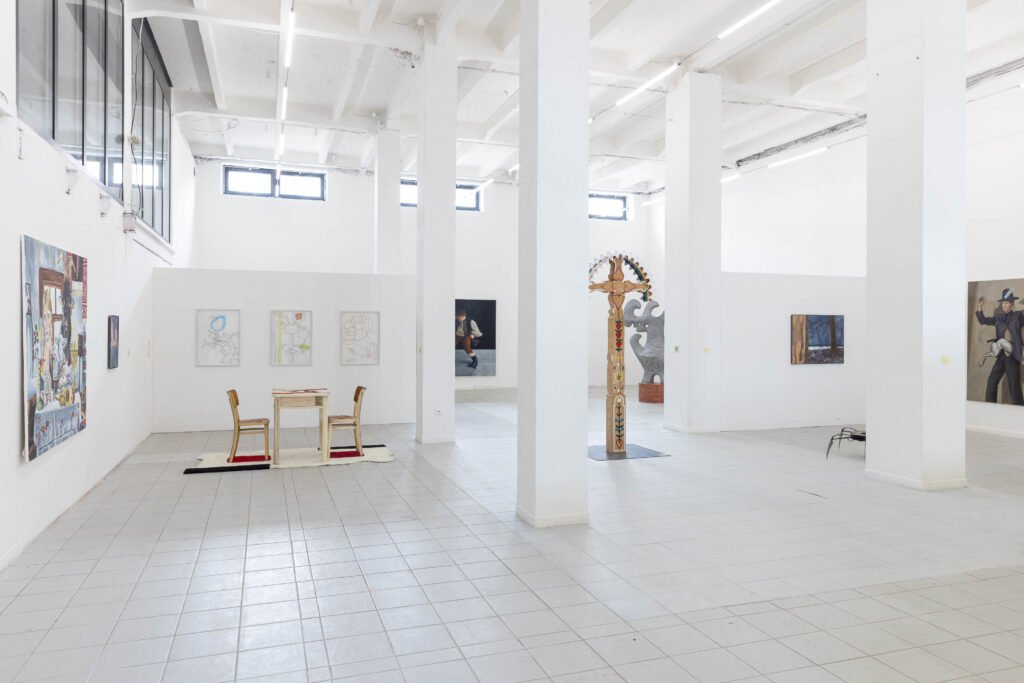
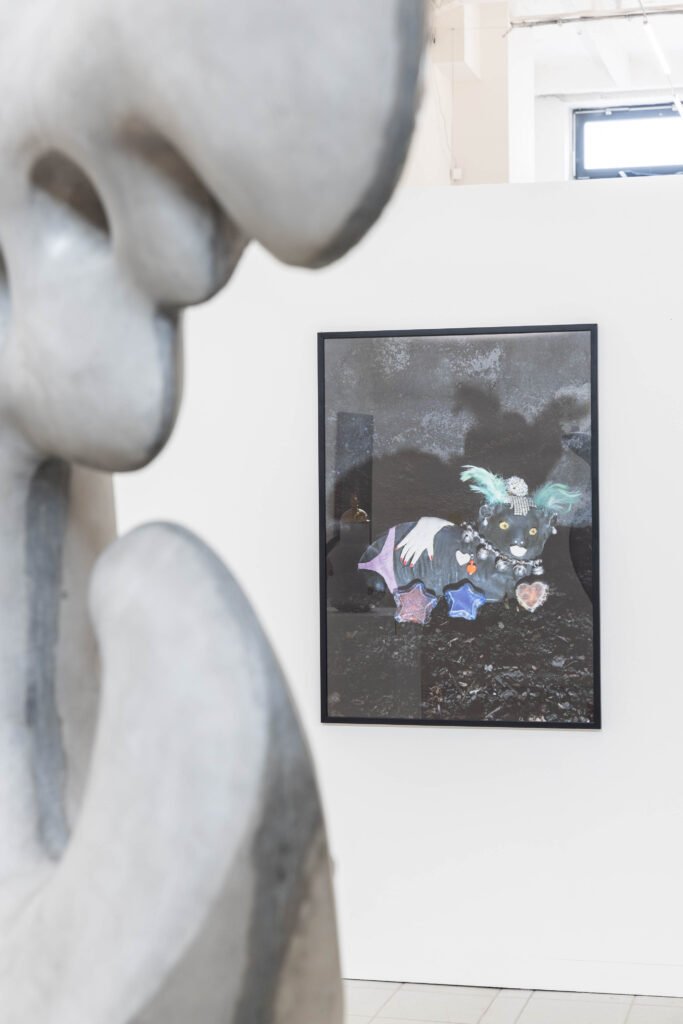
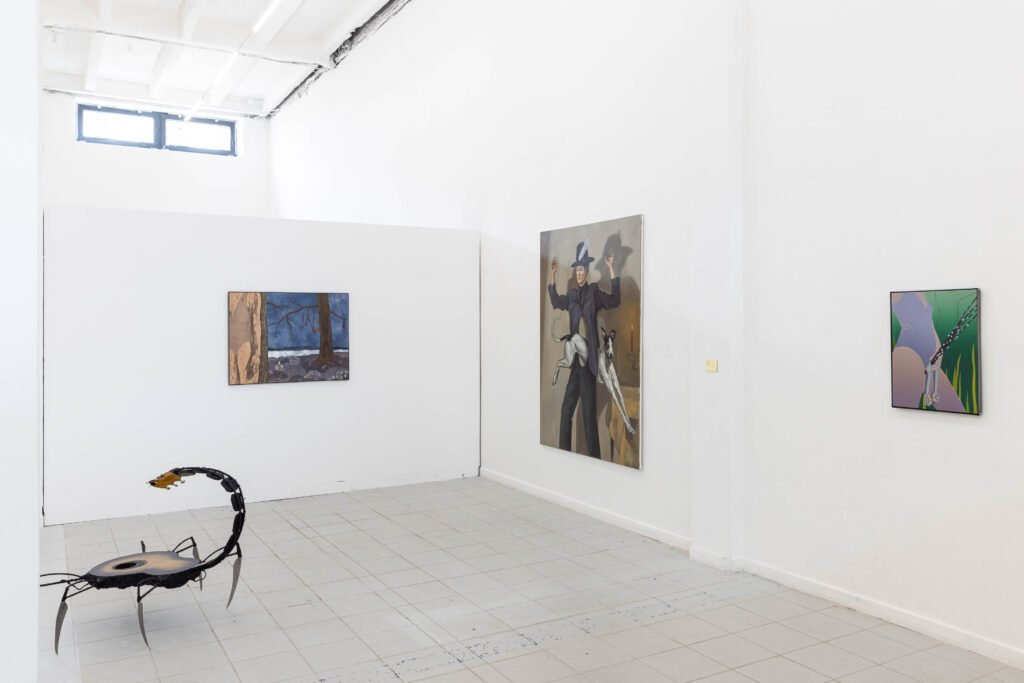
Folk traditions have dug their claws deep into the fabric of the cultural landscape and into our very beings. They survive in patterns of behavior, gestures, rituals, power structures, and fairy-tale narratives that we pass down from generation to generation. The exhibition The Rite of Spring turns its attention to folklore as a collection of archetypal forms, customs, and images that have historically shaped society’s collective identity. In the works of the exhibiting artists, tradition is not an object of admiration, romantic nostalgia, or aesthetic exploitation, but a space of tension where memory mingles with pretense, poetry with anxiety, and protection with violence. Behind the sacred order lie the pressure of norms and hidden traumas that we have grown accustomed to overlooking because “that’s just how it’s always been done.” The exhibition’s title, referencing Igor Stravinsky’s famous composition, however, emphasizes the motif of transformation. Just as the pagan ritual celebrating the rebirth of nature became, in the composer’s conception, an impulse to disrupt old musical structures, the exhibition The Rite of Spring opens up a space for the imagination in which tradition can be critically reevaluated and updated—whether through subversive gestures, empathy, or subtle humor.
In our cultural context, folklore is intrinsically linked to the Christian tradition, which in its early days strategically incorporated ancient pagan festivals and rituals associated with natural cycles and a mythological worldview. The natural human need for order, stability, and a relationship with the transcendent was newly anchored in the narrative of Christ’s life and in a value framework that fundamentally shaped the character of European society. Along with this, a structure of binaries was established, organizing the world into opposites: good and evil, spirit and body, nature and culture, man and woman, purity and sin. Within these dichotomies, female identity is reduced to two extreme images—the idealized figure of the nurturing Mother of God and the stigmatized sinner Mary Magdalene. As if nothing existed between them. Remnants of Christian morality still permeate our daily lives today, often without our realizing it. Yet they are activated with all the greater intensity in shared rituals, when collective memory is set in motion once again.
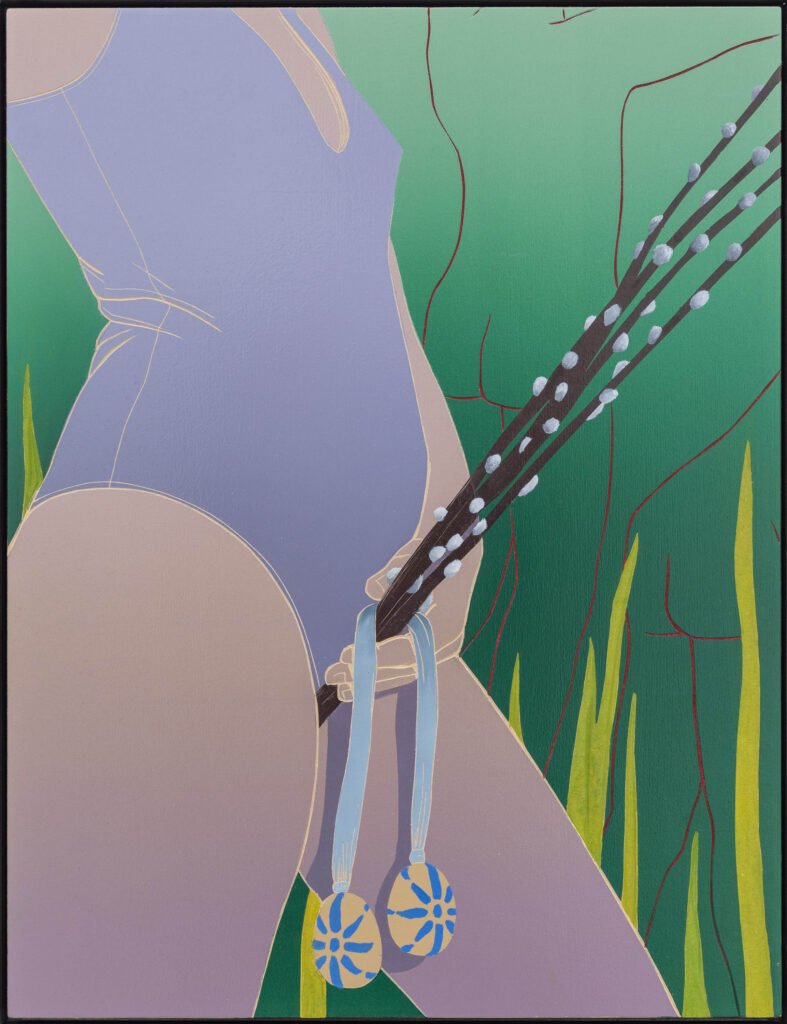
These latent structures are particularly evident in spring rituals associated with the tradition of the Easter whip. This seemingly innocent custom, a symbol of life-giving renewal, bears clear traces of power asymmetry. A woman’s body becomes the object of a ritual presented as a necessary condition for “revival,” while the violent aspect of the act is obscured by tradition and collective consent. The whipping with the pomlázka thus reveals deeply rooted mechanisms in which violence hides behind ritual and dominance becomes a culturally accepted norm.
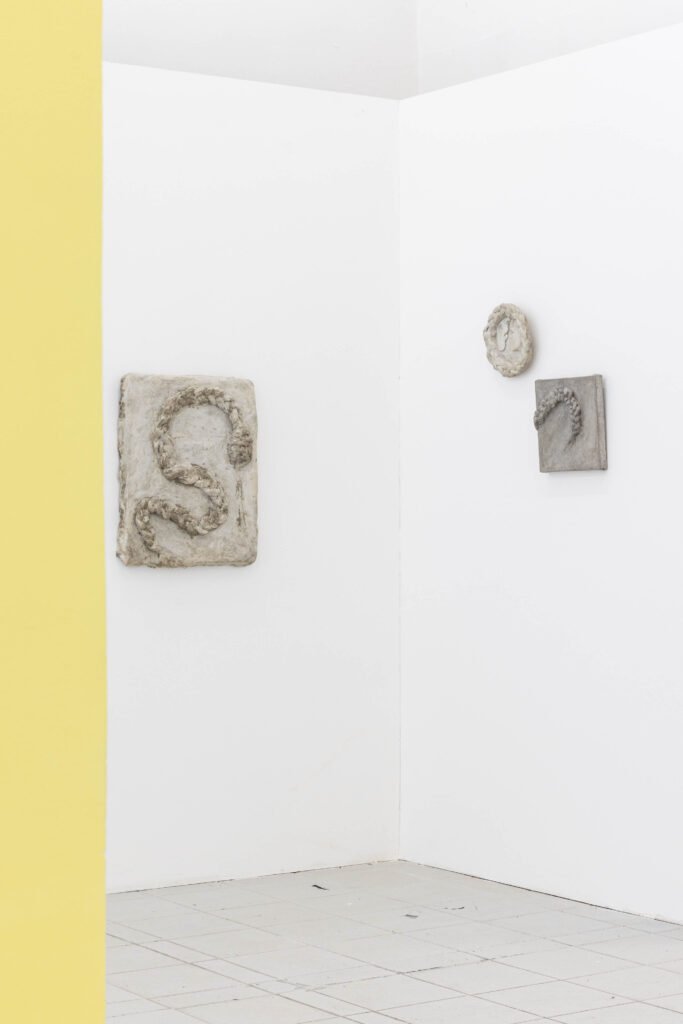
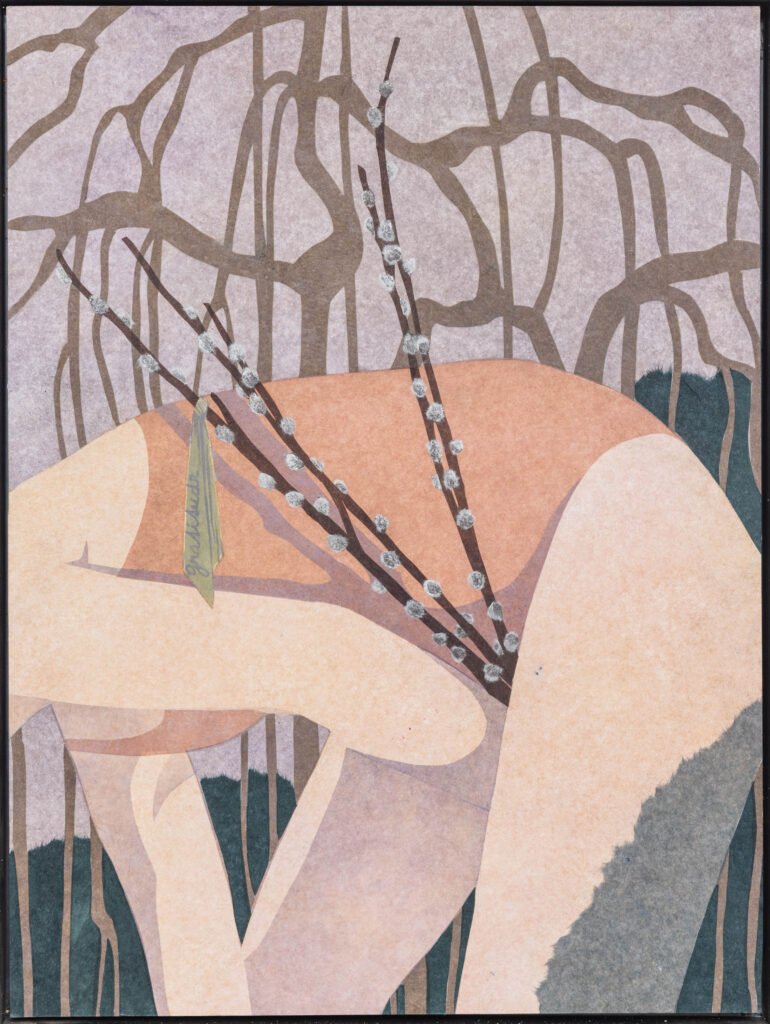
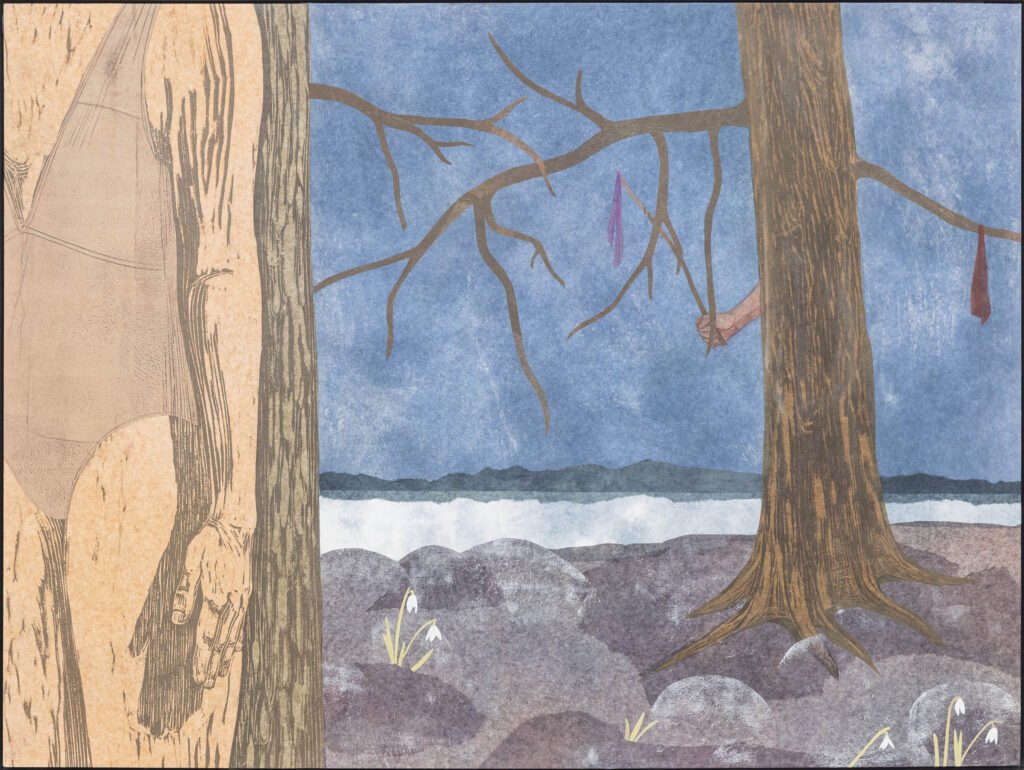
However, we need not view tradition as a rigid model that we are obligated to follow; rather, we can decide for ourselves which values we wish to uphold and share. Eva Yurková (*1996) articulates this possibility with sensitivity, suggesting alternative forms of spring customs in her reliefs and collages. A return to nature as the primary source of ritual allows us to rethink its new forms. Instead of the act of whipping itself, the artist turns her attention to gathering willow twigs or to a cleansing wash in a stream. Her dreamlike, poetic scenes evoke fleeting memories in which fragments of female bodies are immersed in the organic arabesques of plants.
The artist duo Markéta Špundová (*1997) and Viktorie Macánová (*1995) also set themselves apart from the rigid form of the Easter holidays, developing the ritual of baking lamb-shaped cakes with unprecedented lightness and humor. The artists treat tradition as a living organism that can evolve naturally and reflect current social values, including issues of gender. Instead of humiliation, awkwardness, and pain, joy, tenderness, and shared experience come to the fore. For them, the holiday is above all a space for gathering together, playfulness, and renewal of energy.
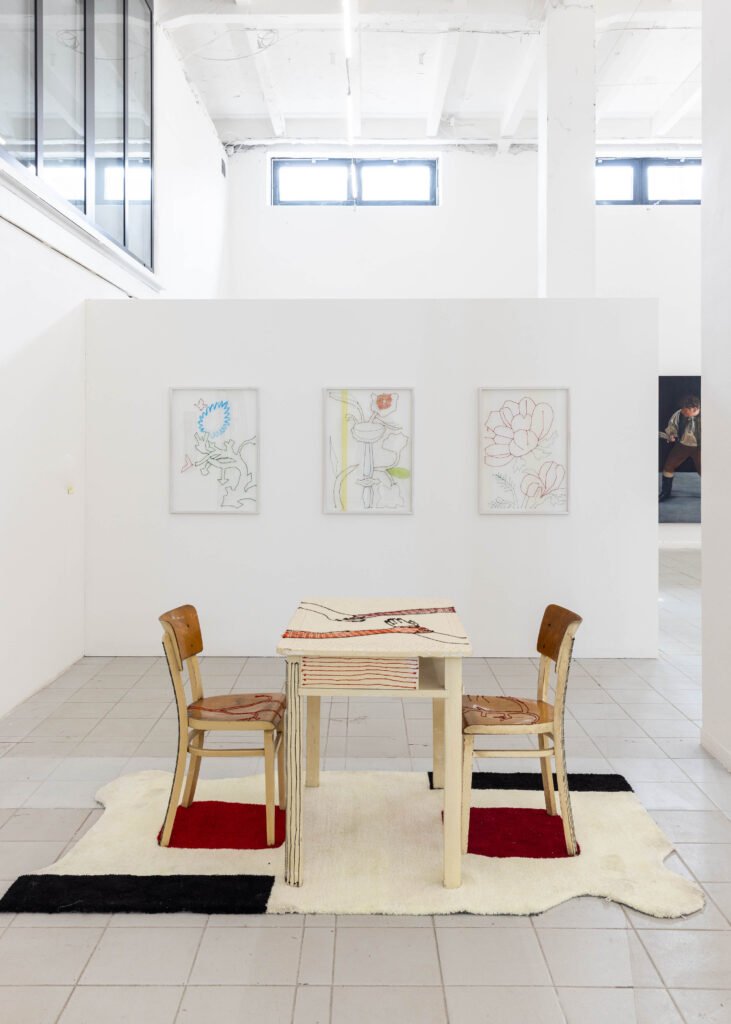
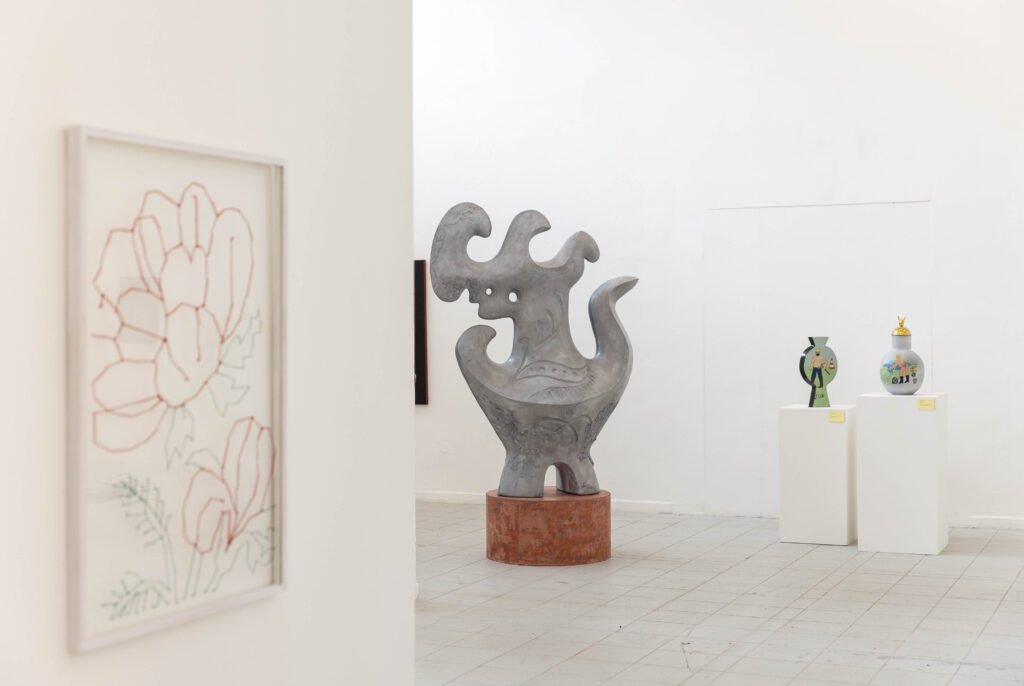
The theme of mutual sharing and communication is also explored in the installation by Karima al-Mukhtárová (* 1989). The silhouette of joined hands, created using a complex embroidery technique on the surface of a wooden table, speaks to the fragility of human relationships and the search for one’s own identity in close connection with nature.
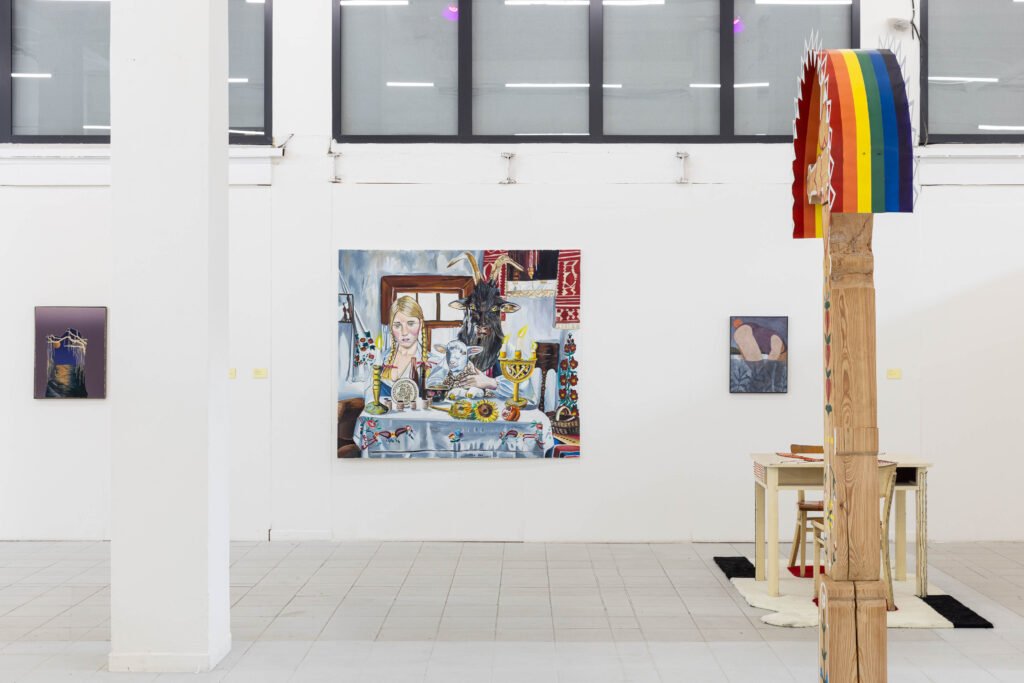
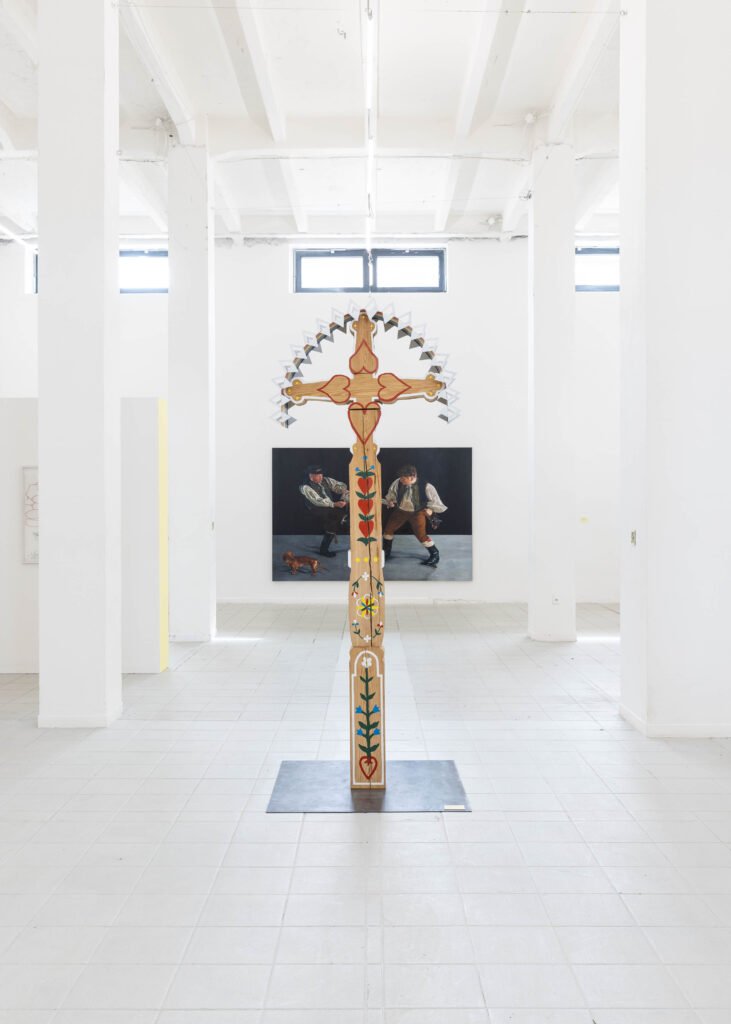
Bystrík Klčo (* 2002) reconciles the traditional form of the Christian cross with issues of identity, gender, and the LGBTQ+ community. The design of the work, created as a memorial to the gender-motivated terrorist attack at the Tepláreň facility in Bratislava, draws on folk crosses typical of the Slovak region. The cross, as a symbol of death, sacrifice, and salvation, is topped with a rainbow-colored canopy. The reference to the LGBTQ+ community thus merges with the biblical motif of the rainbow, which God sent to humanity after the Great Flood as a promise of hope that such devastating threats would never recur.
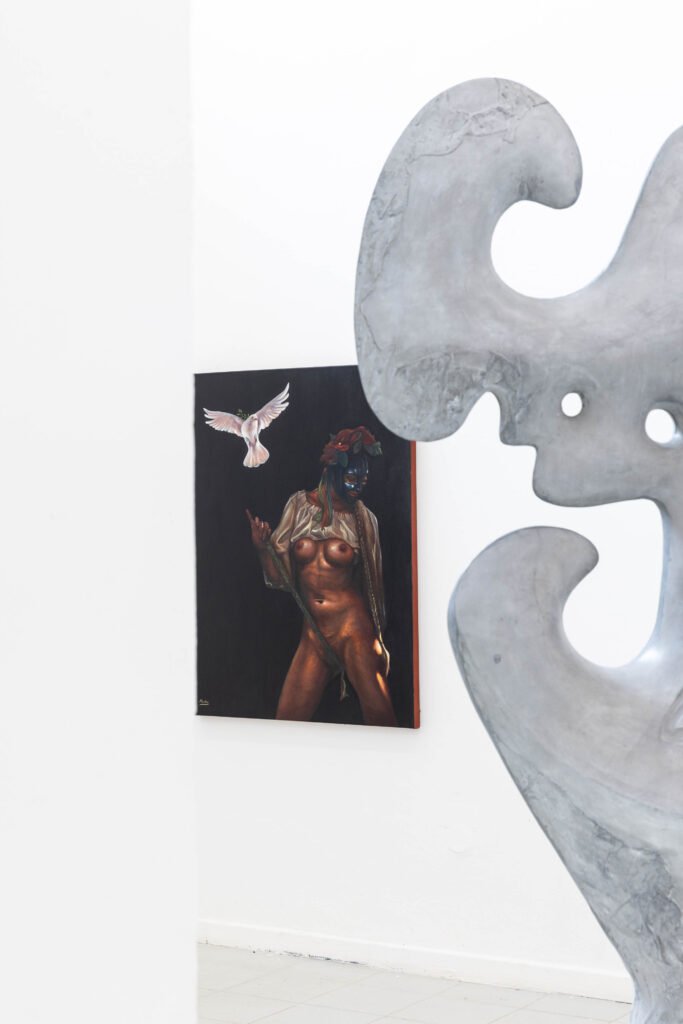
Pavlína Kvita’s (*1988) sculpture relates to the theme of tradition and folklore rather indirectly, through deeper layers of meaning. The artist transforms the archetype of the vessel as a container for storage—and thus a symbol of continuity—into the enclosed form of a biomorphic sculpture. The result is a kind of hieratic monument straddling the line between vessel and body, whose folk ornamentation is subtly disrupted in places by traces of erosion.
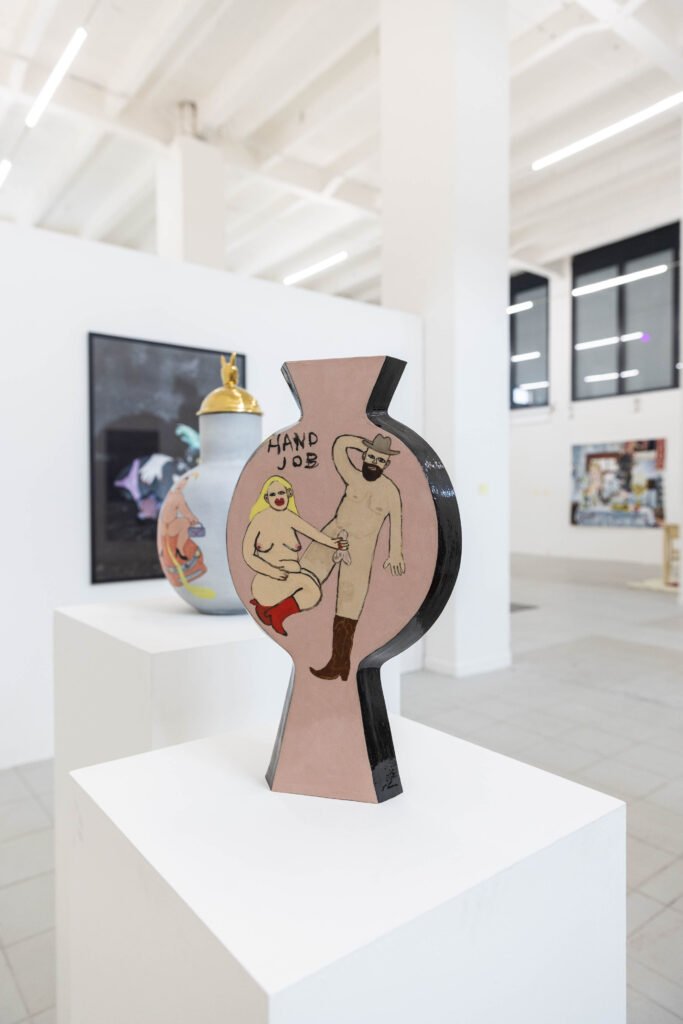
In contrast, Zuzana Svatik (*1993) works with the motif of the vase as a symbol of home, linked to the perception of women as housewives, caregivers, and vain decorators. For her, the traditional shape of this utilitarian vessel becomes a means of forcefully challenging social and gender constructs, which the artist links to a critique of the nuclear family and persistent patriarchal structures in society.
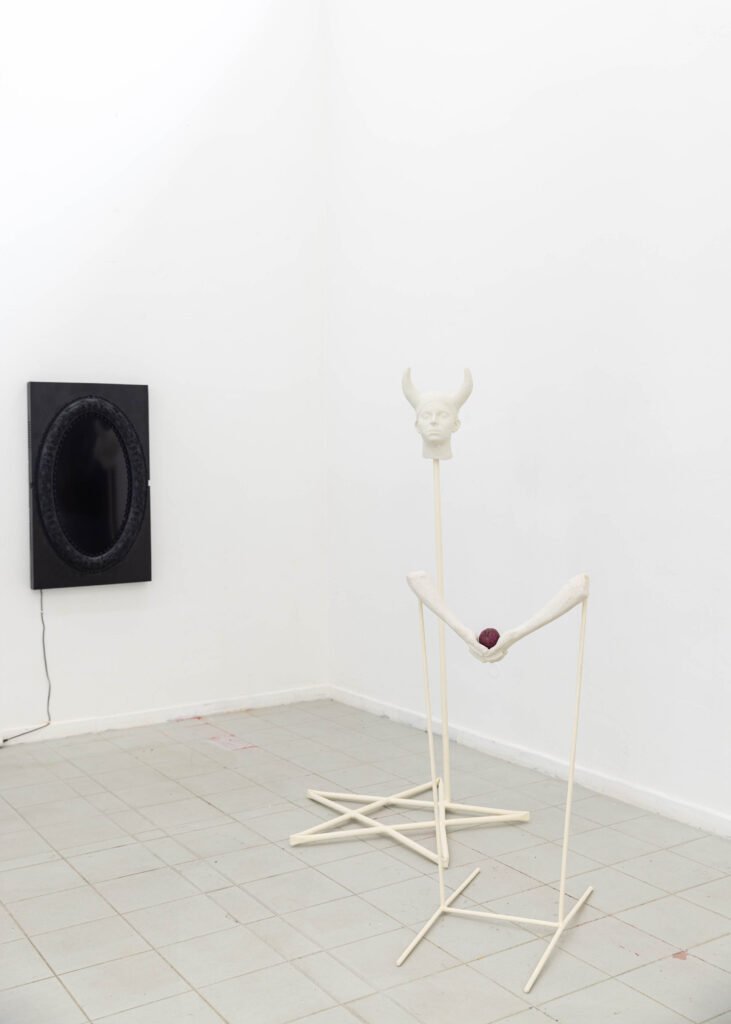
Nikola Emma Ryšavá (* 1990) has also long engaged in her work with gender stereotypes, transmitted, among other things, through traditional fairy tales. The strength and wisdom of female characters who are able to defy established patterns are often attributed solely to witches, who in these narratives embody the principle of evil. In her latest works, the sculptor therefore turns to the pagan religion of Wicca, a modern version of witchcraft based on balance and the interconnection of opposites.
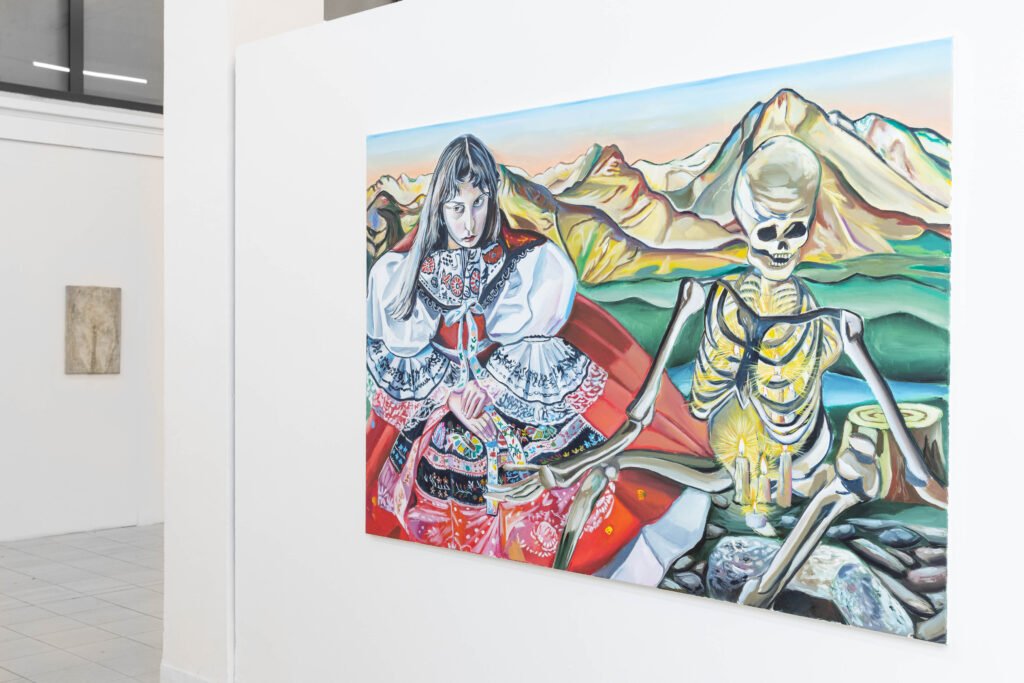
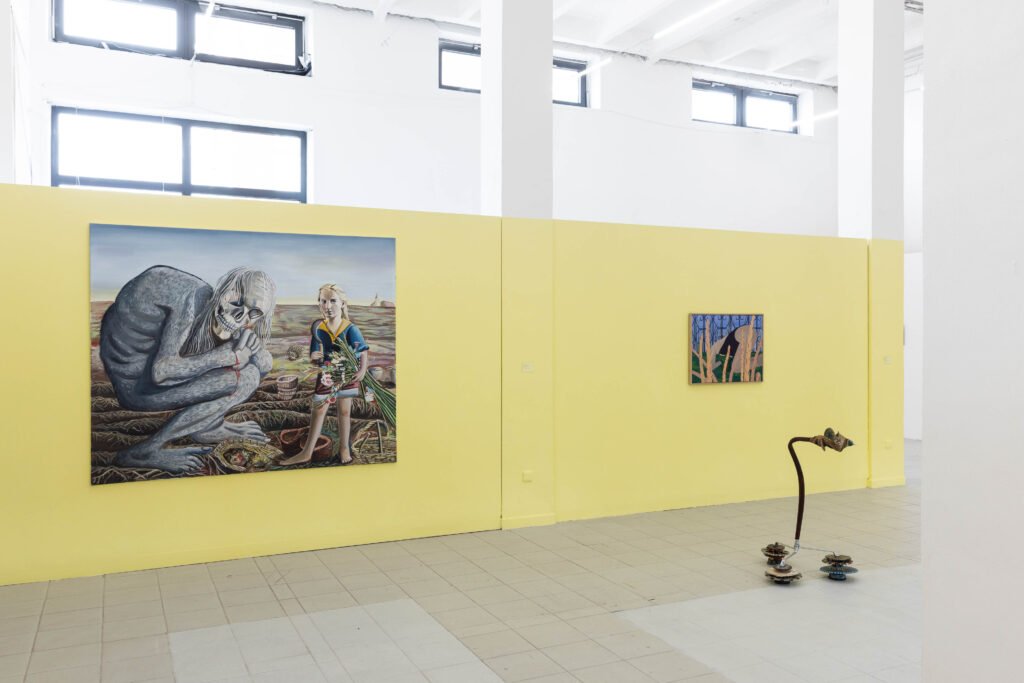
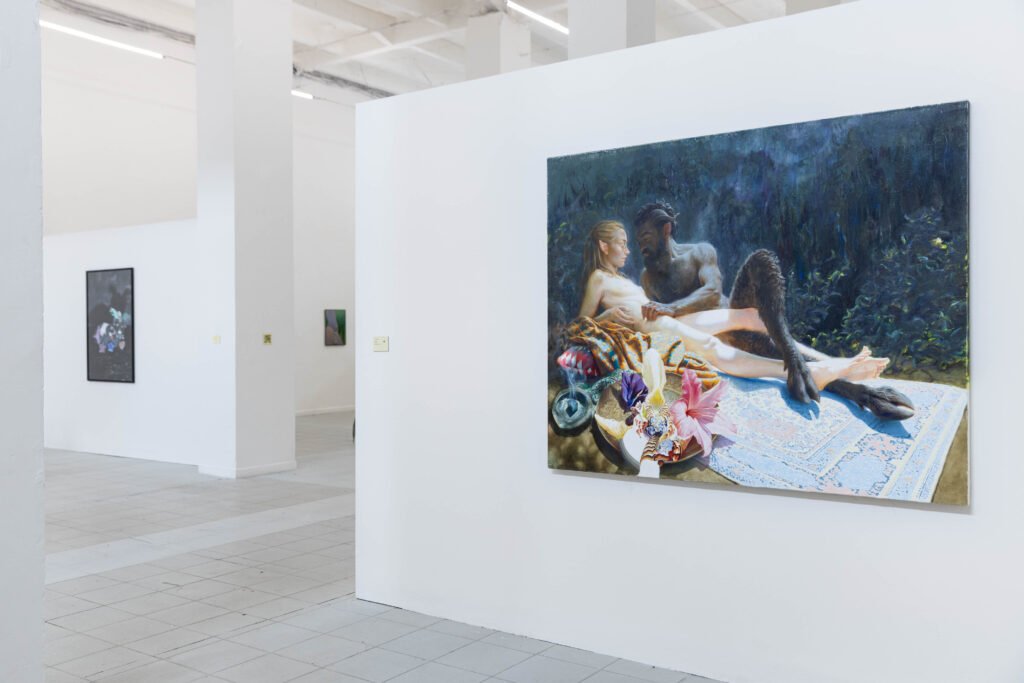
For Jan Vytiska (*1985), folklore serves as the fundamental framework for bringing to life the elusive evil and pathological phenomena of society that permeate the interiors of his Wallachian log cabins and dramatic landscapes. In the fixed gazes of the girls, goats, and skeletons that inhabit the artist’s fictional painterly worlds, we sense the weight of a terrifying mystery and an inescapable fate.
Jan Uldrych (*1983) also turns to the boundaries of the visible and the invisible; his painting oscillates between realistic depiction and abstract, symbolic visuality. In his paintings, fragments of reality dissolve into imaginative landscapes permeated by archetypal motifs and forms that refer to the mythical and ritual layers of human experience. For him, painting becomes a means of introspection through which physical reality intertwines with transcendent experience.
An ambivalent tension—this time, however, directed toward the individual’s inner experience—also permeates the works of Tomáš Kurečka (*1994). The motif of carnival-style dressing up transcends the realm of folk ritual and becomes a metaphor for the fluidity of identity and the roles we assume in everyday life. Here, the mask is not merely a means of symbolic play, but also a tool for concealment and revelation, in which the experience of alienation is simultaneously born.
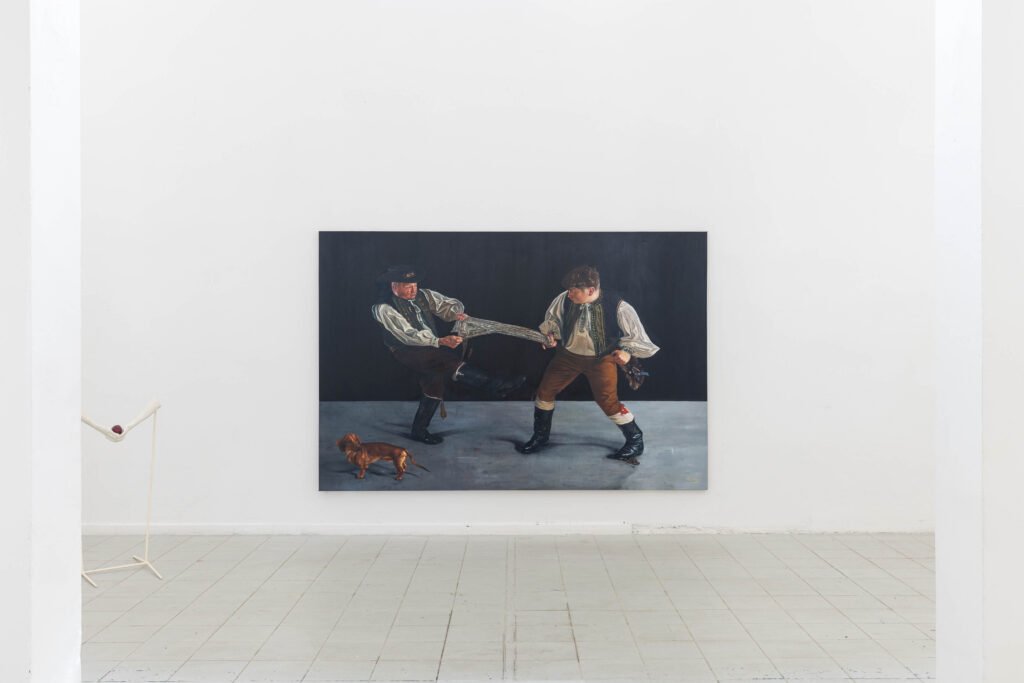
The motif of the mask also appears in the paintings of Filip Kůrka (* 1993), though in the form of latex masks referencing BDSM practices. The contrast between the visual language of contemporary subculture and Old Master painting techniques creates a tension between tradition and the present, between a disciplined image and suppressed physicality. Similarly, the artist’s monumental-scale painterly interpretation of the joke about the miserly people of Haná evokes Dutch genre painting with a moralistic message.
Žil Julie Vostalová (*1988) also turns her attention to the Haná region. She transforms traditional elements of folk costume into 3D animations, through which she explores whether digital representations can offer a space for revitalizing traditional crafts as well as for a critical reflection on material overproduction and waste.
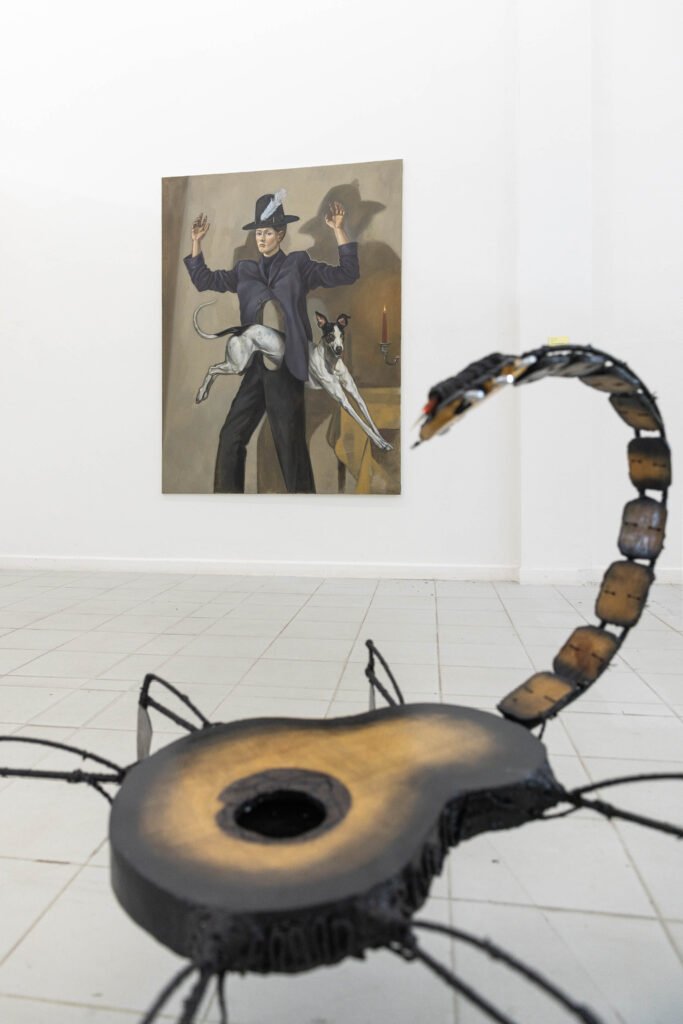
Adam Žufníček (* 1999) also references relics of a bygone past; his objects resemble strange mechanisms straddling the boundaries of the technical, organic, and magical. Their hybrid nature reveals archaic ways of thinking in which the everyday naturally intertwines with myth and ritual.
The exhibition The Rite of Spring views folklore and tradition as a dynamic process of constant transmission, selection, and reinterpretation. In the tension between continuity and transformation, it becomes clear that what we consider “given” is always also the result of our decisions—and thus also our responsibility for what will continue to endure.