


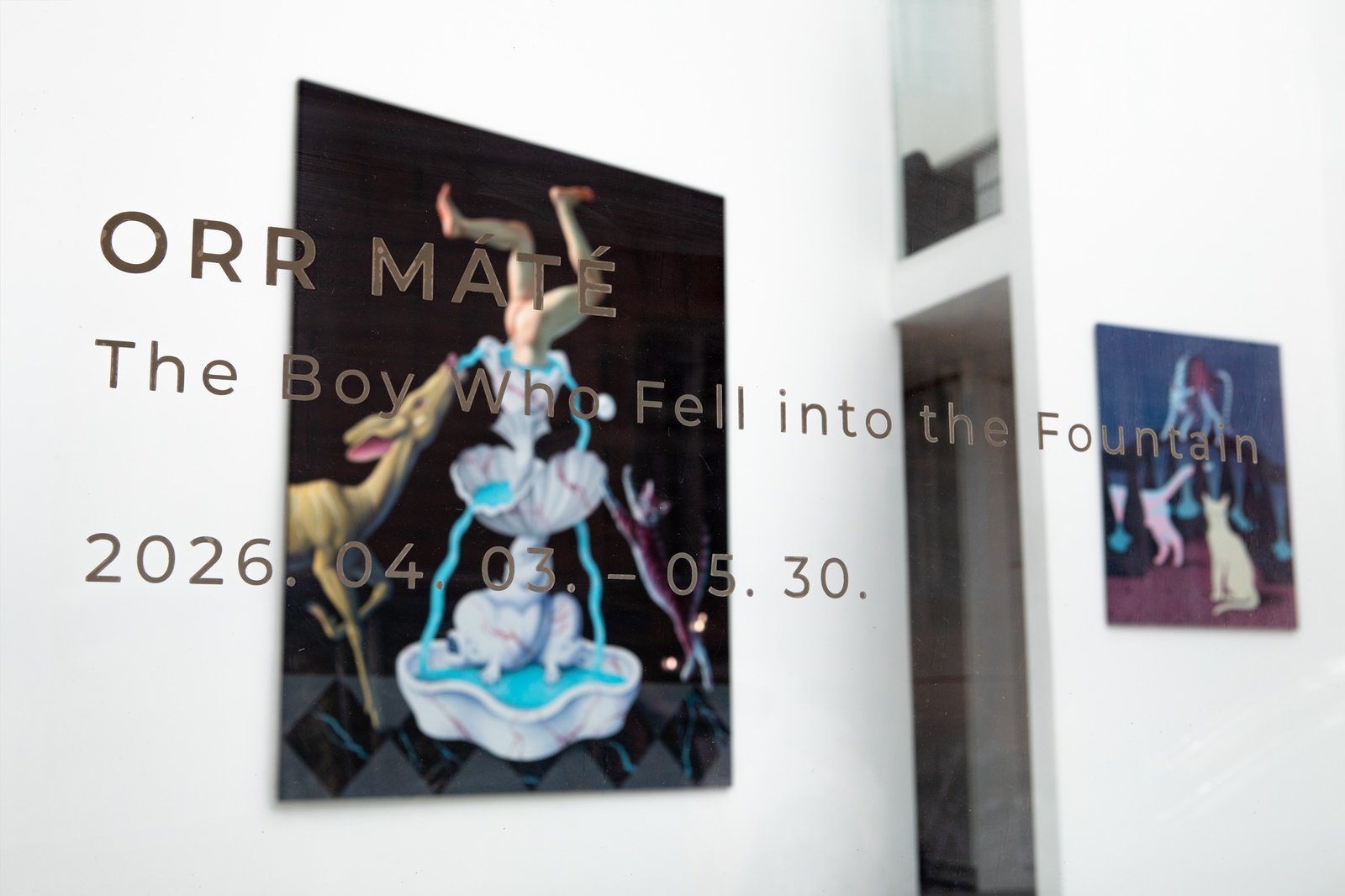
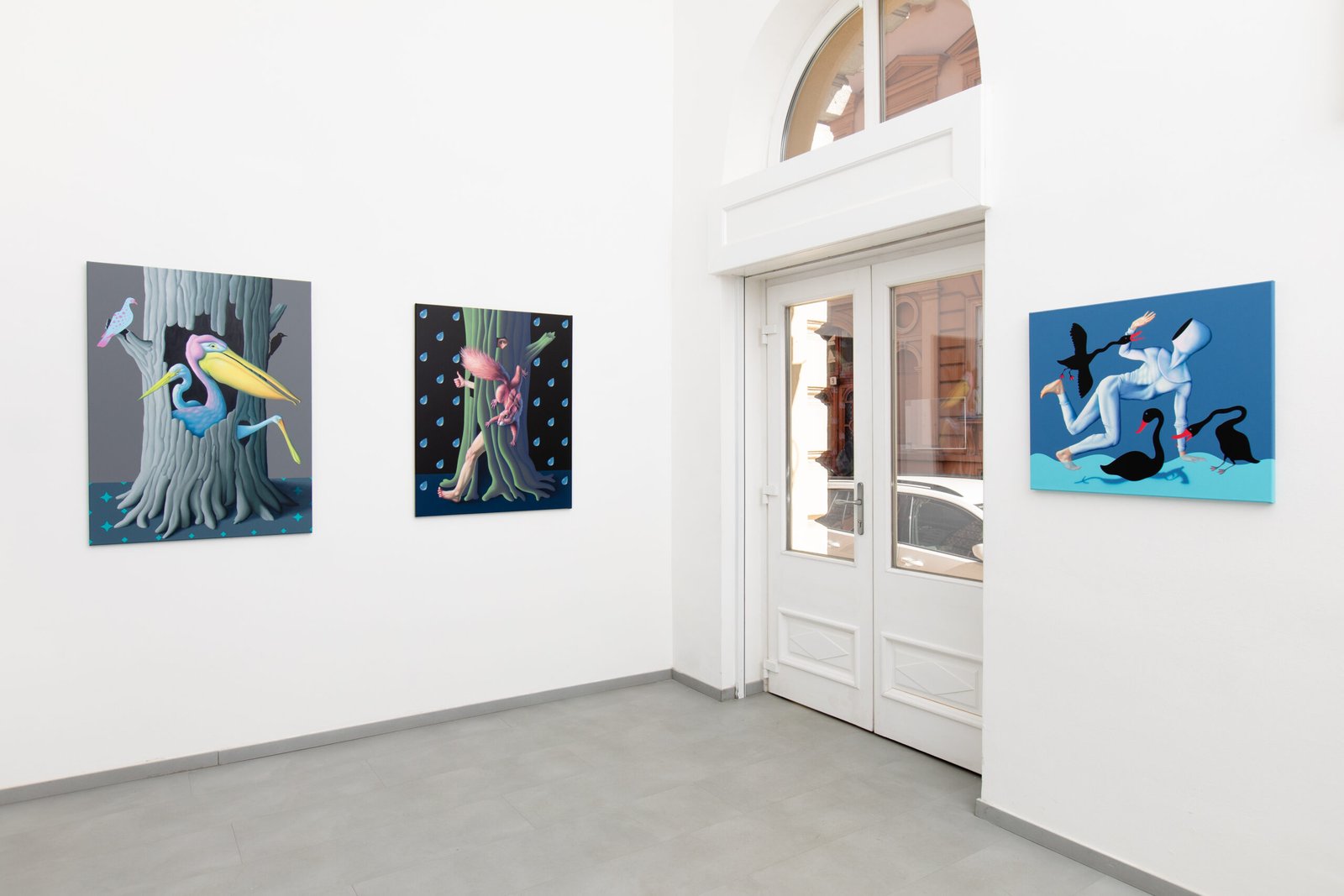
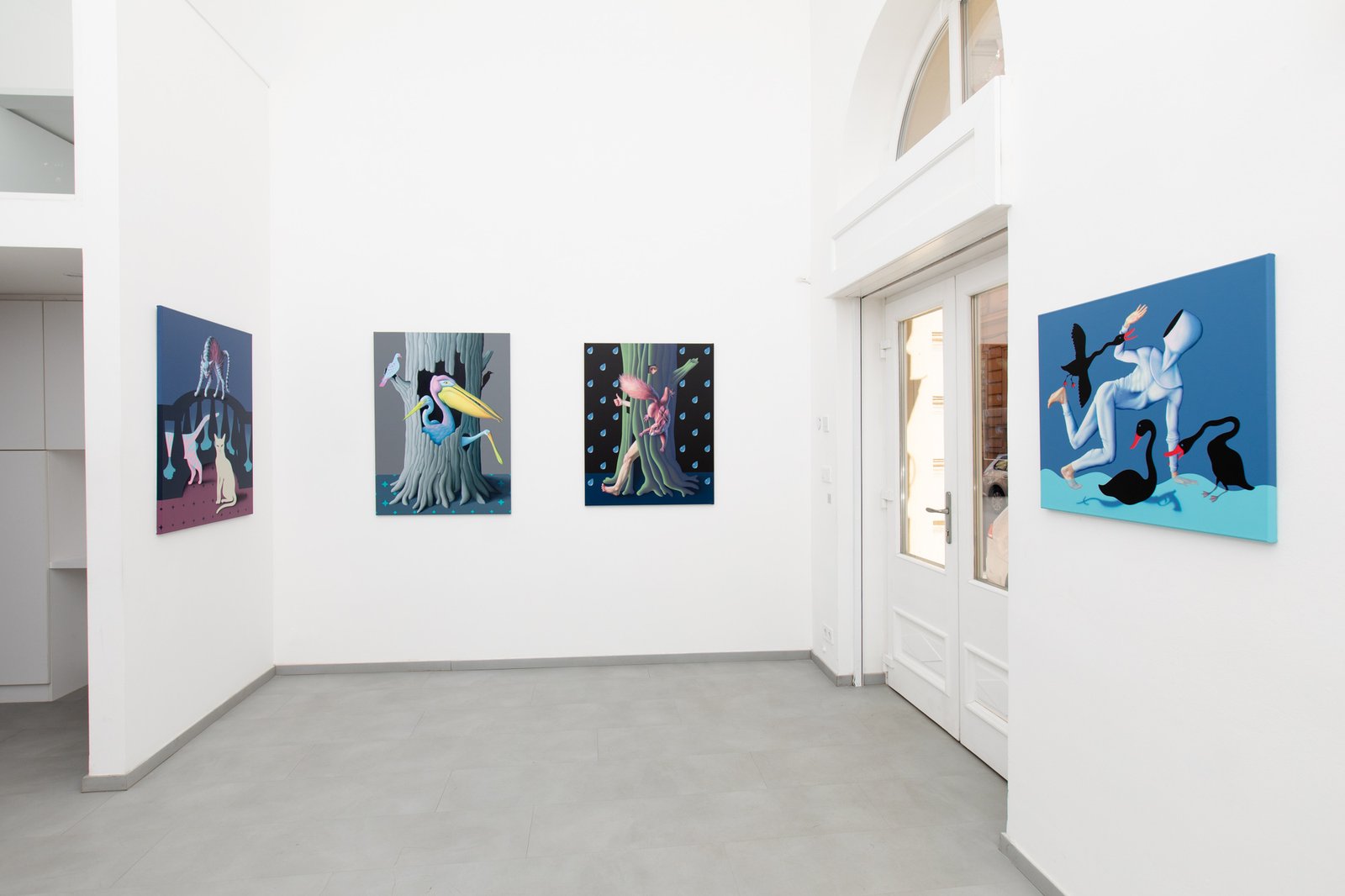
The spring exhibition programme of am projects continues with Máté Orr’s exhibition The Boy Who Fell into the Fountain.
The exhibition centres on questions of masculinity, vulnerability, and emotional openness. The works are grounded in a personal reflection by the artist: “When I hear the phrase ‘boys don’t cry’, I immediately have to cry.”
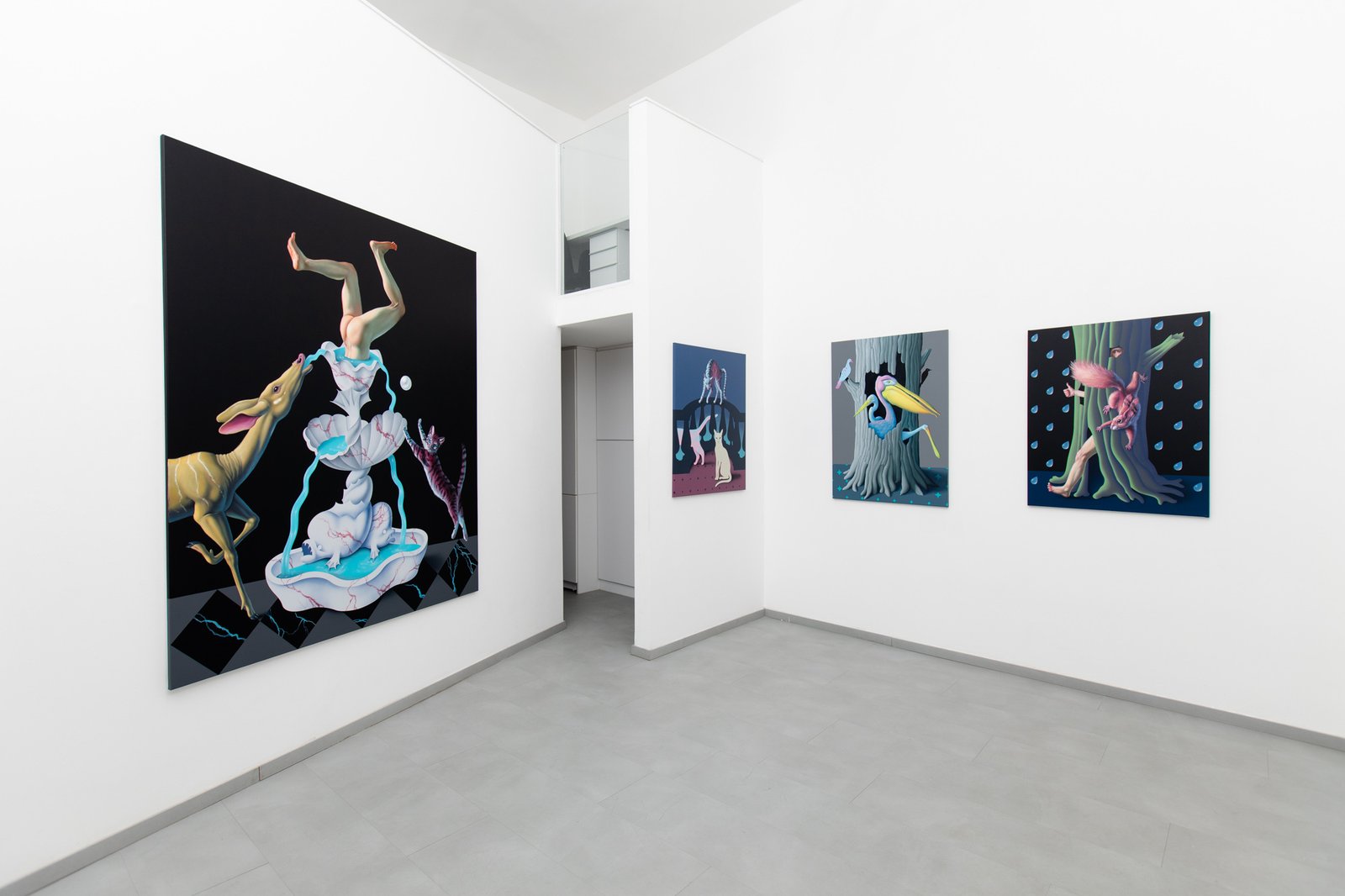
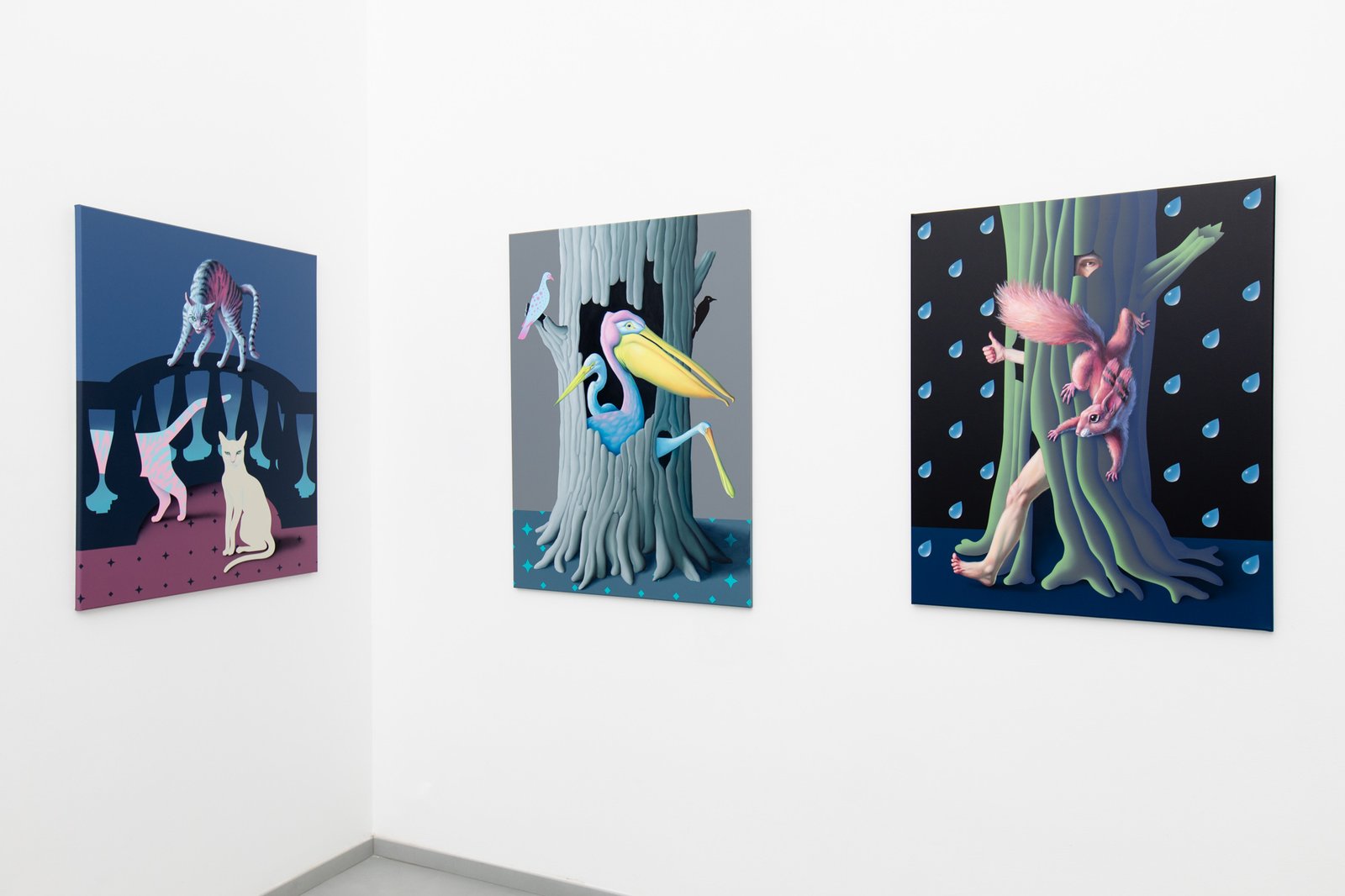
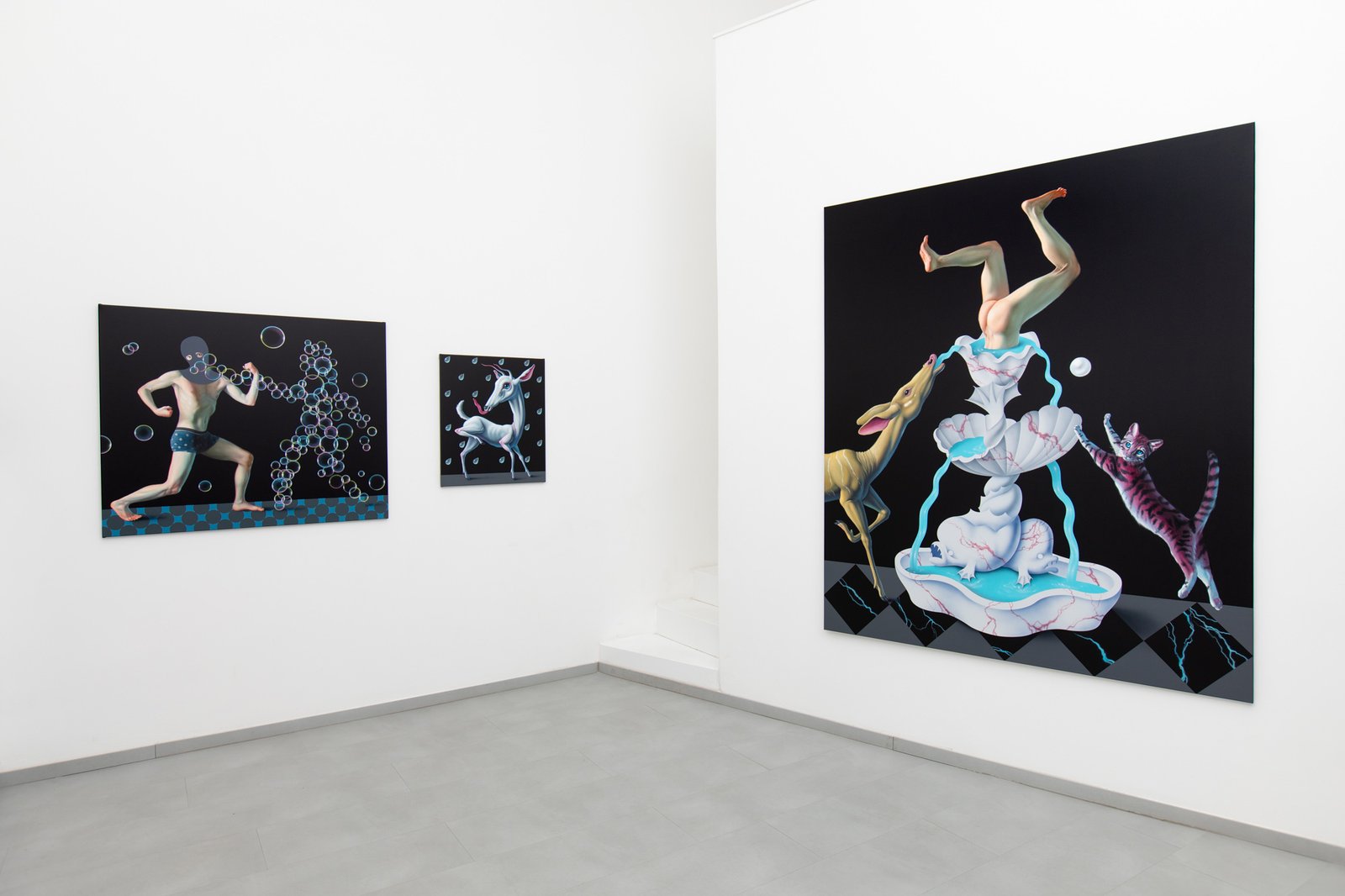
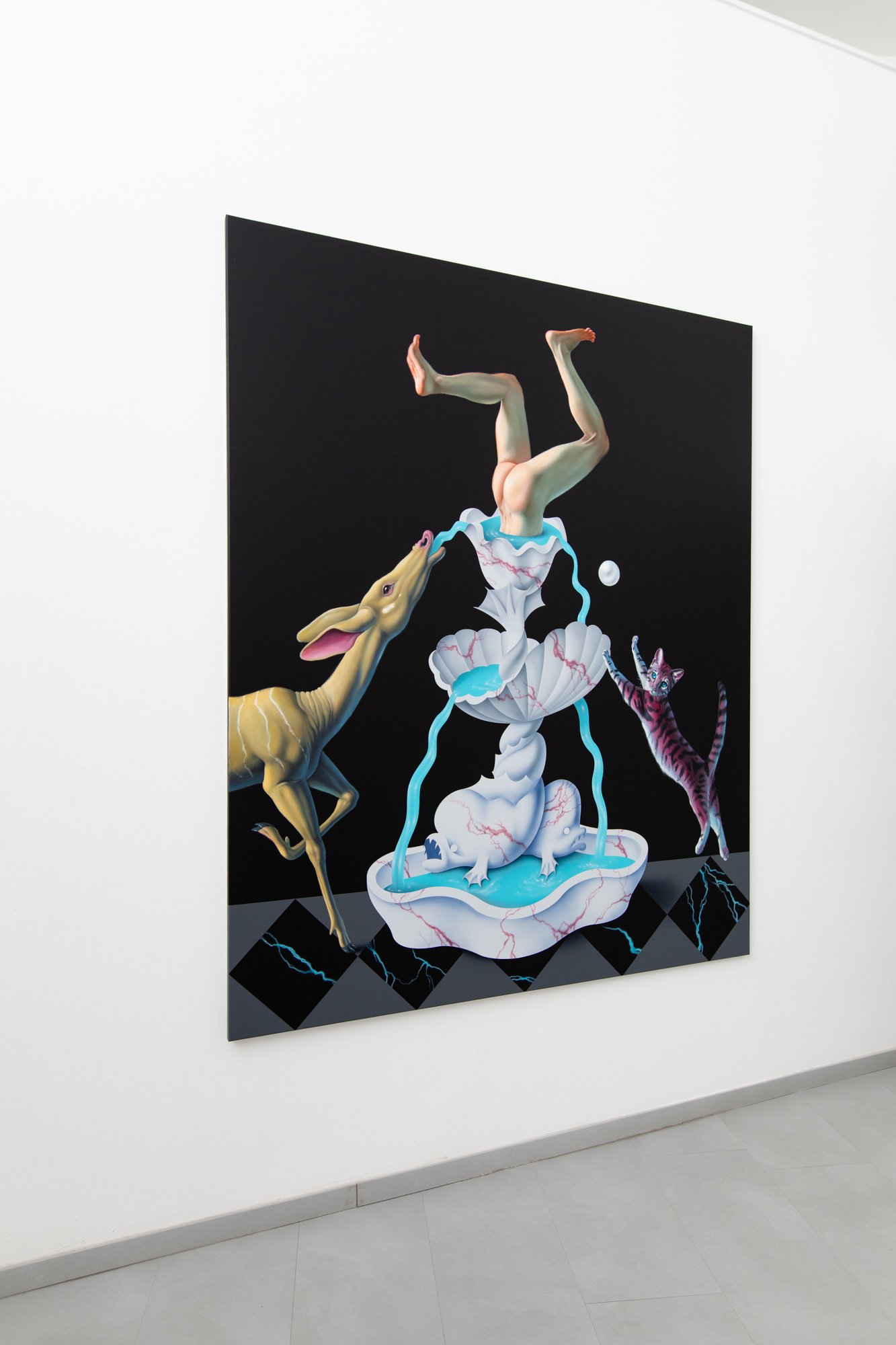
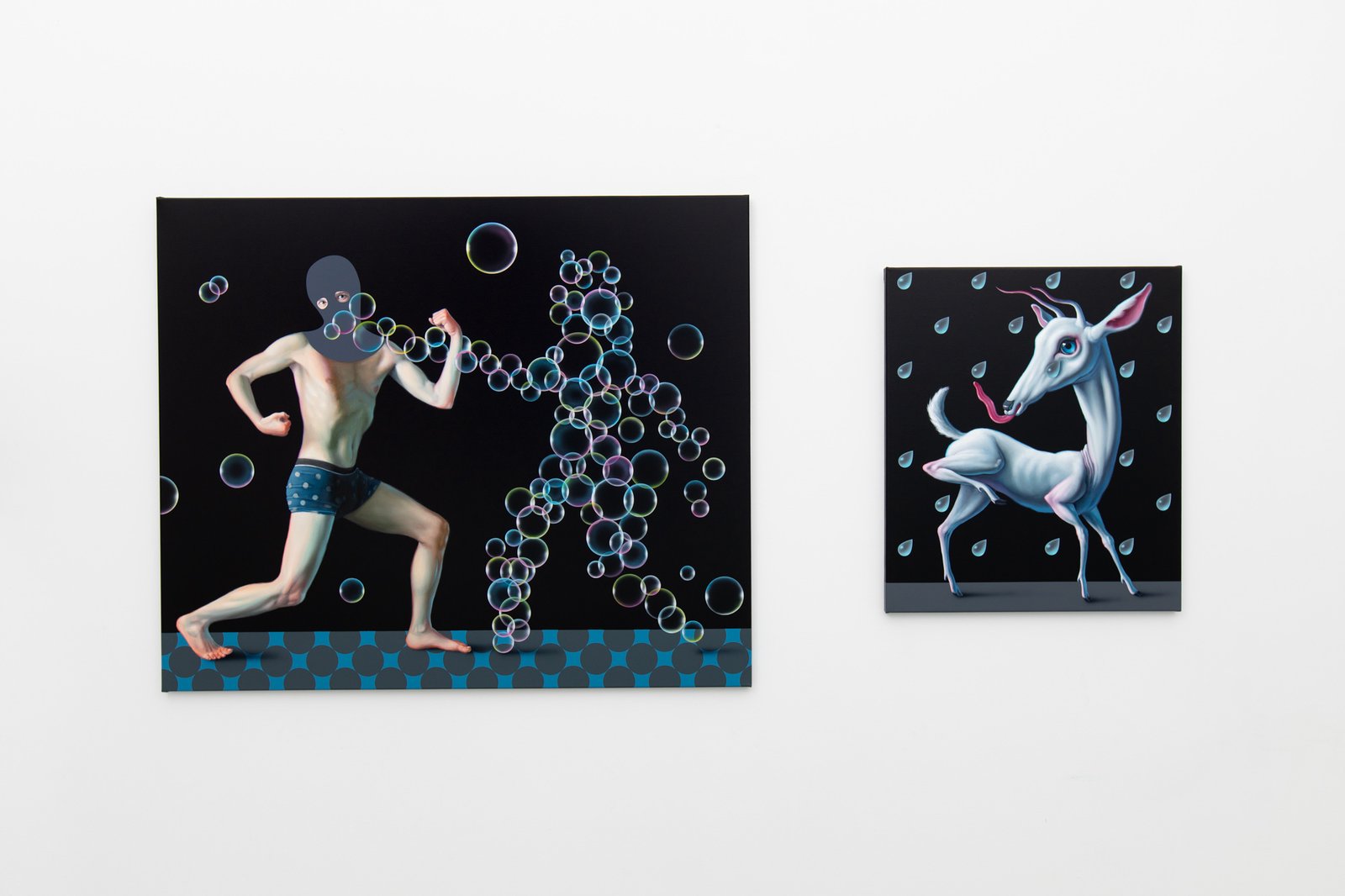
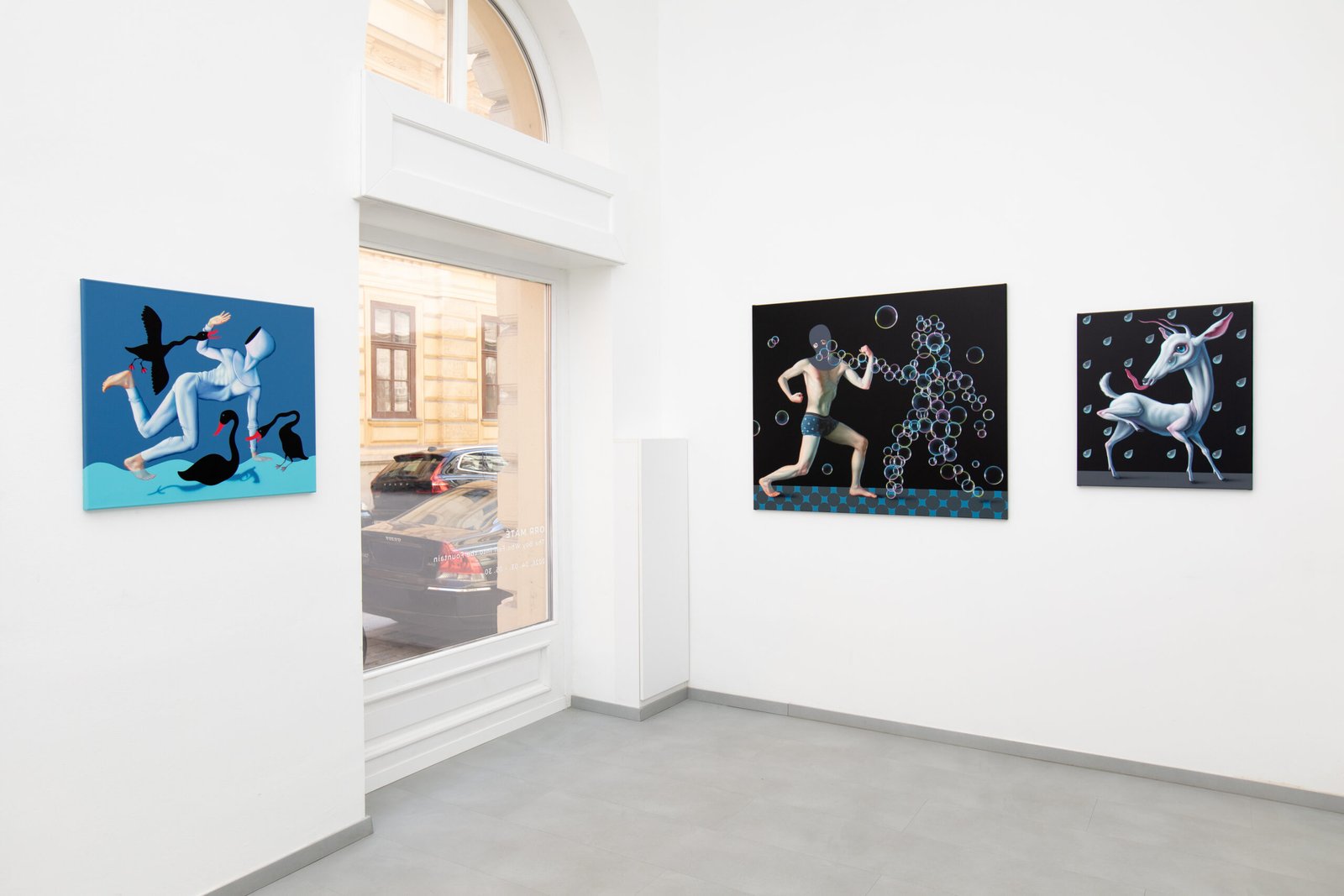
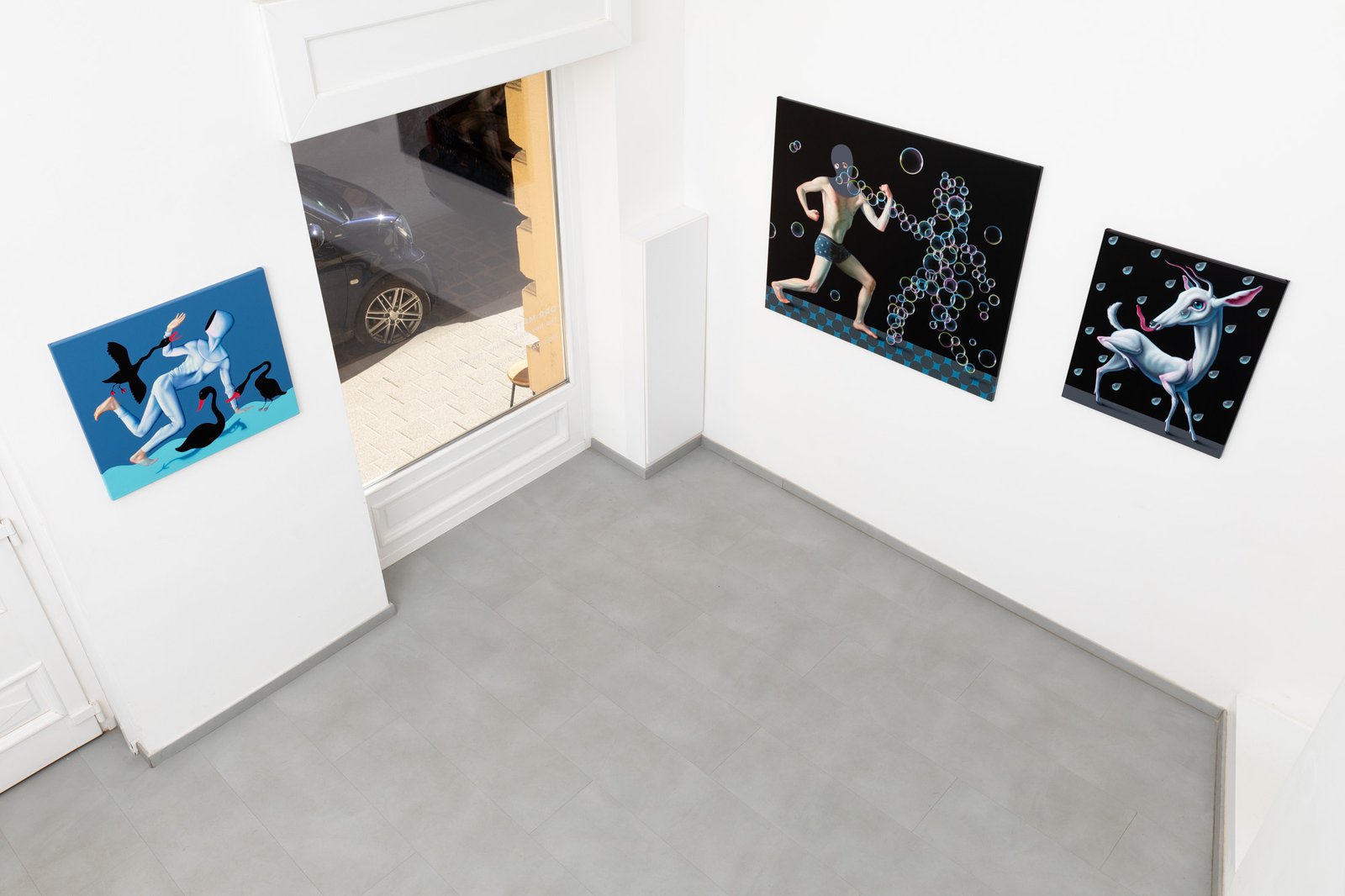
The paintings in this body of work revolve around moments of mild threat or tension, where the outcome remains unresolved. The compositions are often symmetrical and carry a certain gravitas, while vulnerability becomes an integral element, frequently through the presence of naked bodies. The figures are not defeated; rather, strength, exposure, and uncertainty coexist within the balance of the composition.
Orr’s practice constructs a world that is at once playful and capable of holding deep anxiety. His works are populated by animals and imagined creatures, forming a poetic and self-contained universe that offers the viewer a space in which difficult emotions may be more easily approached. From this perspective, the works consider enduring patterns of human psychology within the rapidly changing context of the twenty-first century.
He has developed a distinctive and immediately recognisable visual language. His classical European training established a sustained engagement with art history, reflected in recurring references to the perspective of the Lorenzetti brothers, the work of Magritte, and the stage-like compositions of David Hockney. At the same time, his paintings draw on the legacies of French Surrealism and Dutch Golden Age painting. His visual language is characterised by flat, graphic structures and decorative patterning, while the theatrical quality of his compositions and their dreamlike scenes create a self-contained universe. Within this world, recurring motifs include the relationship between human and animal, the centrality of the male body, and the artist’s own presence, often inserted into the compositions.
Traditionally, vulnerability and emotional openness were rarely associated with masculinity. Instead, restraint and the suppression of feeling came to define what was considered masculine, traits that could prove advantageous in harsher conditions. Yet suppression inevitably narrows the range of experience, and a life that becomes smaller is rarely a better one.
Many psychological patterns persist long after the circumstances that produced them have changed. What once functioned as a survival strategy can become restrictive in a different context. In this sense, the exhibition reflects on the possibility of a more inclusive and holistic understanding of masculinity.
Máté Orr graduated from the Hungarian University of Fine Arts and has presented numerous solo and group exhibitions in Hungary since 2011, though he was last shown to a Hungarian audience in 2023. In recent years, his work has been presented at international fairs and exhibitions, including in Spain, Australia, Switzerland, Monaco, South Korea, China, Germany, Slovakia, and the United Kingdom.